French Press Mistakes That Make Coffee Muddy
You wanted a big, rich cup. What you got has a gritty last third, a grey film on top and a layer of sludge you have to leave in the mug. The French press gets blamed for this a lot, but most muddy coffee comes from a handful of habits that are easy to change.
Here are the seven we see most often, what each one does to the cup, and the fix. Most of the fixes cost nothing.
Disclosure: Espresso at Home is reader-supported. As an Amazon Associate we earn from qualifying purchases, at no extra cost to you.
The quick fixes
| Fix | Helps with | Amazon | |
|---|---|---|---|
 | Baratza Encore burr grinder | Mistake 1: too many fines | Check Price |
 | Greater Goods scale | Mistake 2: guessing the dose | Check Price |
 | Bodum Brazil 8-cup press | A simple, cheap replacement | Check Price |
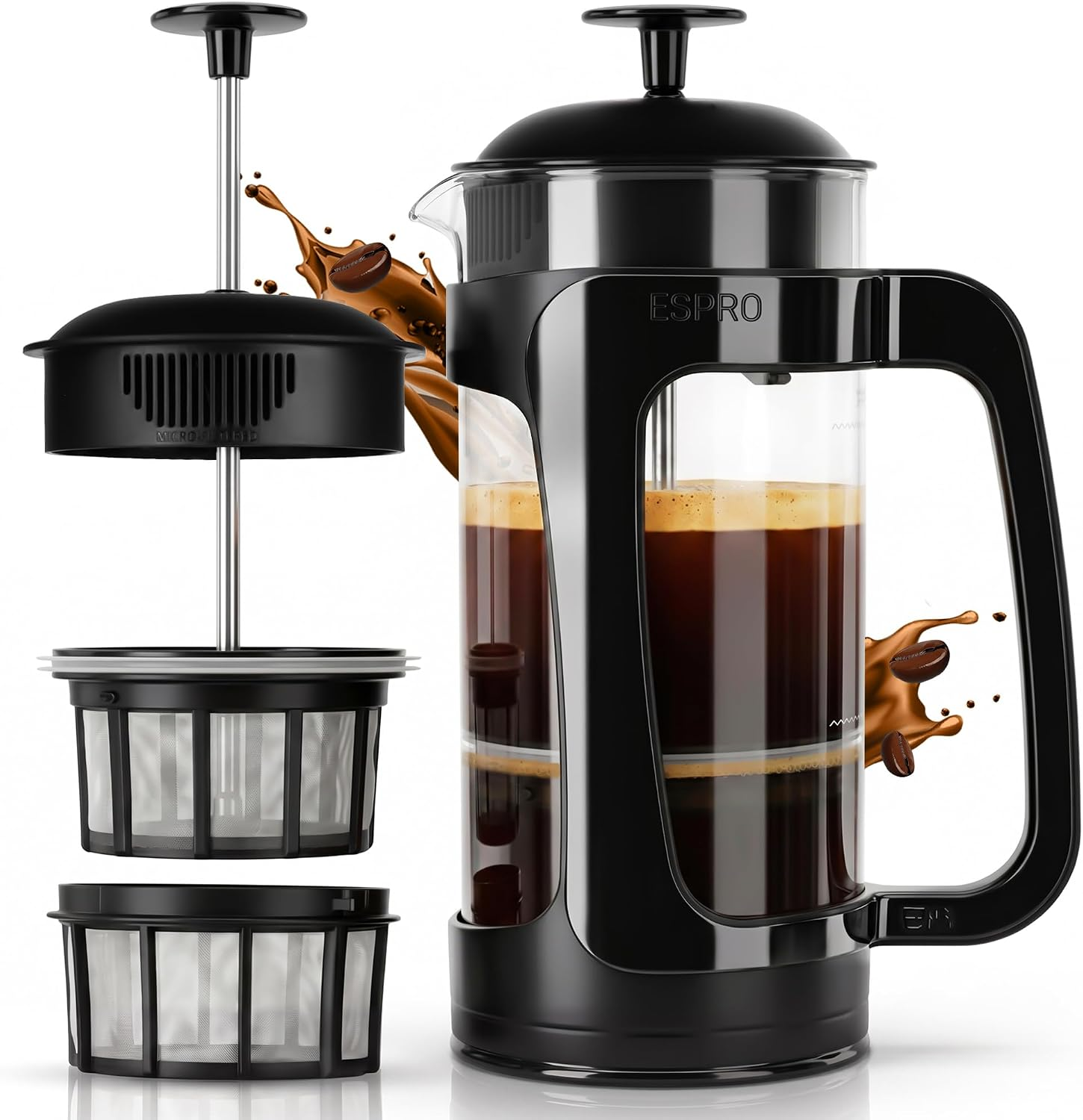 | ESPRO P3 press | Mistake 7: silt in the cup | Check Price |
Mistake 1: Grinding too fine (or with a blade grinder)
What you taste: bitter, heavy coffee with a dusty, silty finish, and a cup that keeps getting muddier toward the bottom.
A French press filters through a metal mesh, and mesh only stops particles bigger than its holes. Very fine particles, usually called fines, slip straight through. Whole Latte Love points out that fines also over-extract, which adds bitterness on top of the grit. Breville adds that a too-fine grind can leave an oily sheen on the surface.
The fix: aim for coarse, roughly the size of coarse sea salt or kosher salt. Pre-ground supermarket coffee is usually ground for drip machines, which is too fine. A blade grinder is the other culprit: it smashes beans into a mix of boulders and powder, so you get fines no matter how long you run it. Our burr vs blade comparison goes into why.
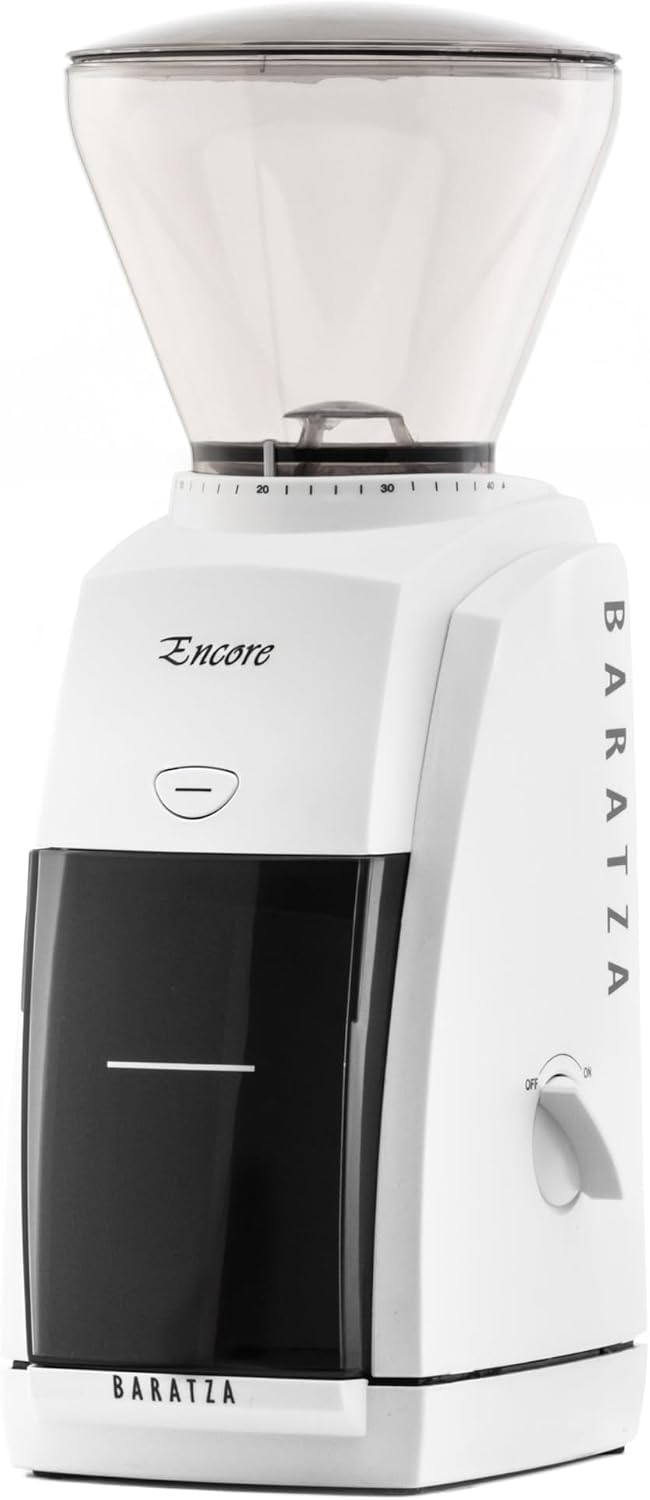
The fix in a box: Baratza Encore
The Encore is a sensible first burr grinder for French press. It has 40 grind settings and 40 mm hardened steel conical burrs, and the coarse end of its range is where a press wants to be. You will still make a few fines with any grinder, but far fewer than with a blade.
Fewer fines, cleaner cup. A burr grinder is the biggest single upgrade for French press.
See the Baratza Encore →Mistake 2: Measuring with a scoop
What you taste: one day thin and sour, the next day thick and harsh, with no obvious reason.
Scoops measure volume, and coffee beans vary in size and density, so the same scoop can hold quite different amounts. The usual ratios sit in a tight band: La Colombe brews at 1:14 by weight, Breville suggests about 1:15, and Whole Latte Love uses 60 g of coffee to 1 liter of water. Drift outside that band and the cup changes noticeably: too little coffee tastes thin, too much tastes heavy.
The fix: weigh the beans and the water. For a 1-liter press, start around 60 to 65 g of coffee and adjust by taste. For a 600 ml press, Eight Ounce Coffee uses 25 g of coffee to 375 g of water.
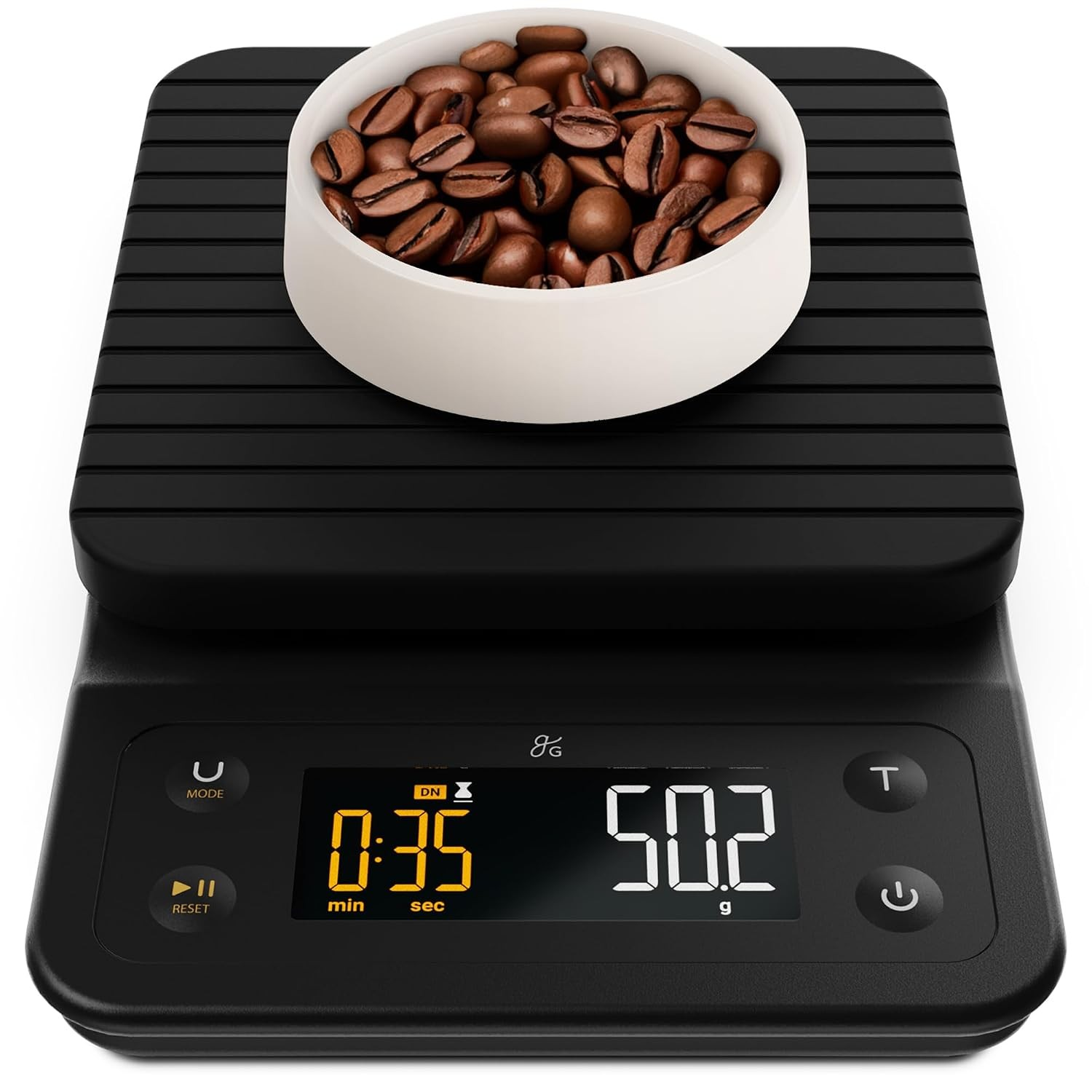
The Greater Goods scale reads in 0.1 g steps and has a timer built in, so it covers dose and steep time in one gadget. Our grams vs scoops guide has more on why weighing helps.
Take the guesswork out. A timer scale costs about the same as a bag of good beans.
Check the Greater Goods Scale →Mistake 3: Water that is too cool, and a cold press
What you taste: sour, flat coffee that seems weak even when you used plenty of grounds.
Most brew guides land on about 200°F. Whole Latte Love says 200°F give or take 5 degrees, Breville says 200 to 205°F, and La Colombe suggests letting just-boiled water sit for about 30 seconds. Water that has been sitting in the kettle for ten minutes is well below that, and a cold glass carafe pulls even more heat out of the brew.
The fix: use water just off the boil, and rinse the press with hot water first. All three guides above recommend preheating; it takes ten seconds and keeps the temperature steady through the steep.
Mistake 4: Dumping everything in and walking away
What you taste: an uneven cup, sometimes with a raft of dry grounds still floating when you press.
Fresh coffee releases gas when hot water hits it, and dry clumps can float on top and never get wet. Whole Latte Love pours about 120 g of water first, stirs, and lets it bloom for 30 seconds before adding the rest. Breville stirs at the one-minute mark and breaks the crust gently with a small spatula before pressing.
The fix: wet all the grounds early with a short bloom and a stir, then leave the press alone for the rest of the steep. Four minutes is the standard starting point in every guide we checked.
Mistake 5: Plunging hard and fast
What you taste: a cloudy cup, more grit, and sometimes a jet of coffee shooting up around the edge of the filter.
Forcing the plunger down quickly pushes water and fines around the edges of the screen and churns up the grounds that have already settled. Whole Latte Love says to press gently using just the weight of your hand; Breville calls for a slow and steady plunge.
The fix: press slowly. If you want the cleanest cup possible, try the method Eight Ounce Coffee describes: after four minutes, give the crust a light stir, skim off the foam and floating bits with two spoons, then wait several more minutes so the fines sink. Lower the screen only to just below the surface and pour through it, without pushing it all the way down. Eight Ounce Coffee says the longer settle gives a sweeter, less gritty cup.
Mistake 6: Leaving the coffee sitting on the grounds
What you taste: a nice first cup and a bitter second one.
Pressing the plunger does not stop extraction; the coffee is still touching the grounds at the bottom. La Colombe says to pour all of the coffee out right after pressing, and Breville says to pour it shortly after you press to avoid over-extraction.
The fix: decant everything you do not drink straight away into a second mug or a thermal carafe. And leave the last half-inch in the press. That is where the sludge collects, and no technique will make it pleasant to drink.
Mistake 7: A dirty or damaged filter
What you taste: grit even with a good grind, and sometimes a stale, oily flavor.
Fines get trapped in the mesh and around the spring, coffee oils build up, and a mesh that has been bent lets grounds slip past the edges. Whole Latte Love recommends scrubbing the screen and spring with a soft brush, and soaking the parts for 30 minutes in hot water with a tablespoon of Cafiza when oils build up.
The fix: take the filter apart and clean it properly every week or so. If the edge of the screen is bent or frayed, replace the filter or the press. Here are two good options at different budgets.
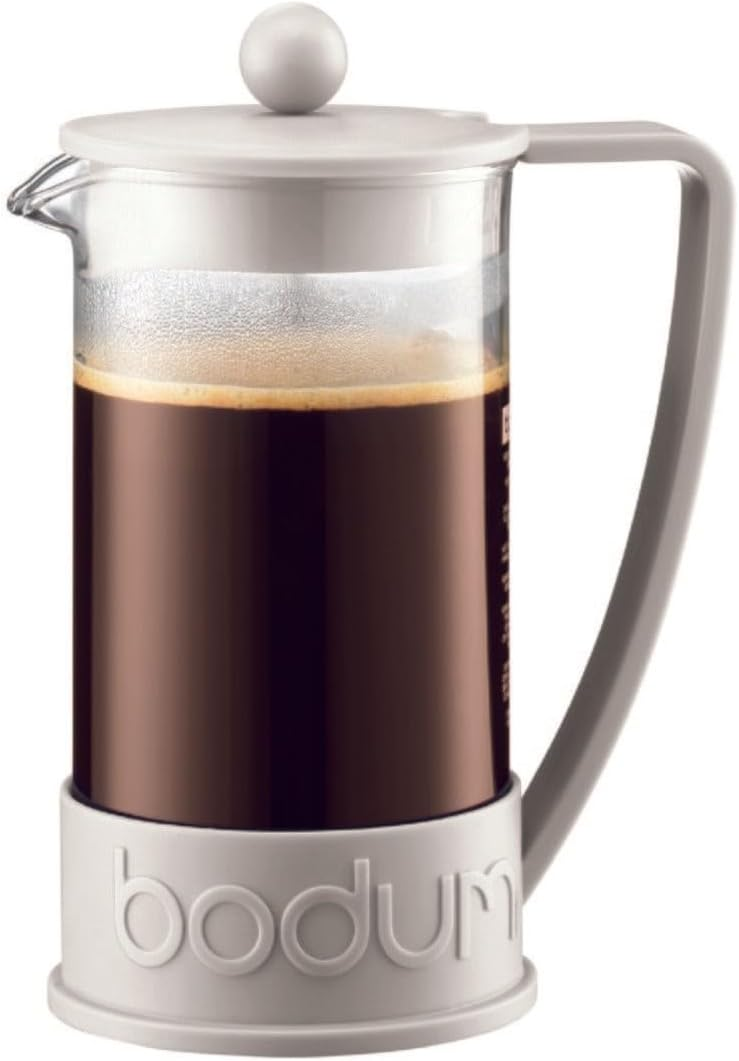
The simple replacement: Bodum Brazil 8-cup
The Brazil is Bodum’s plain, no-fuss press. The 8-cup size holds 1 liter (34 oz), the carafe is heat-resistant borosilicate glass, and it has a safety lid. It uses a standard single mesh filter, so the grind and pouring habits above matter.
A clean start for not much money. Good if your old press has a tired screen or a cracked carafe.
View the Bodum Brazil on Amazon →The silt-fighter: ESPRO P3
If grit bothers you more than anything else, the ESPRO P3 is built to deal with it. ESPRO says its dual-layer micro-filter is 12 times finer than a standard mesh. It holds 32 oz and uses a thick borosilicate carafe.
It will not rescue a blade-ground coffee, but with a decent grind it gets you about as close to a paper-filtered cup as a metal-filter press can. Our AeroPress vs French press comparison covers it in more detail.
Silt-free without paper filters. The P3 is the press to get if you hate the last sip.
Check the ESPRO P3 Price →A clean French press routine
- Heat the water to just off the boil and rinse the press with some of it.
- Weigh about 60 to 65 g of coarsely ground coffee per liter of water.
- Pour enough water to wet the grounds, stir, and wait 30 seconds.
- Add the rest of the water and leave it for four minutes.
- Stir the crust lightly, skim the foam, and give the grounds a few minutes to settle if you have time.
- Press slowly, pour everything out at once, and leave the last bit behind.
If the coffee is still muddy after all that, change the grind first, one step coarser at a time. If it starts tasting thin and sour, you have gone too far, so come back a step.
More guides
- AeroPress vs French Press: Which Brewer Fits Your Mornings?
- Burr vs Blade Coffee Grinders: Which Should You Buy?
- Coffee Scales: Why Grams Beat Scoops
- Storing Coffee Beans: Freezer, Canister or Bag?
- Hosting Brunch: Brewing Coffee for a Crowd