Dialing In a New Grinder: A Weekend Walkthrough
A new grinder arrives on Friday. By Sunday night you want it making coffee you actually like, without burning through three bags of beans or ending up more confused than when you started.
That is very doable if you treat it as a weekend project with a plan. Here is the order we would do it in, with the targets the grinder makers and specialty retailers use, and the few small tools that make it easier.
Disclosure: Espresso at Home is reader-supported. As an Amazon Associate we earn from qualifying purchases, at no extra cost to you.
What you need for the weekend
| Gear | Why | Amazon | |
|---|---|---|---|
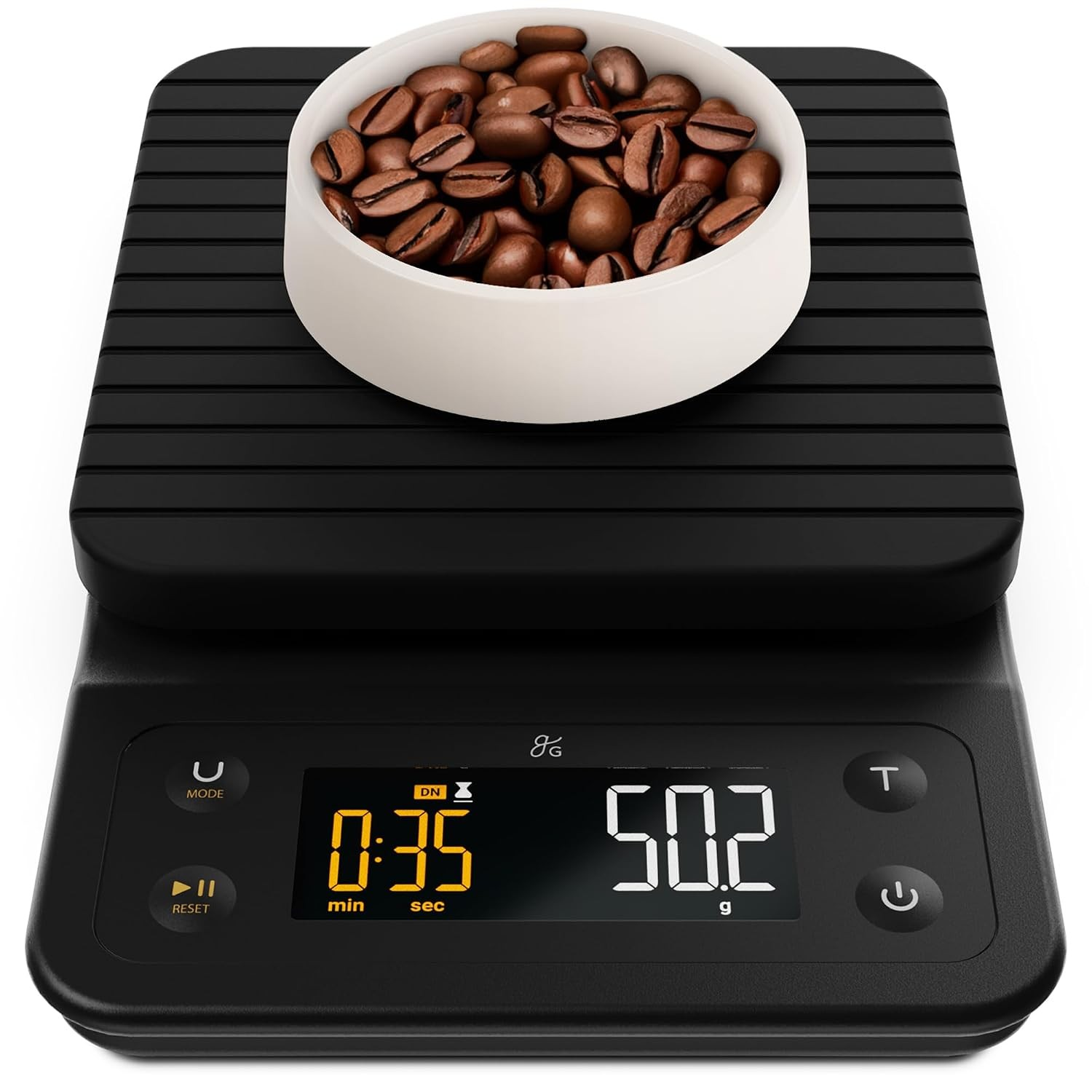 | Greater Goods timer scale | Weigh dose and yield, time the shot | Check Price |
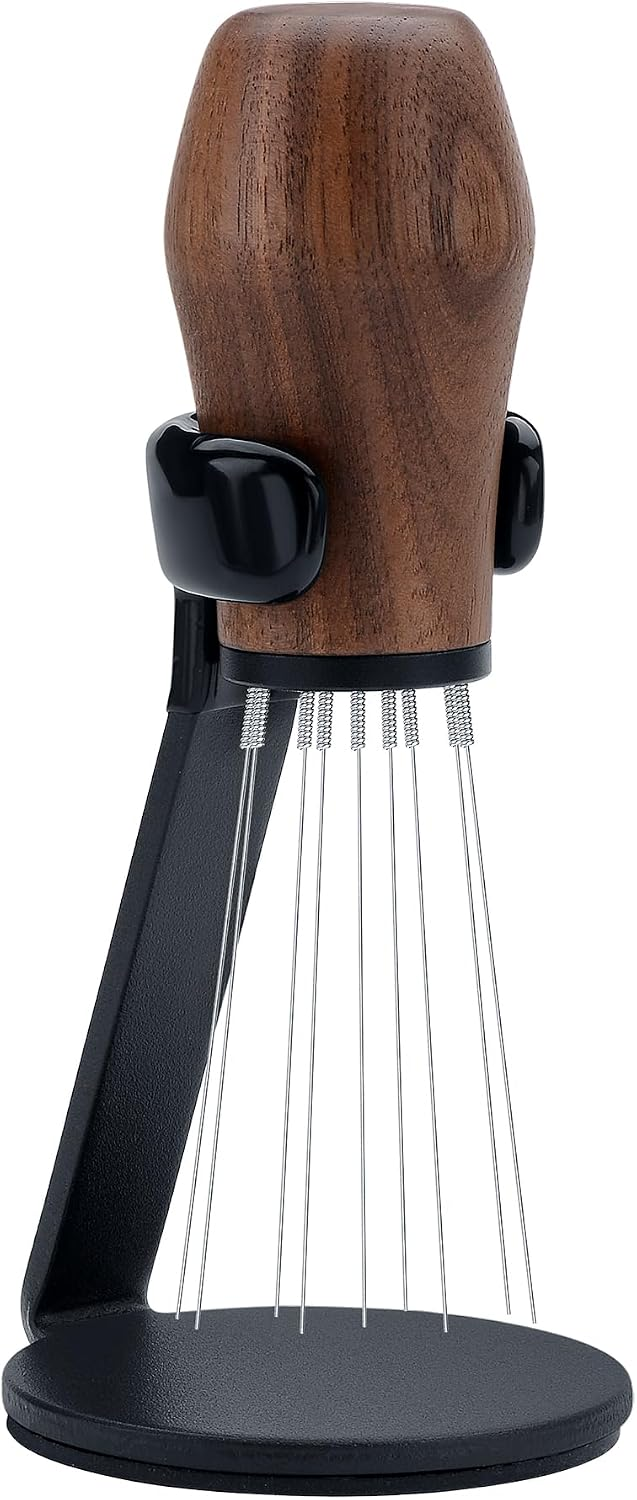 | Normcore WDT tool | Rules out puck prep as the problem | Check Price |
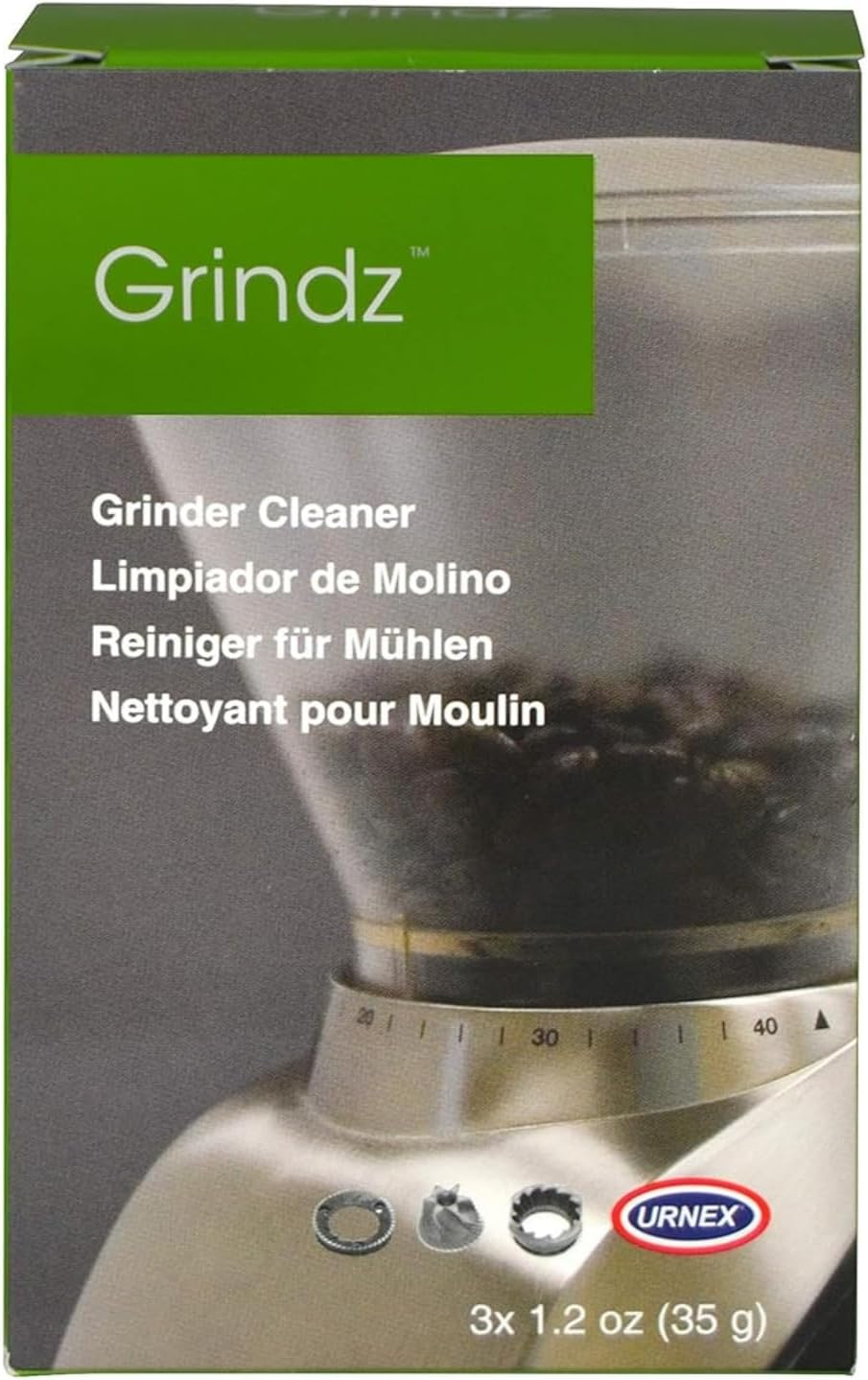 | Urnex Grindz | Cleans the burrs between bags | Check Price |
| One fresh bag of beans | Something you will recognize when it tastes right | Search |
Plus a notebook or a notes app. You will change things a lot over two days, and you will not remember which setting tasted best by Sunday.
Friday evening: unbox and set up
Do the boring part first, so Saturday morning is all coffee. Seattle Coffee Gear suggests keeping the manual and any small parts like the portafilter fork, and washing the hopper and fork in warm soapy water, then drying them fully before you put the grinder together. Clive Coffee adds a sensible step: check for shipping damage and keep the box until you are sure everything works.
Read the part of the manual that explains the adjustment. Every grinder is different: on the Baratza Encore ESP, for example, you turn the hopper clockwise to go finer and counterclockwise to go coarser, according to Clive.
Pick the right beans
Clive recommends budgeting one full bag of coffee just to learn a new grinder, and ordering fresh beans if your bag has no roast date or is more than a month old. Choose a coffee you know well. If you can remember how it tasted at your favorite café or from your old setup, you will know when you have found it again.
Saturday morning: find your starting point
Stepped grinders
If your grinder clicks between numbered settings, start at the coarse end of its espresso range and work finer. Baratza says the Encore ESP’s espresso range is settings 1 to 20, and its advice is to begin at the coarse end and move finer.
Stepless grinders: find zero
Seattle Coffee Gear describes a simple way to find the zero point: with the grinder running, slowly bring the burrs closer until you hear a harsh chirping sound. Note that position, then back off one full rotation. That is your starting point. One warning from the same guide: once beans are in the grinder, only adjust it while it is running.
If nothing comes out at all, Clive suggests checking that the hopper tab is pulled out, then going coarser with the motor on.
Saturday: pull your test shots
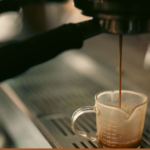
Use one recipe and keep it fixed while you move the grinder. Baratza’s test recipe is 18 g of coffee in, 36 g of espresso out, in 25 to 32 seconds. Seattle Coffee Gear suggests the same 2:1 ratio as a starting point. Clive’s guide puts the shot window at 25 to 35 seconds, timed from when the pump starts.
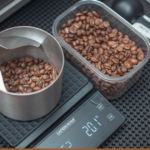
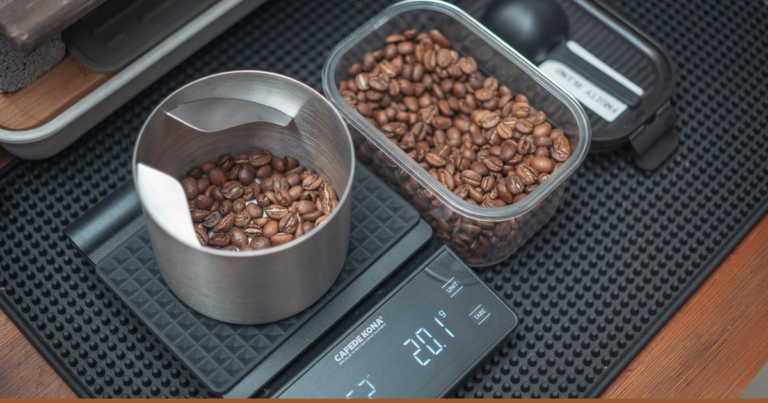
This is where a timer scale earns its place. The Greater Goods reads in 0.1 g steps and has a built-in timer, so you can weigh the dose, put the cup on the scale and watch both the yield and the time in one place.
Your dial-in is only as good as your numbers. Weighing every shot is what makes the changes make sense.
Check the Greater Goods Scale →How to adjust
- Fast, sour and thin: go finer. Clive notes that shots under about 20 seconds tend to taste sour and thin.
- Slow, bitter and harsh: go coarser. Clive says shots over 50 seconds tend to taste muddy and bitter.
- Change one thing at a time. Keep the dose the same and move only the grind. Baratza recommends writing down every change.
- Move in small steps. Clive points out that stepless dials respond to a quarter or half turn, while worm-drive adjusters need full rotations before you see a difference.
Purge after every change
This is the step people skip, and it makes the grinder look like it is ignoring you. Some ground coffee stays inside the grinder, so the next shot is partly the old setting. Clive says changes do not show up right away for this reason, and recommends throwing away the first dose after a change. Single-dose and low-retention grinders are less affected, but a quick purge is still worth doing.
Rule out puck prep
If the time looks right but the shot spurts, runs unevenly or tastes sour and bitter at once, the grinder may not be the problem. Baratza calls channeling a puck-prep issue rather than a grind issue.
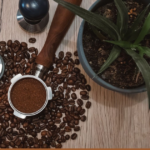
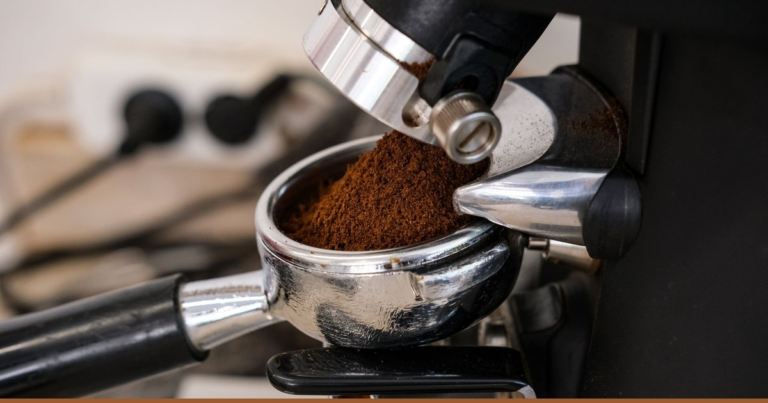
A WDT tool is the cheap way to check. Stir the grounds in the basket with the fine needles to break up clumps before you tamp. If the shots suddenly behave, it was the puck all along. The Normcore V3 comes with its own stand, so it lives next to the grinder instead of in a drawer.
Separate grinder problems from puck problems. A two-minute habit that makes the dial-in much less confusing.
See the Normcore WDT Tool →Saturday afternoon: stop, then taste again
Once you have a shot in the target window, stop adjusting. Make that same shot two or three more times. If it repeats, you have found your setting for this bag. Write it down, with the date and the roast date on the bag.
Be patient with a brand-new grinder. Clive says new burrs need about 3 to 5 pounds of coffee to season and break in, so the setting you land on this weekend will probably drift a little as the burrs settle. That is normal; just repeat the same process with smaller steps.
Sunday: filter coffee and cleaning
If you also brew filter coffee
If the grinder does double duty, switch to your pour-over or French press grind on Sunday morning and taste. Each grinder’s manual has a suggested range for each method; start in the middle of it. The same logic applies as with espresso: sour and thin means go finer, bitter and dry means go coarser. Note the setting for each method so switching back is quick.
Clean before the next bag
Seattle Coffee Gear suggests wiping out the hopper and running a grinder cleaner between bags, about monthly, and hand-cleaning the burrs at least once a year.
Grindz is the grinder cleaner Seattle Coffee Gear names. You run the tablets through the grinder like beans to clear out old grounds and oils. This pack has three single-use packets, and Urnex says it is not meant for super-automatic machines. Run a few beans through afterward to clear any residue before you dial in the next bag.
Keep the burrs clean between bags. A packet a month keeps stale oils out of your shots.
View Urnex Grindz on Amazon →Still choosing a grinder?
If you are reading this before the grinder arrives, two easy ones to dial in are the Baratza Encore ESP and the Breville Smart Grinder Pro. Our espresso grinder guide compares them properly.
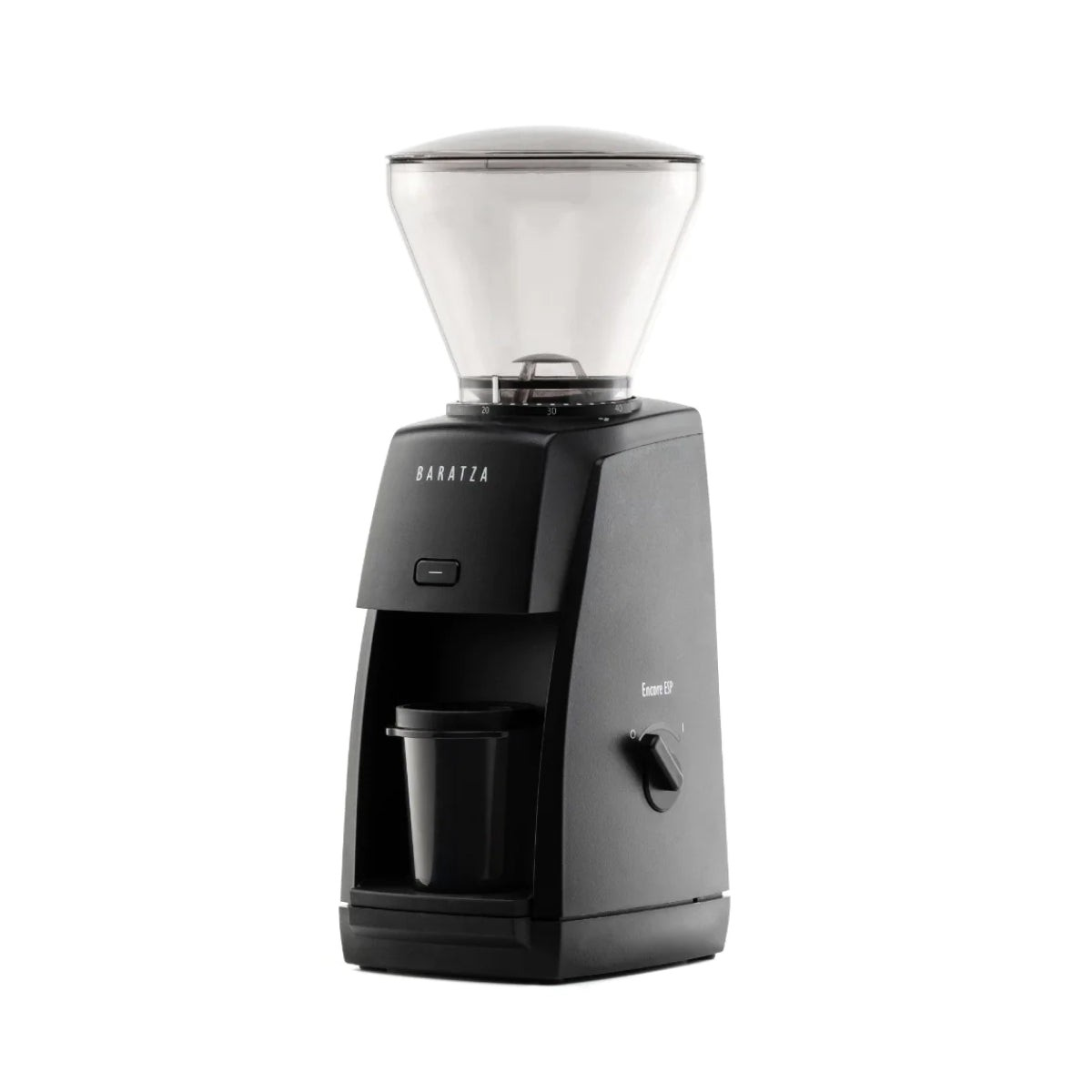
The Encore ESP uses a 40 mm M2 conical burr, and its espresso range is spread over settings 1 to 20, which leaves room for small changes.
A friendly first espresso grinder. Plenty of room to fine-tune in the espresso range.
Search for the Encore ESP →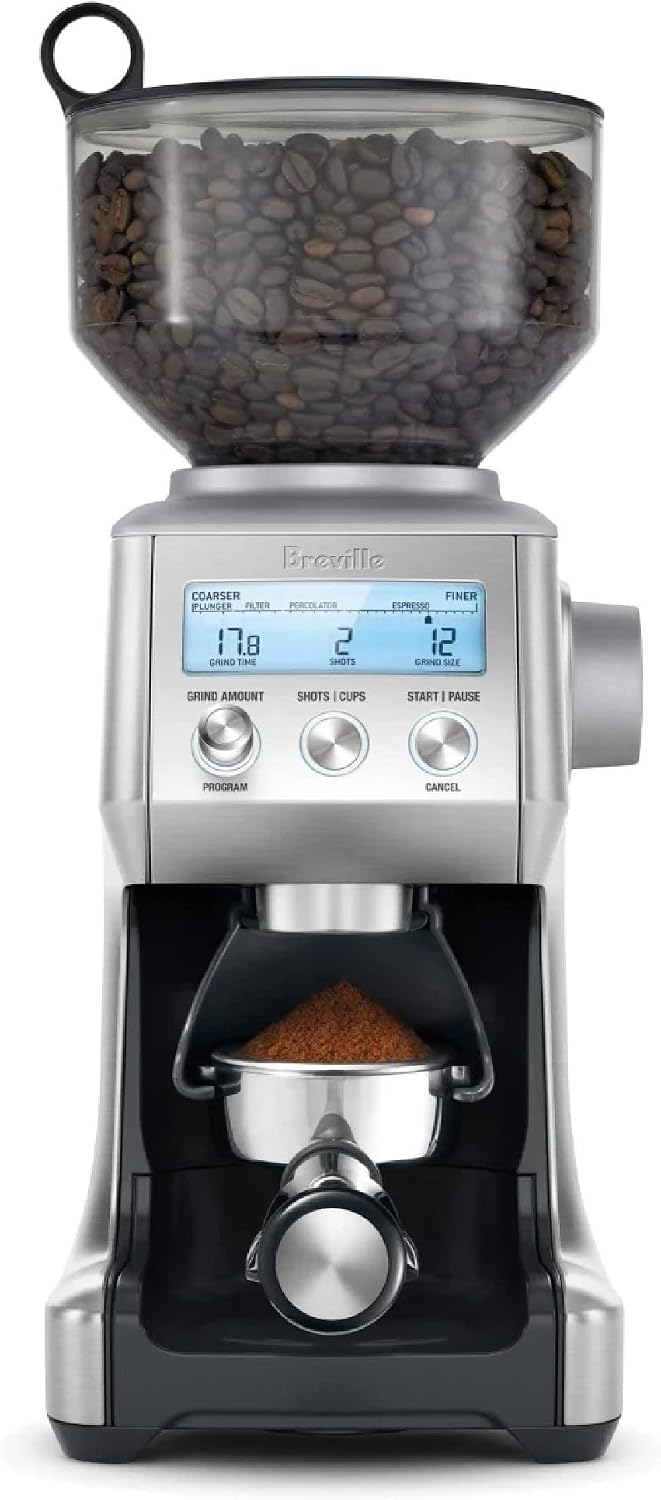
The Smart Grinder Pro has 60 settings and pairs naturally with a Breville espresso machine. It also has a dosing timer, which helps keep the dose steady while you change the grind.
A good match for a Breville machine. Easy to dial in, with a timer for repeatable doses.
Check the Smart Grinder Pro Price →Whatever you end up with, the weekend plan is the same: fresh beans, one fixed recipe, small changes, purge, and notes. If your shots are still off after that, our sour or bitter espresso troubleshooting guide goes through the other causes.
Want to skip the hopper altogether? Our guide to single dosing at home explains when it is worth the extra step.
More guides
- Best Espresso Grinders for Home
- Why Your Grinder Matters More Than Your Machine
- Why Your Espresso Tastes Sour or Bitter: A Troubleshooting Guide
- Coffee Scales: Why Grams Beat Scoops
- Espresso Accessories Worth Buying (and Ones to Skip)
After a deep clean you will need to check your settings again. Here is how to clean a burr grinder safely.