Cappuccino vs Flat White vs Latte: What’s Really in the Cup
Walk into three different cafés, order a flat white, and you can get three different drinks. One will be a small, strong cup with a thin silky top. One will be a latte in a smaller cup. One will be something the barista invented on the spot.
The names do mean something, though, and once you know what actually changes between a cappuccino, a flat white and a latte, it gets much easier to make the one you like at home. Here is what is really in each cup, where the lines blur, and what gear helps if you want to make them yourself.
Disclosure: Espresso at Home is reader-supported. As an Amazon Associate we earn from qualifying purchases, at no extra cost to you.
The short version
| Cappuccino | Flat white | Latte | |
|---|---|---|---|
| Cup size | About 5 to 6 oz | About 5 to 6 oz | 6 oz and up, often 8 to 12 oz |
| Espresso | Usually a double | A double, sometimes ristretto | Usually a double |
| Foam | Thick, at least about 1 cm | Thin, about 0.5 cm | Thin, about 0.5 cm |
| Tastes like | Coffee with a soft, airy cap | The strongest coffee flavour of the three | Milky, mild, smooth |
The sizes and foam depths above follow Breville’s explainer, which leans on Specialty Coffee Association guidance: a cappuccino and a flat white both sit at 5 to 6 oz, a latte starts at 6 oz and goes up from there, and a cappuccino should have at least 0.4 inches of foam while the other two carry around 0.2 inches.
What actually changes: three things
1. How much milk goes in
All three start from the same place. Breville says it uses the same espresso for each, and Trade notes that cafés typically start all three with a double shot. What changes is how much milk is poured on top.
Trade puts a cappuccino at two to three times as much milk as espresso, and a latte at roughly five or six parts milk to one part coffee. A flat white lands closer to the cappuccino in volume. That single difference explains most of the taste: the bigger the cup, the more the milk takes over.
2. How much air is in the milk
This is the part people miss. A latte and a flat white are both made with microfoam, milk that has been steamed with only a little air so it turns glossy and pourable, like wet paint. A cappuccino gets more air, which gives it a thicker, lighter cap that sits on the drink rather than blending into it.
In a traditional cappuccino you can see layers. In a good latte or flat white you should not: the foam is folded right into the milk.
3. How big the cup is
Cup size quietly controls everything else. A 6 oz cup with a double shot is a coffee-forward drink whatever you call it. A 12 oz cup with the same shot is a milky one. If your homemade flat white tastes like a latte, the first thing to check is the size of the mug.
The cappuccino
The cappuccino is the old one. Breville traces the idea to the 19th-century Viennese kapuziner, with the name taking hold in Italy in the early 1900s once espresso machines arrived. In Italy it is still mostly a breakfast drink.
At home, aim for a 5 to 6 oz cup, a double shot and milk with a bit more air than you would use for a latte. Stretch the milk a few seconds longer while it is still cold, then spin it. You want a foam layer you can feel on your lip, not a stiff dry meringue sitting on top of hot milk.
A cappuccino is the most forgiving of the three if you are new to steaming, because extra foam is part of the point. It is also the drink where cup shape matters most: a wide, rounded 6 oz cup holds the foam and the heat nicely.
A proper 6 oz cup
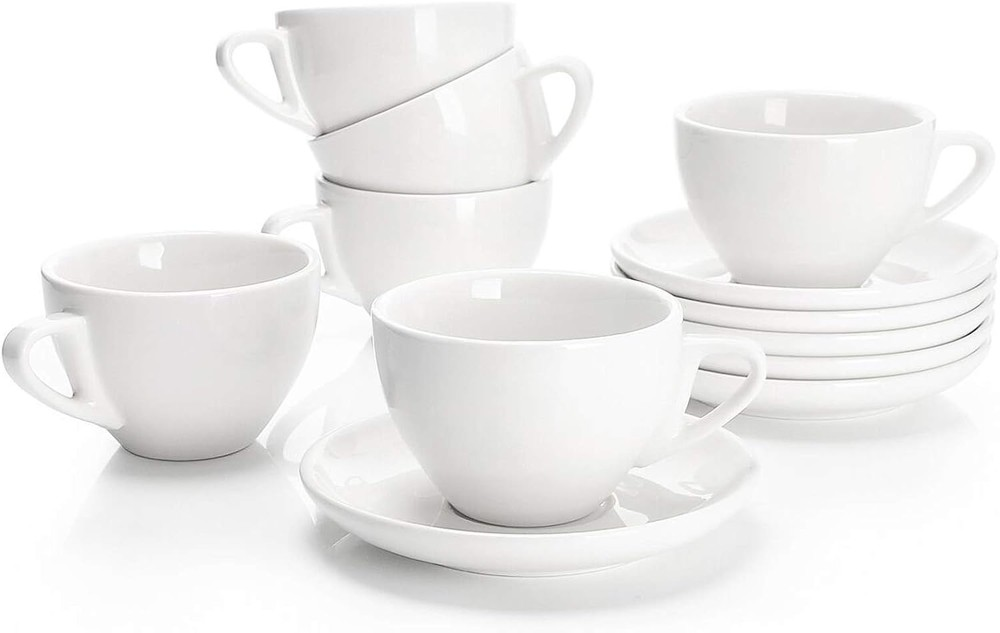
If all you own are 12 oz mugs, a cappuccino will always taste like a weak latte. The Sweese set is six 6 oz porcelain cups with saucers, which is the classic cappuccino and flat white size, and the rounded bowl shape makes pouring a simple heart easier.
They are plain white, they stack, and they work just as well for a double espresso or a cortado. It was $34.39 for the set of six on Amazon when we checked.
The cheapest upgrade to your cappuccino is the cup. Six of them, sized the way cafés size it.
See the Sweese Cup Set →The flat white
The flat white comes from Australia and New Zealand, and the two countries still argue about who got there first. Breville notes that a Sydney café owner, Alan Preston, claimed the first official version in 1985, while New Zealanders point to Wellington.
Whoever invented it, the idea is simple: a small cup with a strong coffee taste and a thin layer of silky microfoam. Some cafés use a double ristretto, a shorter, sweeter version of the shot. Bean Box points out that Starbucks has made its flat white with two ristretto shots since 2015.
At home, the flat white is the one that rewards good milk technique. Use the same small cup as a cappuccino, add only a little air, and pour so the milk folds under the crema. If you like the taste of your espresso and just want it softened, this is your drink.
The latte
The latte is the biggest and mildest of the three. Breville’s story is that it grew up in late 19th-century Italy as a way to soften espresso for visitors, and it has been getting larger ever since. Breville says lattes start at 6 oz; most cafés serve 8 to 12 oz, and chains go well past that.
At home, a latte is the easiest drink to make taste good and the hardest to make look good. The milk texture is the same as a flat white, but there is more of it, so you need a pitcher big enough to steam the volume without spilling and still leave room to spin. It is also the drink most people make with a frother instead of a steam wand, which works fine if you do not care about pouring a pattern.
What about cortados and macchiatos?
They sit on the smaller, stronger side. Bean Box describes a cortado as about 4 oz of espresso and steamed milk in roughly equal parts with very little foam, and an espresso macchiato as a shot marked with a teaspoon or two of foam. A Starbucks caramel macchiato is a different animal entirely: it is a sweetened latte with the shot poured on top.
How to choose your drink
- You like the taste of coffee and want it smoother: flat white.
- You like a light, foamy texture and a smaller cup: cappuccino.
- You want something mild and large to sip slowly: latte.
- You find all three too milky: try a cortado.
Whatever you pick, the milk temperature matters as much as the recipe. Arla suggests finishing the milk at 60 to 65°C (140 to 149°F). Go much hotter and you lose the natural sweetness that makes all three drinks taste good.
Gear that helps, by type of home barista
You have a steam wand: a pitcher sized for one or two cups
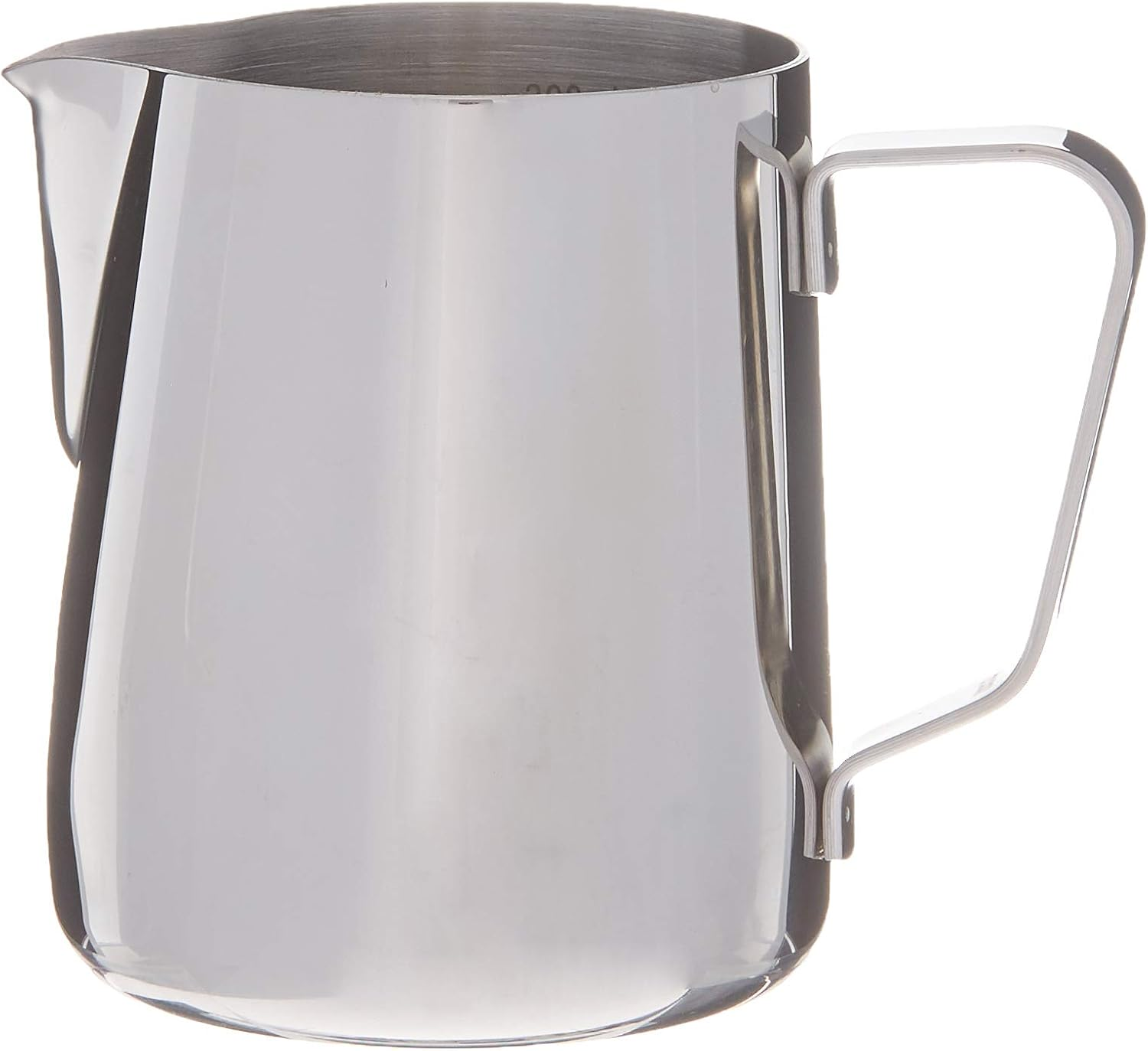
Most machines ship with a jug that is either too big or too blunt at the spout. The Rhinowares Pro 12 oz is the right size for one flat white or cappuccino, or a small latte, and its spout gives you control over where the milk lands. It was $28.99 on Amazon when we last checked.
Small jug, cleaner pours. The right size for the 6 oz drinks in this guide.
Check the Rhinowares Price →You want café milk without learning to steam: Breville Bambino Plus
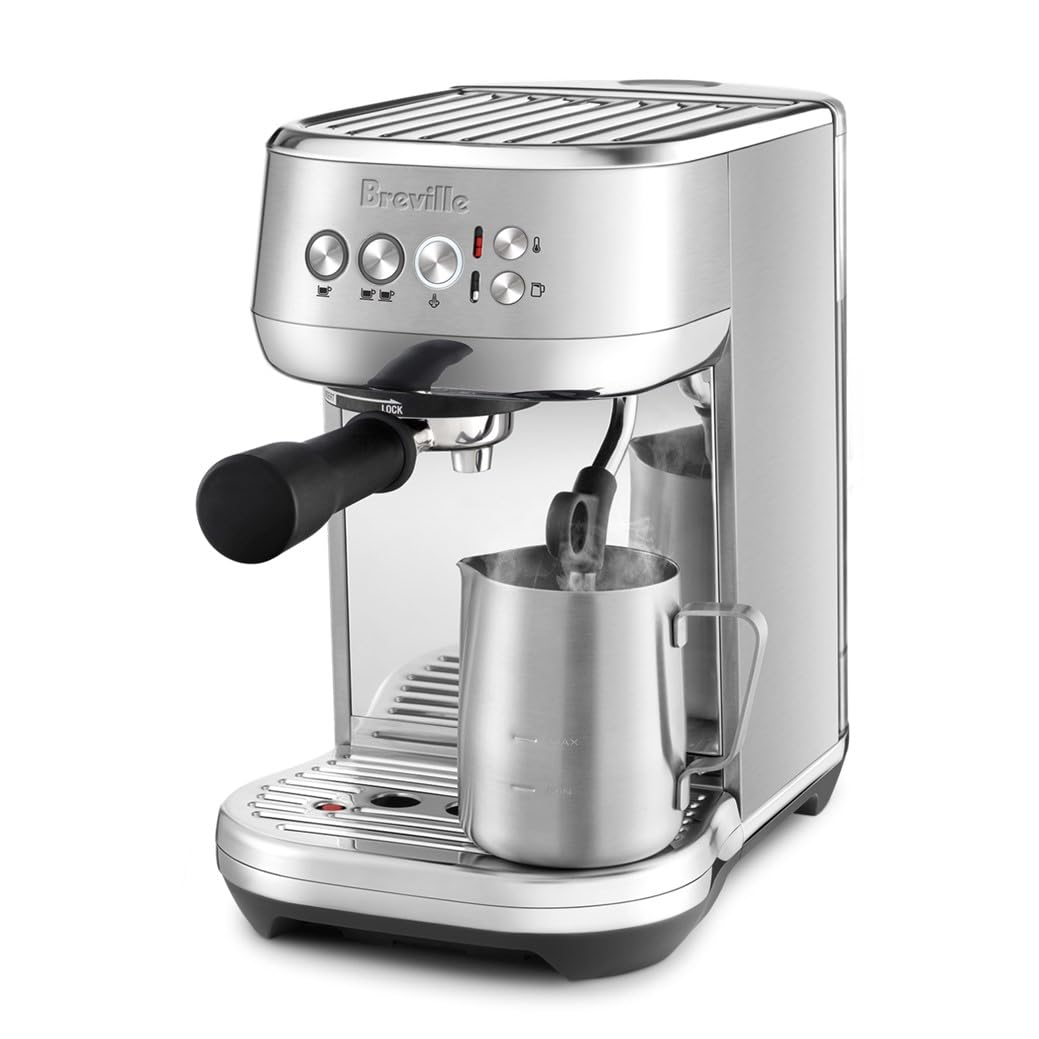
The Bambino Plus is the machine we reviewed in our Bambino Plus review. Its automatic wand textures milk in the included 16 oz jug at one of three temperatures and three texture levels, then shuts itself off, which is exactly the control you need to switch between a foamy cappuccino and a silkier flat white.
Breville lists it at $499.95. You will still want a decent grinder alongside it.
One button between a cappuccino and a flat white. Set the texture, walk away, come back to milk.
See the Bambino Plus →No espresso machine: Breville Milk Café
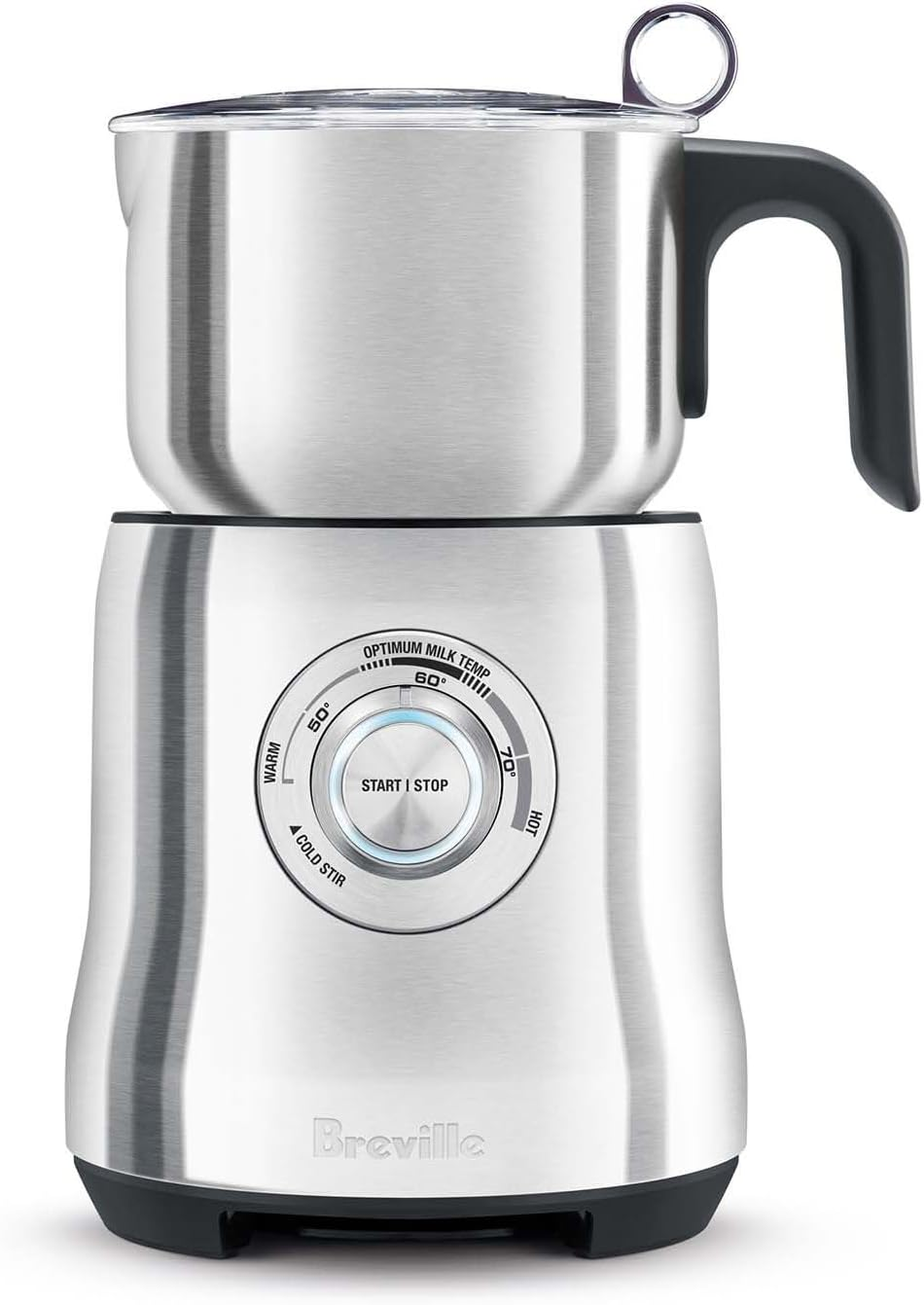
If you make your coffee in a moka pot or AeroPress, a countertop frother gets you most of the way. The Milk Café comes with two discs, one for latte-style milk and one for cappuccino foam, plus a temperature dial, so you can actually tell the two drinks apart. It is the frother we picked for families in our frother guide, at $199.95 when we checked.
Two textures, no steam wand. A good fit if everyone in the house drinks something different.
View the Milk Café →If you are ready to try pouring patterns, our guide to common latte art mistakes picks up where this one leaves off.