Best Espresso Machines Under $500: Five Honest Picks
Five hundred dollars is a sensible ceiling for a first espresso machine. Below it you can buy anything from a $150 starter to a machine people keep for a decade. What changes as you climb is not the bar number on the box but how much control you get, how good the milk is, and how far the machine can grow with you.
Here are five machines ordered from cheapest to most expensive, with what each one does well and what you give up at that price.
Disclosure: Espresso at Home is reader-supported. As an Amazon Associate we earn from qualifying purchases, at no extra cost to you.
Before you pick: save room for a grinder
Every machine below makes better coffee with fresh beans ground right before the shot. CoffeeGeek goes as far as saying a $200 machine with a $500 grinder beats the reverse, and Clive Coffee suggests putting about a third of the total budget into the grinder. If $500 is the whole budget, look at the cheaper picks here and spend the rest on a grinder from our espresso grinder guide.
Also ignore the 15 bar claims. Espresso brews at around 9 bar, and the bigger number is just the pump’s maximum. We explain why in our list of espresso machine myths.
The budget ladder at a glance
| Price tier | Machine | Best for | Buy |
|---|---|---|---|
| Around $150 | De’Longhi Stilosa EC260BK | Trying espresso without much risk | 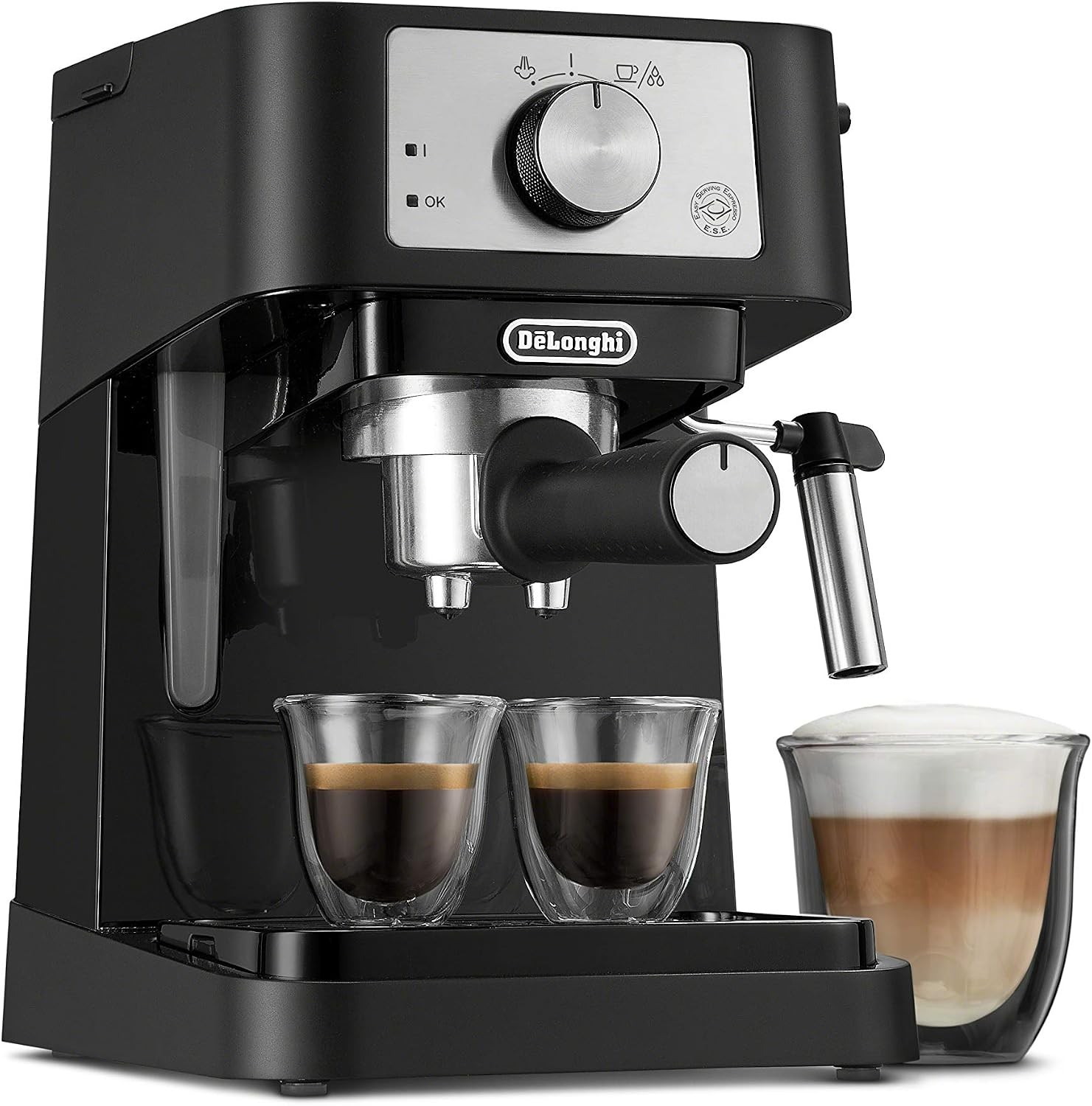 Stilosa |
| Around $240 | De’Longhi Dedica EC680M | Narrow counters | 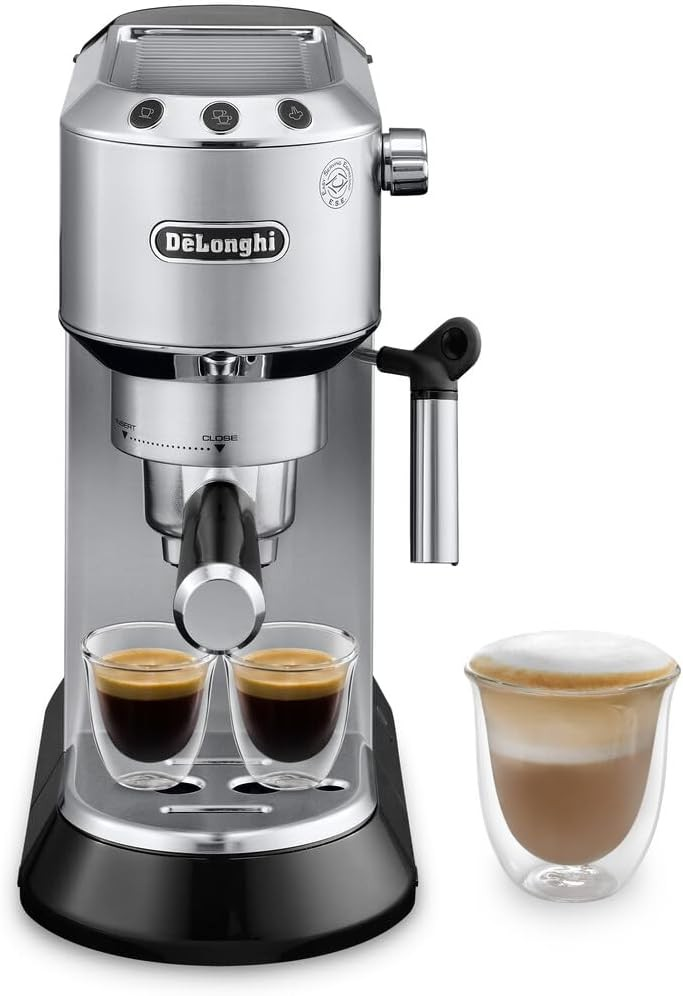 Dedica |
| Around $300 | Breville Bambino | Fast, controlled shots | 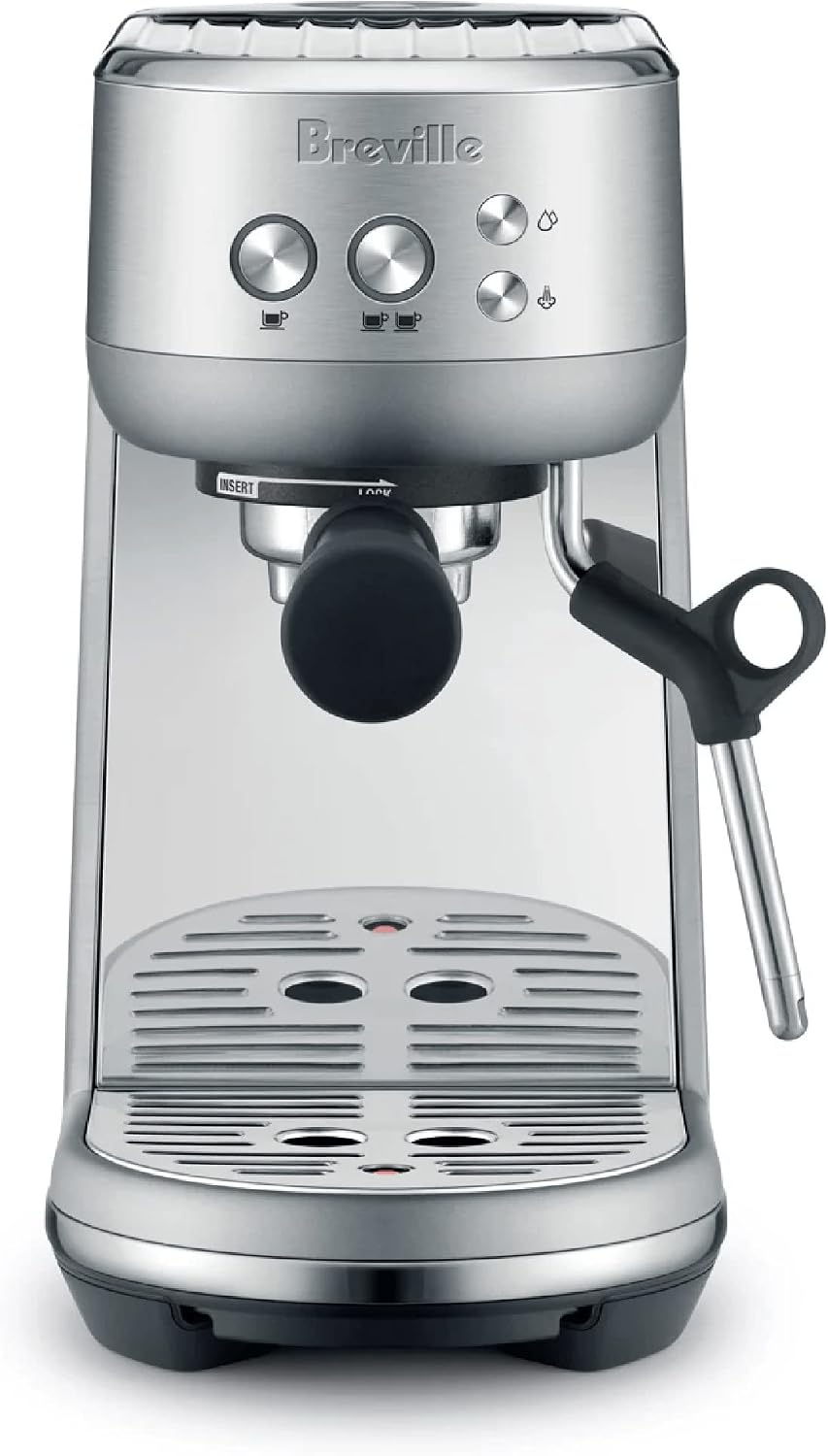 Bambino |
| Around $450 | Gaggia Classic E24 | Learning the craft | 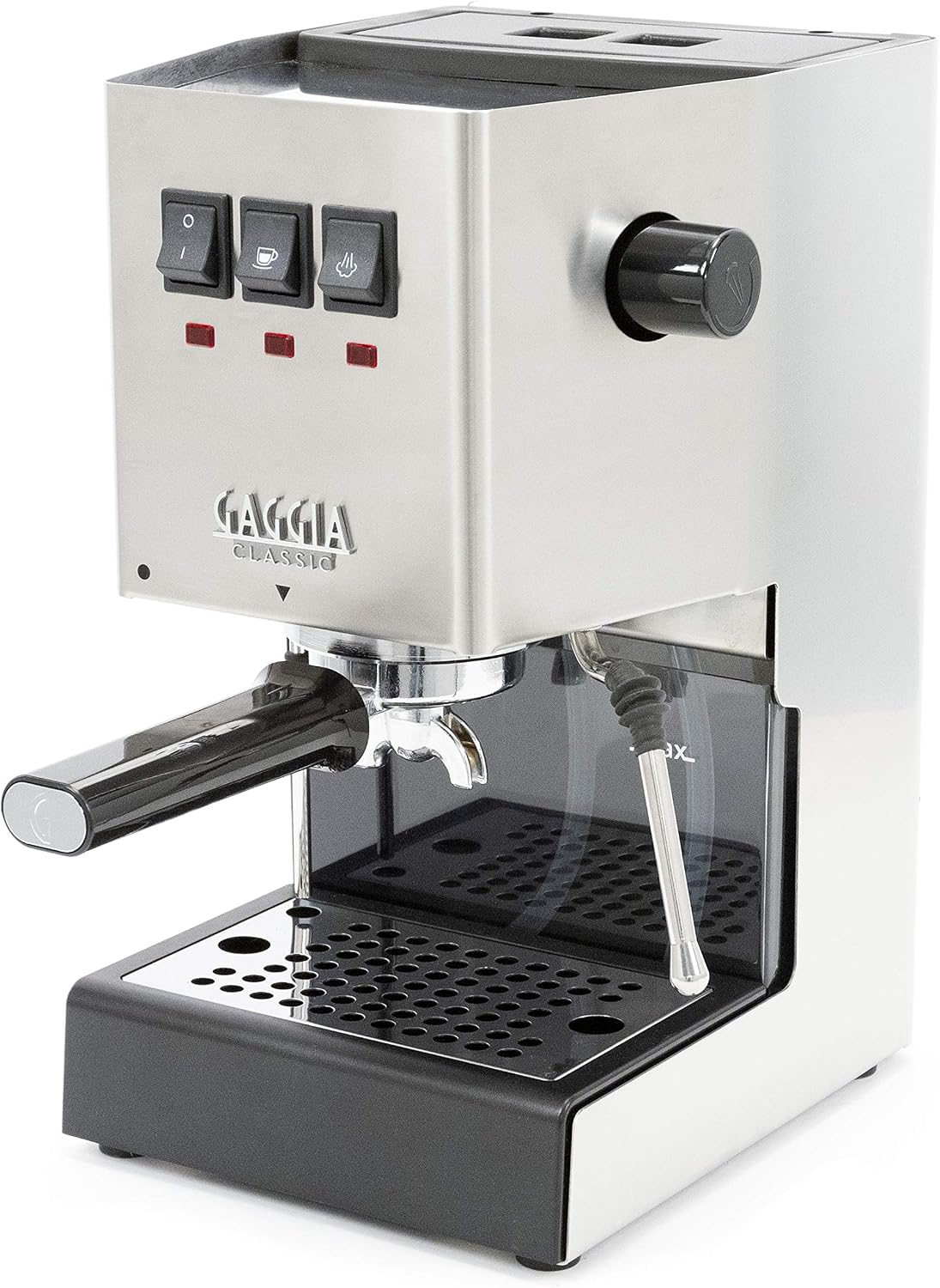 Gaggia Classic |
| Around $500 | Breville Bambino Plus | Easy milk drinks | 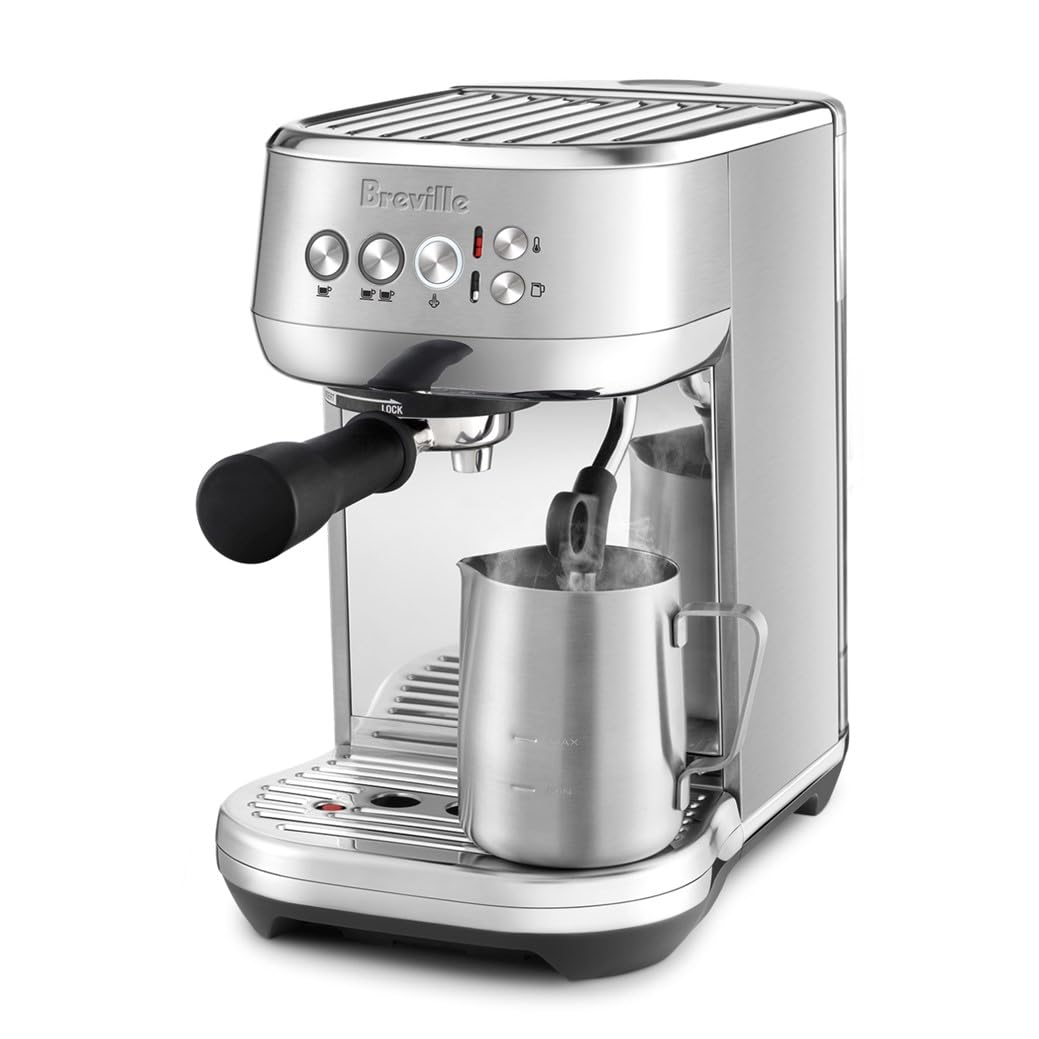 Bambino Plus |
1. De’Longhi Stilosa EC260BK: the low-risk starter
The Stilosa is about as simple as a pump espresso machine gets. De’Longhi lists a 15 bar pump, a stainless steel boiler, a manual milk frother and a two-level cup holder, and the box includes the portafilter, a tamper, single and double filters and a measuring spoon. De’Longhi’s own store showed it at $149.95.
It is a good way to find out whether you enjoy making espresso before spending more. You can pull a shot, steam milk for a latte, and learn the basic routine.
What you give up: fine control. There is little to adjust, and the frother is basic. If espresso becomes a habit, this is the machine you will outgrow first.
Cheapest real pump machine on the list. Check today’s Amazon price; it moves around.
Check the Stilosa Price →2. De’Longhi Dedica EC680M: for the narrowest kitchens
The Dedica’s selling point is its size. De’Longhi describes it as only about 6 inches wide, its slimmest espresso machine, which makes it one of the few that fits beside a toaster on a short counter. It uses a thermoblock heater with a 15 bar pump, has a manual milk frother, and takes cups up to about 5 inches tall.
It looks smarter than its price, and the thermoblock gets it to temperature without a long wait. It was about $237 on Amazon when we checked.
What you give up: room to grow. It is a step up in looks and footprint from the Stilosa more than in the cup, and serious shot control lives further up the ladder.
Fits where other machines will not. Measure your counter, then check the current price.
See the Dedica on Amazon →3. Breville Bambino: the best value for straight espresso
The Bambino is where the ladder gets serious. It has Breville’s ThermoJet heater, ready in about three seconds, PID temperature control that holds the brew water steady, low-pressure pre-infusion before full extraction, and a 54 mm portafilter built around an 18 g dose. Breville lists it at $299.95.
Those are the features our guide to what matters in a first espresso machine tells you to look for, at a price that still leaves money for a grinder. Pair it with a $200 espresso grinder and you are right at the $500 line with a setup that can make excellent shots.
What you give up: easy milk. The steam wand is manual, which is fine if you drink espresso and Americanos or want to learn to steam, but it is the difference you pay $200 more to remove.
Real temperature control at an entry price. The smartest base for a machine-plus-grinder budget.
View the Bambino on Amazon →4. Gaggia Classic E24: the one you can grow into
The Gaggia Classic is the traditional single boiler many home baristas start on, and the E24 is the latest version. Per Whole Latte Love’s listing, it has a 1,350 W brass boiler, a full-size 58 mm stainless portafilter, a pressure valve set for 9 bar extractions and a commercial-style three-way solenoid that dries the puck after each shot.
The 58 mm size matters more than it sounds. It is the standard most baskets, tampers and distribution tools are made for, so upgrades are easy to find. The machine is simple and repairable, which is why people keep them for years.
What you give up: speed and convenience. As a single boiler it has to switch between brewing and steaming, and it rewards practice more than it forgives mistakes. Our boiler types explainer covers the trade-off. It was about $450 on Amazon when we last checked.
For people who want to understand every shot. Full-size 58 mm parts and decades of community know-how.
Check the Gaggia Classic E24 →5. Breville Bambino Plus: the easy latte machine
The Bambino Plus has the same brewing hardware as the Bambino and adds the feature most people actually want: an automatic steam wand with three temperatures and three texture levels. Put the jug under it, press a button and walk away. It also comes with a 16 oz milk jug and a 64 fl oz water tank. Breville lists it at $499.
If your house runs on flat whites and cappuccinos, this is the machine on the list that makes that easiest. Our full Bambino Plus review goes through where it shines and where it does not.
What you give up: the grinder budget. At $499, the machine uses all of a $500 budget, so you will need to spend more for a grinder or buy pre-ground coffee for a while.
Café milk with no skill required. Amazon prices on the Plus change often, so check today’s.
See the Bambino Plus Price →Which one should you buy?
- Just curious about espresso: Stilosa.
- Very little counter space: Dedica.
- Mostly espresso and Americanos, want a grinder in the same budget: Bambino.
- Want a hobby and a machine you can upgrade: Gaggia Classic E24.
- Lattes every morning with no learning curve: Bambino Plus.
If nobody in your house will ever grind or tamp, none of these is quite right. Our comparison of semi-automatic and super-automatic machines for a busy household explains when a bean-to-cup machine is the better buy, even though it costs more.