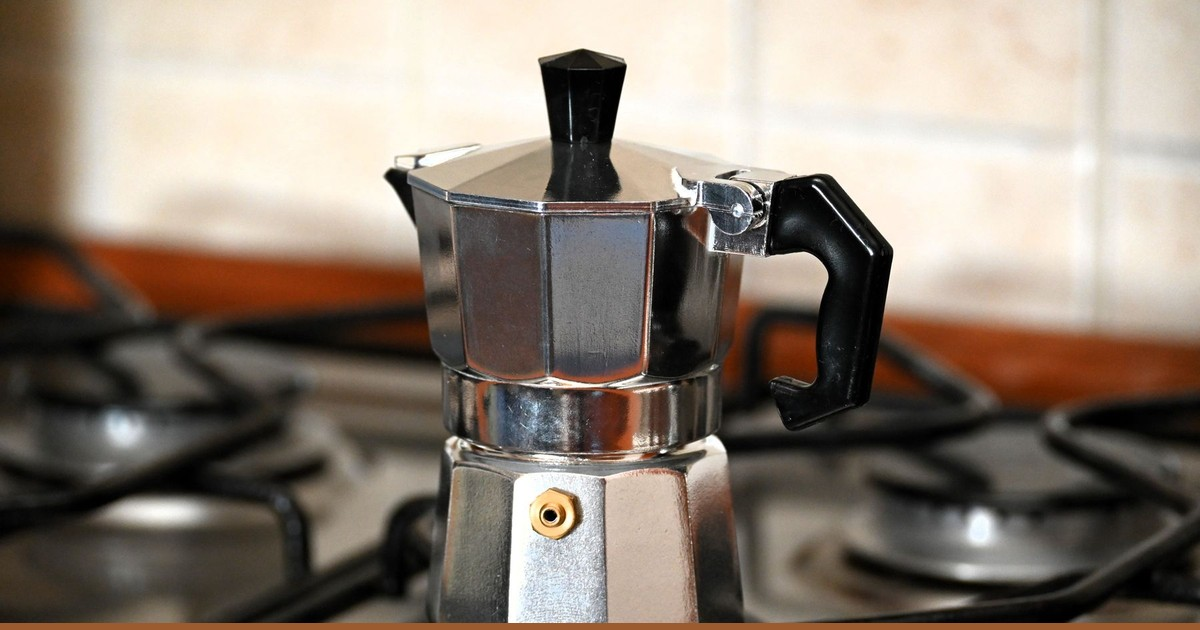
Moka Pot Guide: Stovetop Coffee Done Right
Almost everyone who owns a moka pot has made at least one cup that tasted burnt, metallic or just harsh. Usually the pot gets the blame. Most of the time it is the heat, the grind or the moment you took it off the stove.
Done right, a moka pot makes a strong, rich coffee that sits somewhere between a French press and an espresso. It costs less than a few weeks of café drinks, needs no electricity of its own and lasts for years. Here is how to brew it well, what gear actually helps, and how to fix the usual problems.
Disclosure: Espresso at Home is reader-supported. As an Amazon Associate we earn from qualifying purchases, at no extra cost to you.
How a moka pot works
The moka pot was invented in 1933 by Alfonso Bialetti, and the design has barely changed. Water in the bottom chamber heats up, steam pressure builds, and that pressure pushes hot water up through a funnel of ground coffee and into the top chamber.
It is not espresso. The pressure is far lower than an espresso machine’s 9 bar, so you will not get thick crema. What you get is a concentrated, full-bodied coffee that is great on its own, topped up with hot water, or with steamed milk. Seattle Coffee Gear compares it to a classic diner cup when brewed correctly.
What you need
| Gear | Why | Amazon | |
|---|---|---|---|
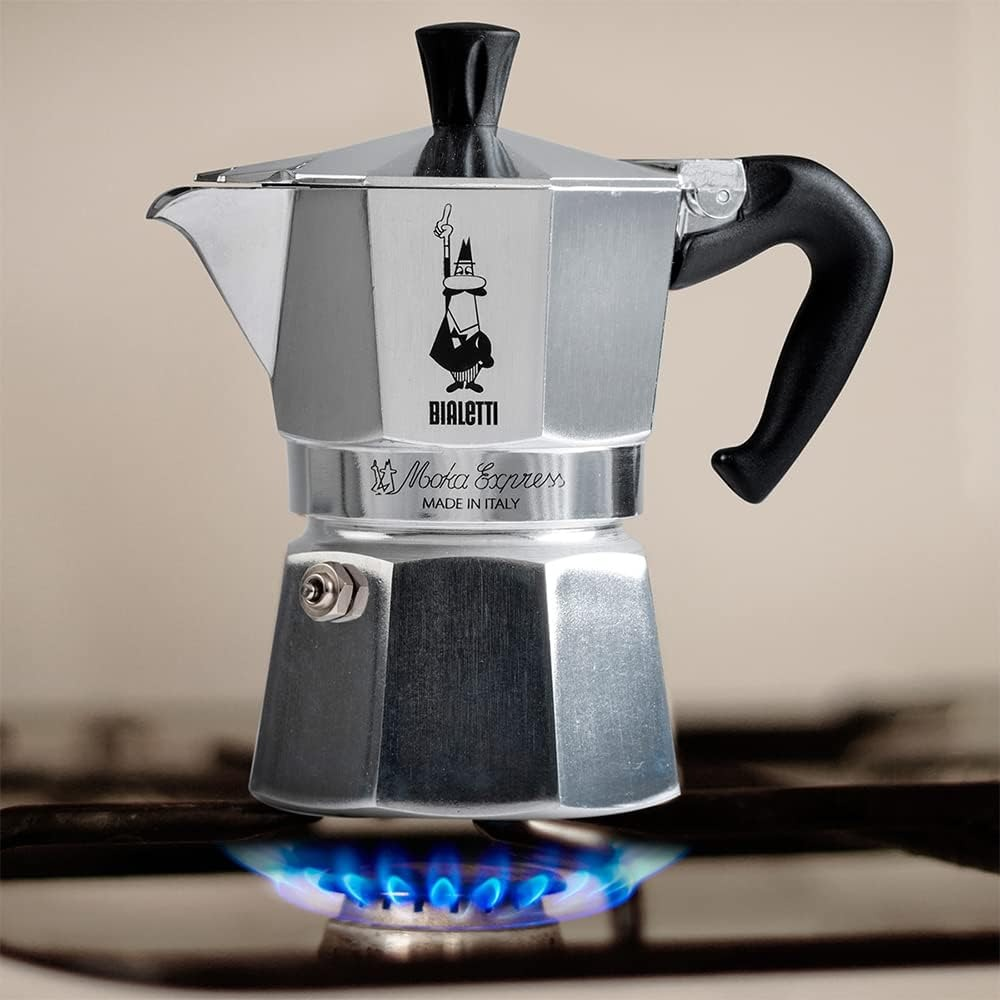 | Bialetti Moka Express 3-cup | The original aluminium pot | Check Price |
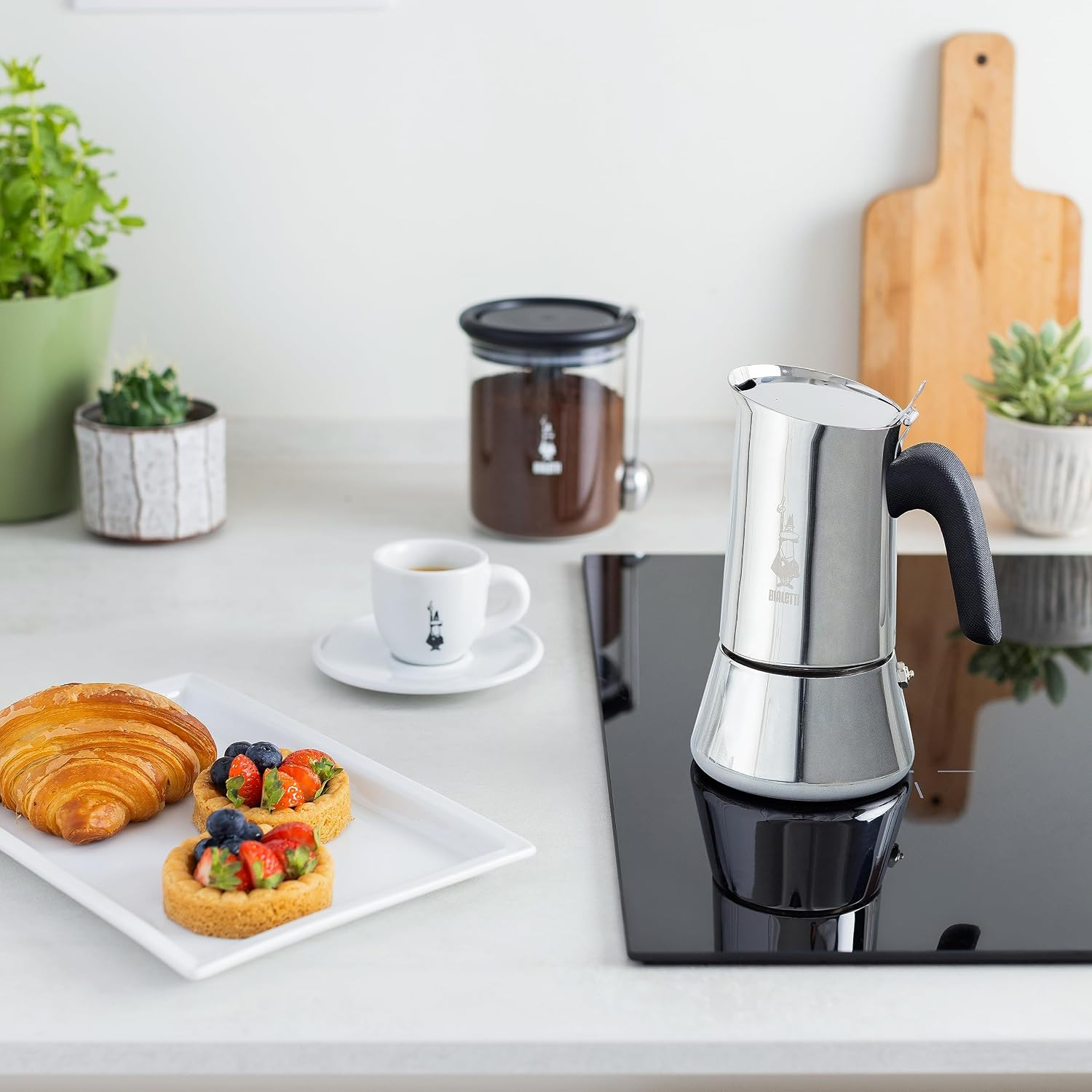 | Bialetti Venus 4-cup | Stainless steel, works on induction | Check Price |
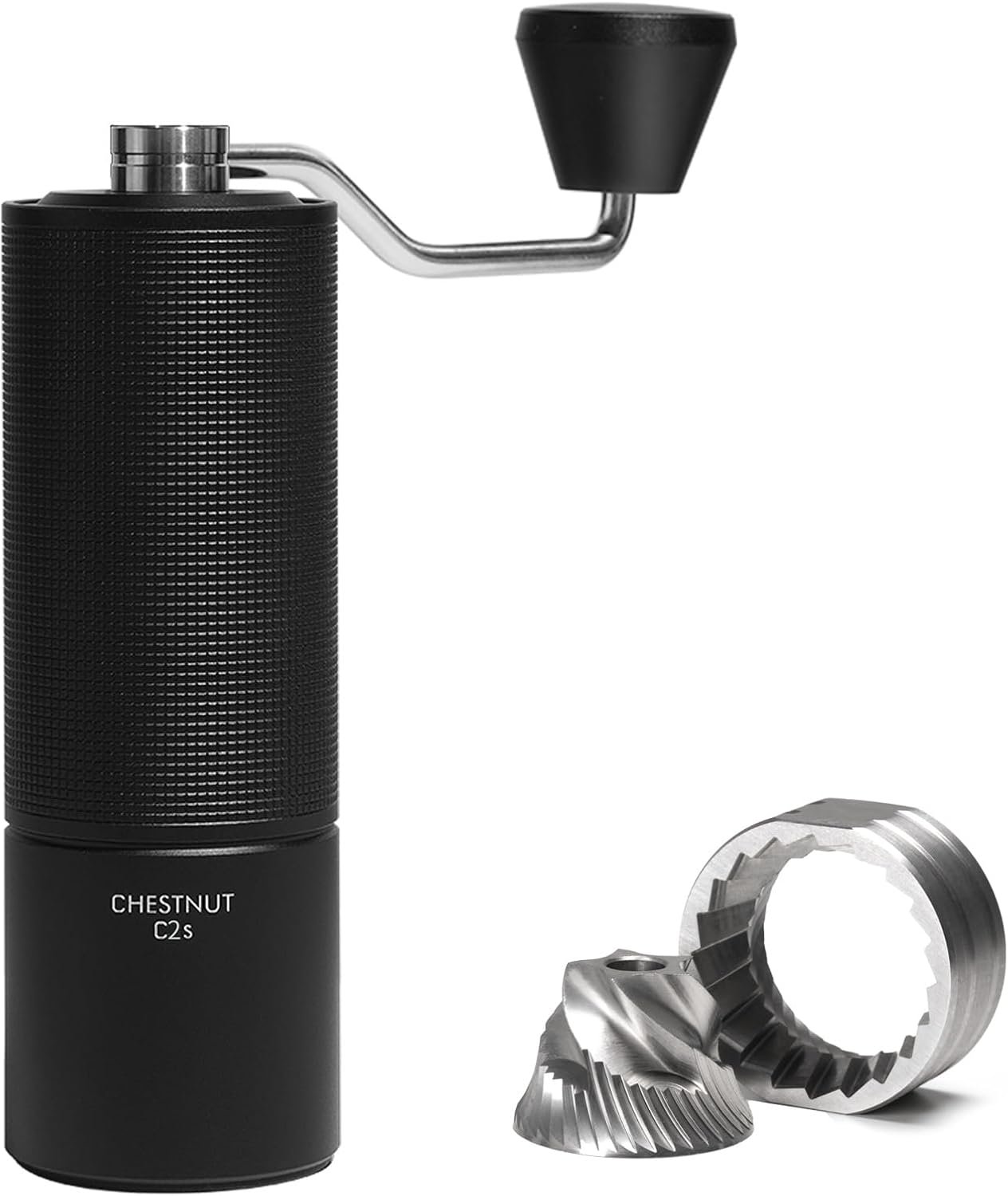 | Timemore Chestnut C2S | Fresh, even grind on a budget | Check Price |
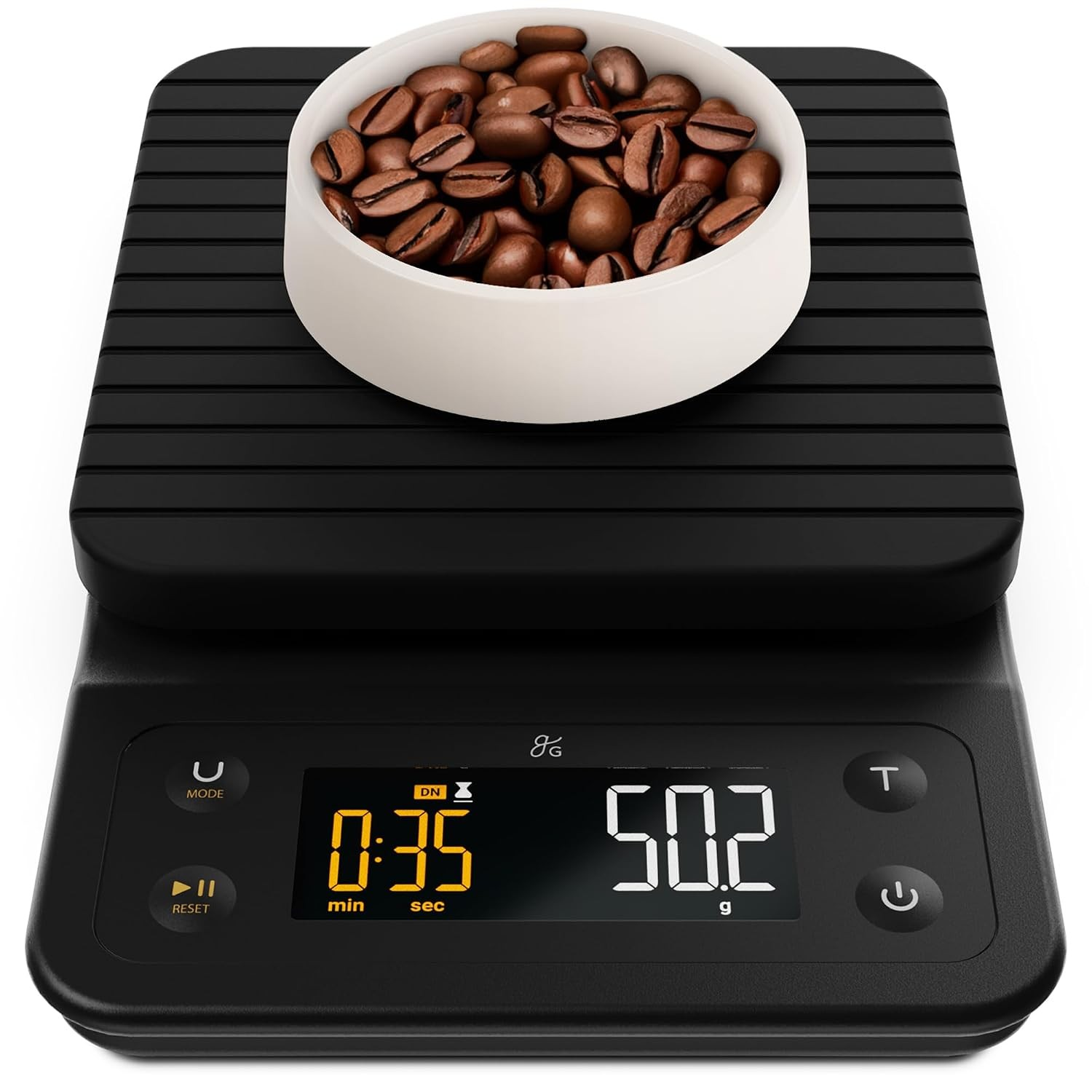 | Greater Goods scale | Repeatable doses | Check Price |
The pot: Bialetti Moka Express
The Moka Express is the eight-sided original. It is aluminium, made in Italy, and works on gas and electric hobs, and on induction with Bialetti’s adapter plate. Sizes are measured in espresso cups, not mugs, so a 3-cup pot makes enough for one person who likes a generous coffee, or two small ones. Buy a size you will fill every time; a half-filled funnel brews badly.
The classic for a reason. The 3-cup was about $40 on Amazon when we last checked.
Check the Moka Express Price →For induction hobs: Bialetti Venus
If your stove is induction, skip the adapter and get a stainless pot. The Venus is made of 18/10 stainless steel and Bialetti lists it as suitable for all hob types, including induction. The 4-cup size makes about 5.7 oz of coffee, according to the listing. Bialetti’s care instructions are the same as for the classic: rinse with water only, no detergent and no dishwasher.
Cooking on induction? The Venus brews directly on it, no adapter plate. It was about $50 on Amazon today.
See the Bialetti Venus →Step by step: brewing a good moka pot coffee
These steps follow Blue Bottle’s moka pot guide and Bialetti’s own instructions, with a few notes from experience.
- Grind your coffee. Aim finer than pour-over but coarser than espresso, roughly the texture of granulated sugar. For a 6-cup pot, Blue Bottle suggests about 20-22 g. A 3-cup pot takes roughly half that; the funnel itself is your measure.
- Fill the bottom with water up to the safety valve, never above it. Blue Bottle notes that starting with hot water speeds things up, and it also means the coffee spends less time sitting on a hot base. Use a towel or oven glove, since the base gets hot.
- Fill the funnel with coffee and level it. Fill it to the top and sweep off the excess with a finger. Do not tamp. Packing the coffee down can choke the flow.
- Wipe the rim and screw the top on firmly. Grounds on the thread or gasket are the main cause of leaks.
- Heat on medium or medium-low. On gas, keep the flame smaller than the base so it does not lick up the sides and scorch the handle.
- Watch and listen. Coffee will start to flow into the top. When you hear it start to hiss and gurgle, take the pot off the heat straight away. The last bit will finish flowing on its own.
- Pour and serve. Stir the coffee in the top chamber first, because the first and last parts to come through taste different.
Blue Bottle suggests brewing a couple of pots and pouring them away when the pot is new. It seasons the pot and gets rid of any manufacturing taste.
Why the grinder makes the biggest difference
Pre-ground coffee works in a moka pot, and Seattle Coffee Gear even mentions brands that sell grounds made for it. But fresh coffee ground just before brewing tastes noticeably sweeter and less harsh. The trick is getting the grind consistent, because a blade grinder’s mix of powder and chunks makes the pot sputter and taste bitter and sour at once.
A hand grinder like the Timemore C2S is an inexpensive way to get there. Its conical burrs give an even grind, and it covers the medium-fine range a moka pot wants without needing a socket on the counter. We compared it to other hand grinders in our hand grinder guide.
Fresh grounds, no plug needed. The C2S is one of the best-value hand grinders around.
Check the Timemore C2S →Weigh it once, repeat it every day
You do not need a scale to make moka coffee, but it helps you fix problems. Weigh the coffee that fills your funnel level, and the water up to the valve, once. Write those numbers down. Now when a cup tastes off, you know the dose was not the problem, and you can change the grind or the heat instead.
Make tomorrow’s cup match today’s. A 0.1 g scale with a timer was about $30 on Amazon last time we checked.
See the Greater Goods Scale →Troubleshooting the usual problems
- Bitter, burnt or metallic: the heat was too high or the pot stayed on too long. Turn it down, start with hot water, and take it off as soon as it gurgles.
- Weak and watery: the funnel was not full, or the grind was too coarse. Fill it level and go a little finer.
- Sputters violently or barely flows: the grind is too fine or the coffee was packed down. Go a step coarser and never tamp.
- Leaks around the middle: grounds on the rim, a loose join or a worn gasket. Wipe the rim, tighten firmly, and replace the rubber gasket when it gets hard or cracked.
- Takes forever: the heat is very low or you started with cold water. Use hot water from the kettle; do not just turn the flame up.
Cleaning and care
Let the pot cool before you take it apart. Seattle Coffee Gear advises against running a hot pot under cold water, because the quick temperature change strains the metal. Once it is cool, unscrew it, knock out the grounds, and rinse every part with warm water.
Skip the soap. Blue Bottle recommends rinsing with warm water only, since soap can leave a taste, and Bialetti’s care instructions say no detergent and no dishwasher. Every so often, take out the gasket and filter plate to rinse the gunk behind them, and dry everything before you screw it back together.
Making it a latte
Moka coffee is strong enough to stand up to milk. Heat milk in a pan or froth it with a handheld frother, then pour it over the coffee for a latte-style drink. It is not quite café microfoam, but it is a big step up from instant. For the cost side of the argument, see our home espresso vs café math, where a moka pot pays for itself in a couple of weeks.
Want frothy milk for a moka latte? Compare the options in the best milk frothers if you don’t own an espresso machine.