Best Hand Coffee Grinders for Travel and Small Kitchens
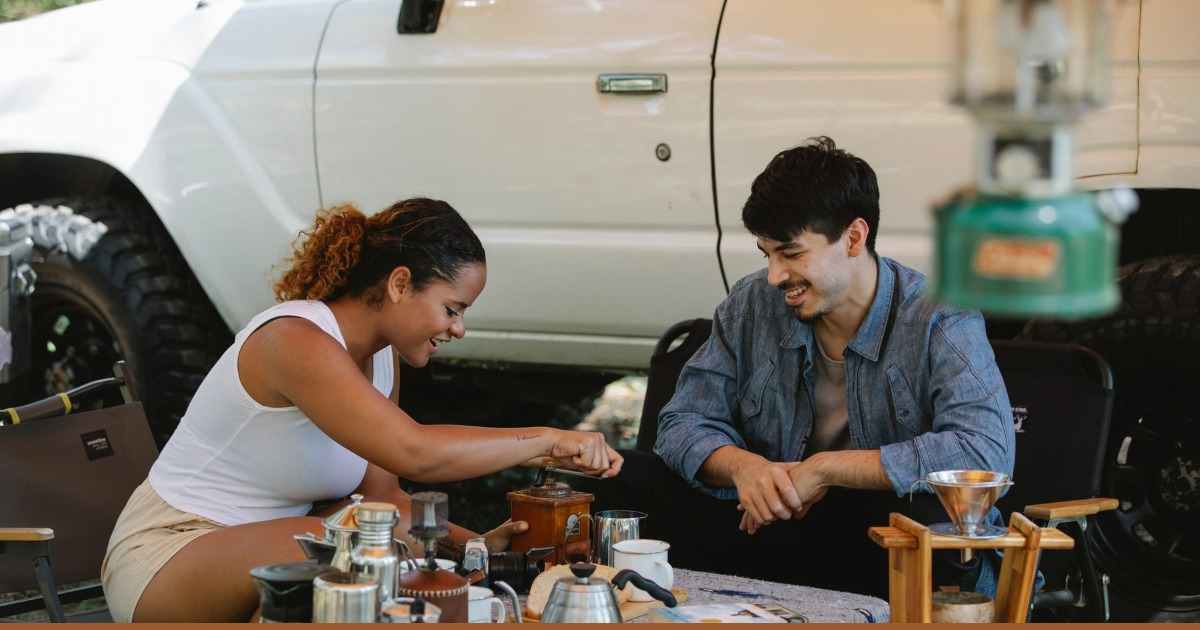
A good electric burr grinder is the size of a toaster, needs a socket and lives on the counter forever. That is fine in a big kitchen. It is a problem in a studio apartment, a rental with eight inches of free counter, a camper van, or a hotel room where you refuse to drink the pod coffee.
A hand grinder solves all of that. It fits in a drawer or a backpack, makes no noise at 6 a.m. when the rest of the house is asleep, and a decent one grinds more evenly than most electric grinders under $150. The trade-off is 30 seconds to a minute of cranking per cup.
We looked at what matters for travel and small spaces (weight, size, capacity, how the grind adjusts) and narrowed it to five grinders that cover every budget and brewing style.
Disclosure: Espresso at Home is reader-supported. As an Amazon Associate we earn from qualifying purchases, at no extra cost to you.
The short list
| Grinder | Best for | Weight | Capacity | |
|---|---|---|---|---|
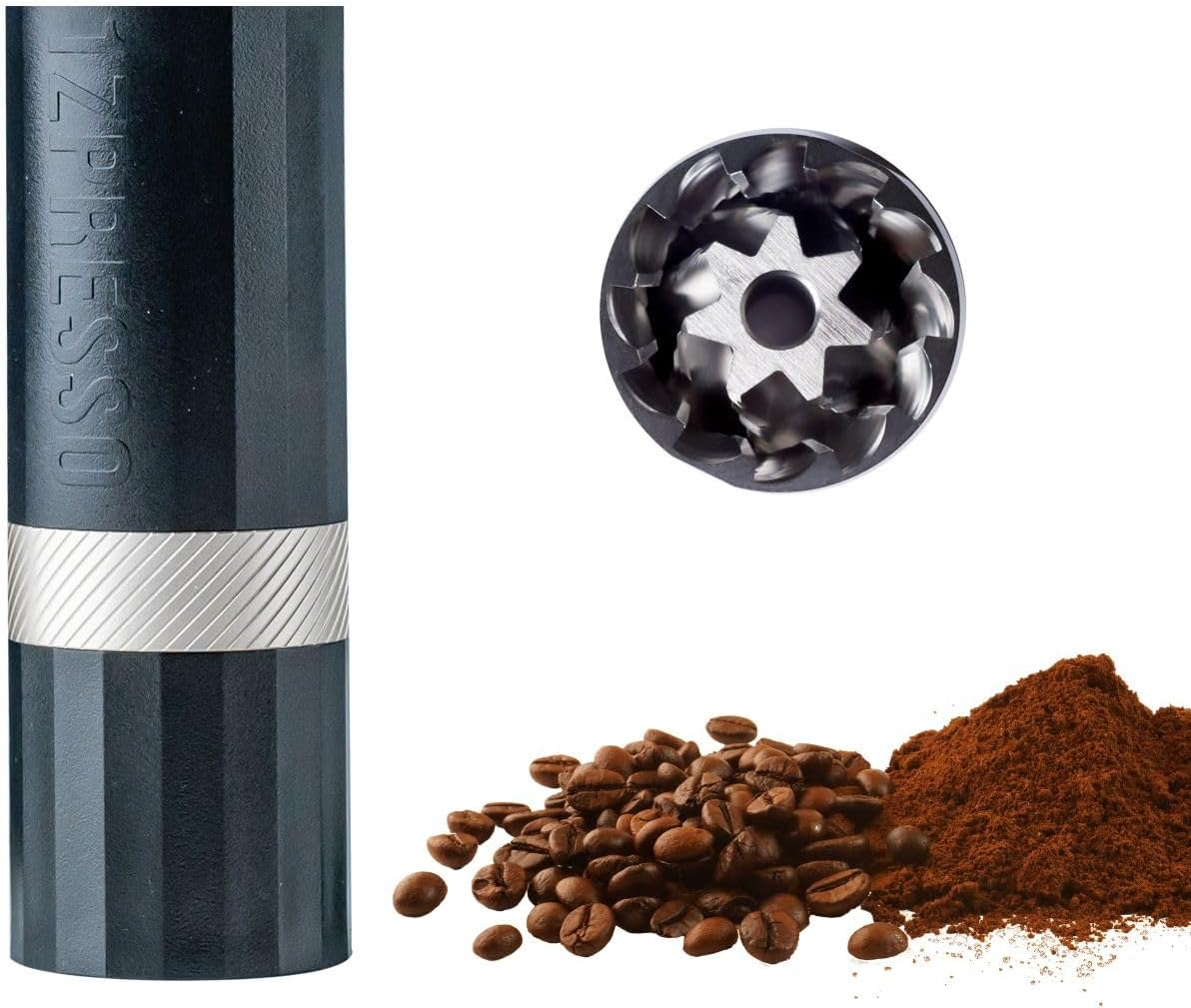 1Zpresso Q Air | Lightest travel kit, AeroPress users | 365 g | 15–20 g | Check Price |
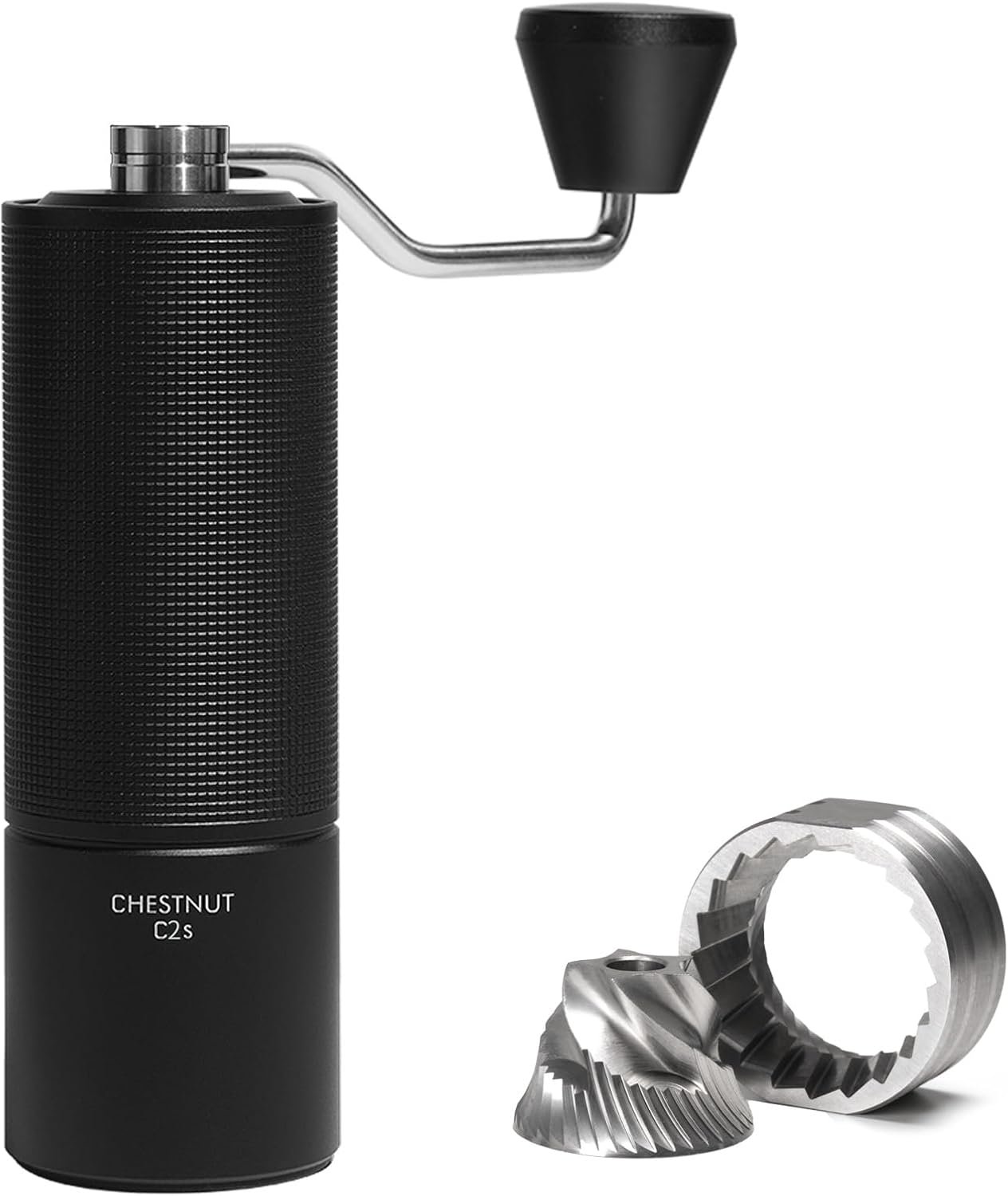 Timemore Chestnut C2S | Best value for drip and pour-over | Not listed | 25 g | Check Price |
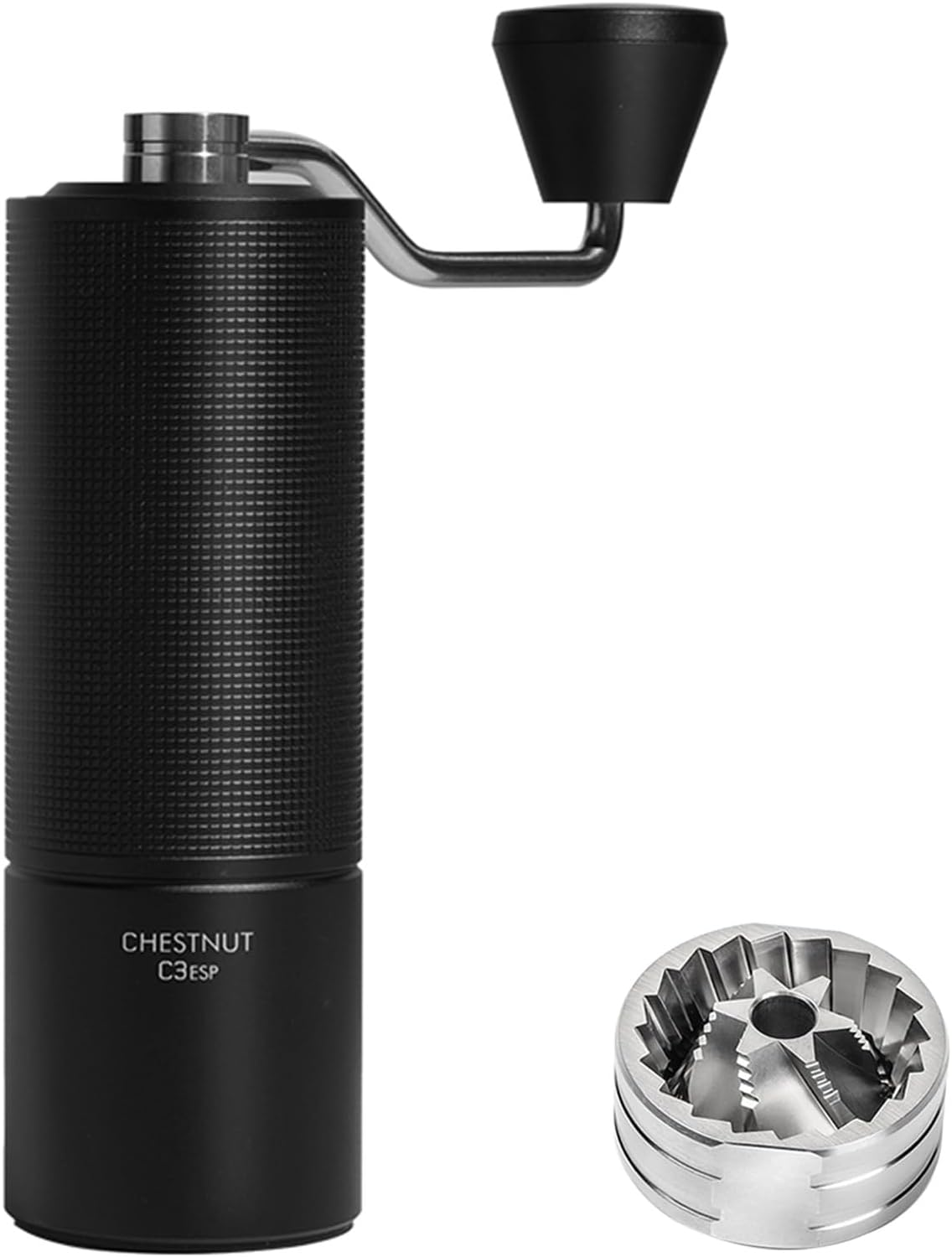 Timemore Chestnut C3 ESP | Small kitchens that also make espresso | 530 g | 25 g | Check Price |
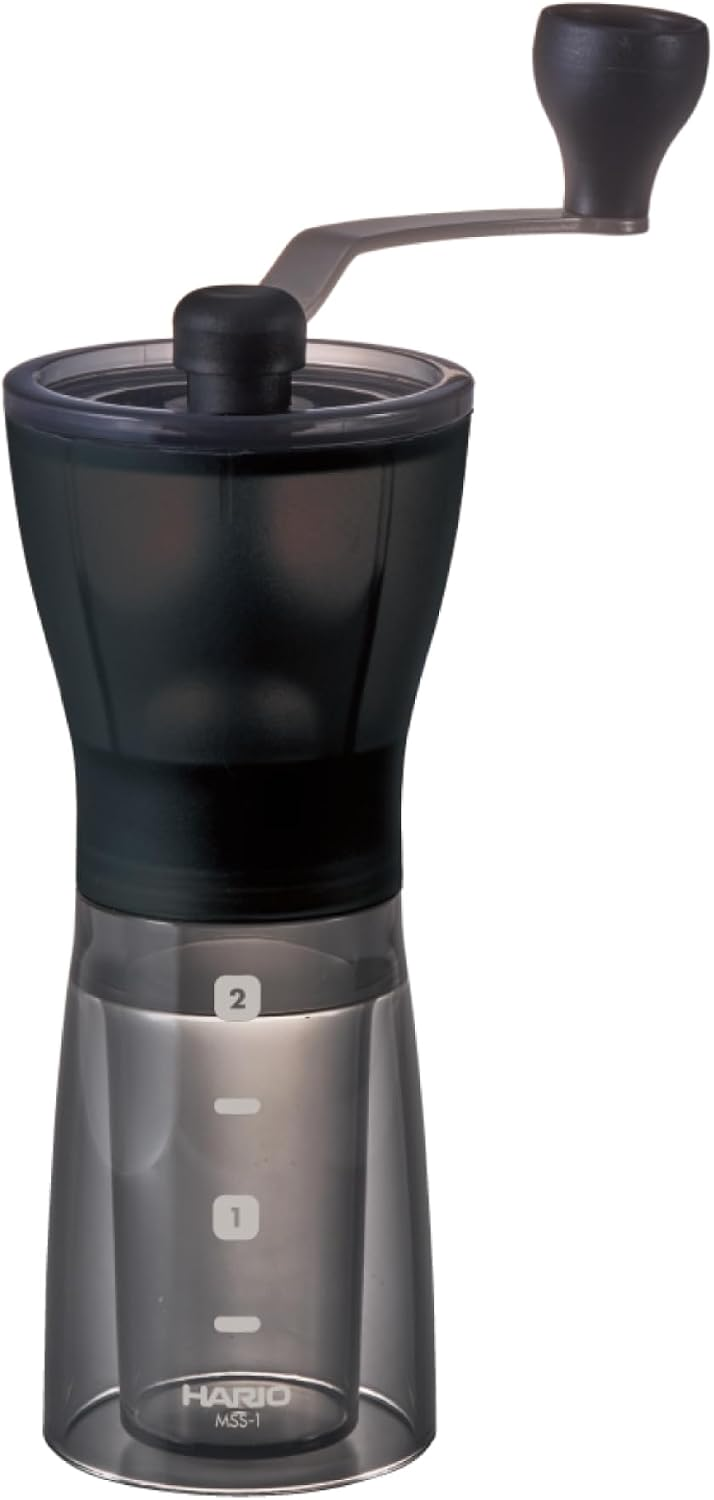 Hario Mini-Slim Plus | Tightest budget | 0.3 kg | Small | Check Price |
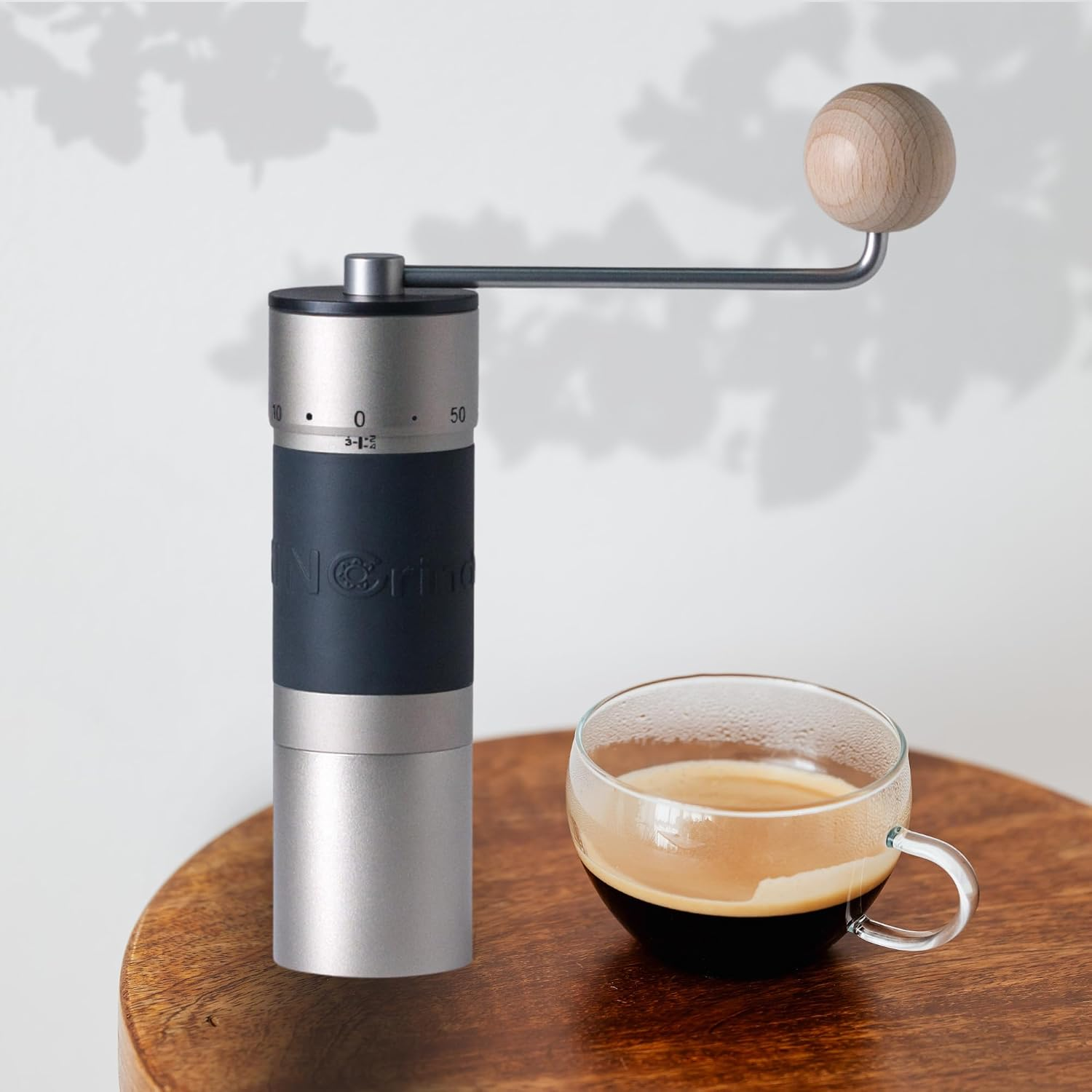 KINGrinder K6 | One grinder for everything at home | 630 g | 25–35 g | Check Price |
What actually matters in a travel or small-kitchen grinder
- Burrs, not blades. Every grinder here uses conical burrs. That is what gives you an even grind and a cup that does not taste muddy and sharp at the same time.
- Weight and shape. Under about 500 g packs easily. A slim body that nests inside a brewer is even better.
- Capacity. 15 to 20 g is one mug. 25 to 35 g covers two mugs or a small French press without refilling.
- Adjustment. Pour-over and French press are forgiving. Espresso needs very fine steps, which means more clicks per turn.
- Build. A metal body survives being thrown in a bag. Plastic saves weight but scuffs.
1Zpresso Q Air: the one that disappears into your bag
1Zpresso lists the Q Air at 365 g, the lightest model in its Q range, and the listing says it is smaller than a soda can. The party trick is that it slides inside the plunger of an AeroPress, so your whole brewing kit takes up the space of one brewer.
It holds 15 to 20 g, which is one generous mug, and has 30 clicks per rotation. It is built for pour-over, AeroPress and French press, not espresso. The body is plastic to keep the weight down, so it will pick up scuffs, but the burr is stainless steel.
If you want the same size in metal, the Q2 S is its aluminium sibling at 465 g with a heptagonal burr.
Packing light? The Q Air was about $69 on Amazon when we checked, and it is the easiest grinder here to forget is in your bag.
See the Q Air on Amazon →Timemore Chestnut C2S: the sensible all-rounder
The C2 earned its reputation as the budget grinder that punched above its weight. The C2S is Timemore’s update, with a full metal body that fixes the original’s fragile top cover.
It holds 25 g, enough for two cups, and Timemore says the 52 mm body is easy to grip even for small hands. Adjustment is by a nut under the burr with roughly 36 settings, plenty for drip, pour-over and French press. Double bearings keep the burr centred, which is what makes the grind consistent.
This is the one we would buy for a small kitchen if you never plan to make espresso.
Best bang for the buck. The C2S was about $60 on Amazon when we checked.
Check the C2S Price →Timemore Chestnut C3 ESP: for the tiny-kitchen espresso setup
Lots of people with small kitchens pair a compact espresso machine with a hand grinder because electric espresso grinders are big and expensive. The C3 ESP is built for exactly that. Timemore lists it at 530 g with 25 g capacity and S2C steel burrs, and it adjusts in 30 clicks per full turn, fine enough to dial in a shot.
It still grinds coarse enough for filter coffee, so it can be your only grinder. It is heavier than the Q Air, and grinding fine for espresso takes real effort, so it suits home use more than daily travel.
Making espresso in a small space? Pair the C3 ESP with a compact machine and skip the bulky electric grinder.
View the C3 ESP on Amazon →Hario Mini-Slim Plus: the budget starter
Hario’s little mill has been the first hand grinder for a huge number of coffee drinkers. It uses ceramic conical burrs, the crank pops off for packing, and the listing puts it at 0.3 kg.
It is noticeably less consistent than the Timemore and 1Zpresso grinders, especially at coarse settings for French press, and grinding takes longer. But it is a real burr grinder for well under $50, which beats a blade grinder or pre-ground coffee every time.
On a tight budget? The Mini-Slim Plus was about $38.50 on Amazon when we checked.
See Today’s Price →KINGrinder K6: the one grinder for home
If your grinder will mostly live in a kitchen drawer and only occasionally travel, the K6 gives you the most control. Its adjustment ring sits on the outside, so you can change settings without taking the grinder apart, and the listing says it moves 16 microns per click, 60 clicks per rotation.
The hopper takes 25 to 35 g, the largest here, and the body is aluminium with a stainless burr. At 630 g it is the heaviest on our list, which is the price of the bigger capacity.
Want espresso-to-French-press range in one grinder? The K6 was about $93 on Amazon when we checked.
Check the K6 on Amazon →Looking after a hand grinder on the road
Hand grinders need very little care, but travel adds a few habits. Grind straight into the catch cup and tap it out completely before you pack it, or old grounds will go stale in the bag and end up in tomorrow’s cup.
Never wash the burrs with water unless the maker says you can; a dry brush is enough day to day. Every few weeks, take the burr out (most of these come apart by hand) and brush away the oily dust that builds up around it.
Finally, note your setting. Counting clicks from fully closed makes it easy to get back to your usual grind after you change it for a different brewer.
Which one should you buy?
- You travel with an AeroPress: 1Zpresso Q Air.
- Small kitchen, pour-over or drip only: Timemore C2S.
- Small kitchen with an espresso machine: Timemore C3 ESP or KINGrinder K6.
- Just want to stop buying pre-ground: Hario Mini-Slim Plus.
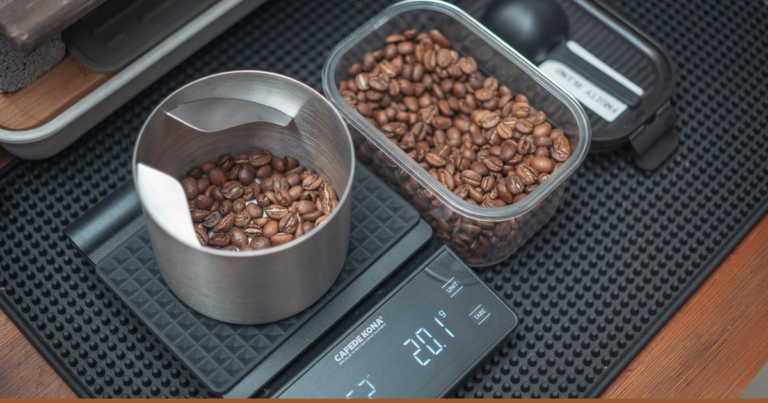
One habit makes any of these better: weigh your beans. A cheap scale takes the guesswork out of the dose and lets you repeat a good cup. If you are still choosing a brewer to go with your grinder, read our AeroPress vs French press comparison.
Grinding decaf? Start a step or two coarser than usual; our decaf guide explains why.
Ready for an electric grinder? See our picks for the best espresso grinders for home.
Still deciding whether you need burrs at all? We settle it round by round in burr vs blade coffee grinders.
A hand grinder is the heart of a good desk kit. See our office coffee setup that beats the break room.
Taking a grinder on a trip? Our guide to making good coffee while camping or traveling covers the rest of the kit.
More guides
- AeroPress vs French Press: Which Brewer Fits Your Mornings?
- Pour-Over Coffee for Beginners: The Gear You Need
- Setting Up a Home Coffee Bar in a Small Kitchen
- Espresso Accessories Worth Buying (and Ones to Skip)