Single Boiler, Heat Exchanger or Dual Boiler, Explained
Spend ten minutes reading espresso machine listings and you hit the same three phrases: single boiler, heat exchanger, dual boiler. They get thrown around as if everyone knows what they mean, and the price jump between them is huge, from a few hundred dollars to well over two thousand.
The boiler setup is not about espresso quality on its own. A well-handled single boiler can pull a shot as good as a dual boiler. What it changes is workflow: how long you wait, whether you can steam milk while the shot runs, and how much you have to think about temperature. Once you know how each design works, it is much easier to tell which one your mornings need.
Disclosure: Espresso at Home is reader-supported. As an Amazon Associate we earn from qualifying purchases, at no extra cost to you.
Why espresso machines need two temperatures
Espresso brews best with water a little below boiling. Steaming milk needs real steam, which means water well above boiling, under pressure. One machine has to do both jobs. Every design on this page is a different answer to that one problem.
Single boiler: one tank, two jobs, one at a time
A single boiler machine has one small boiler. It sits at brew temperature while you pull your shot. Flip the steam switch and the heater pushes the same boiler up to steam temperature. When you are done steaming, you usually run some water through the group to bring it back down before the next shot.
What you get: low price, compact size, simple parts that are easy to repair. What you give up: you cannot brew and steam at the same time, and making several milk drinks in a row means waiting between them.
For someone who makes one or two drinks in the morning, or mostly drinks straight espresso and Americanos, that trade-off barely matters.
Gaggia Classic E24: the single boiler most people start with
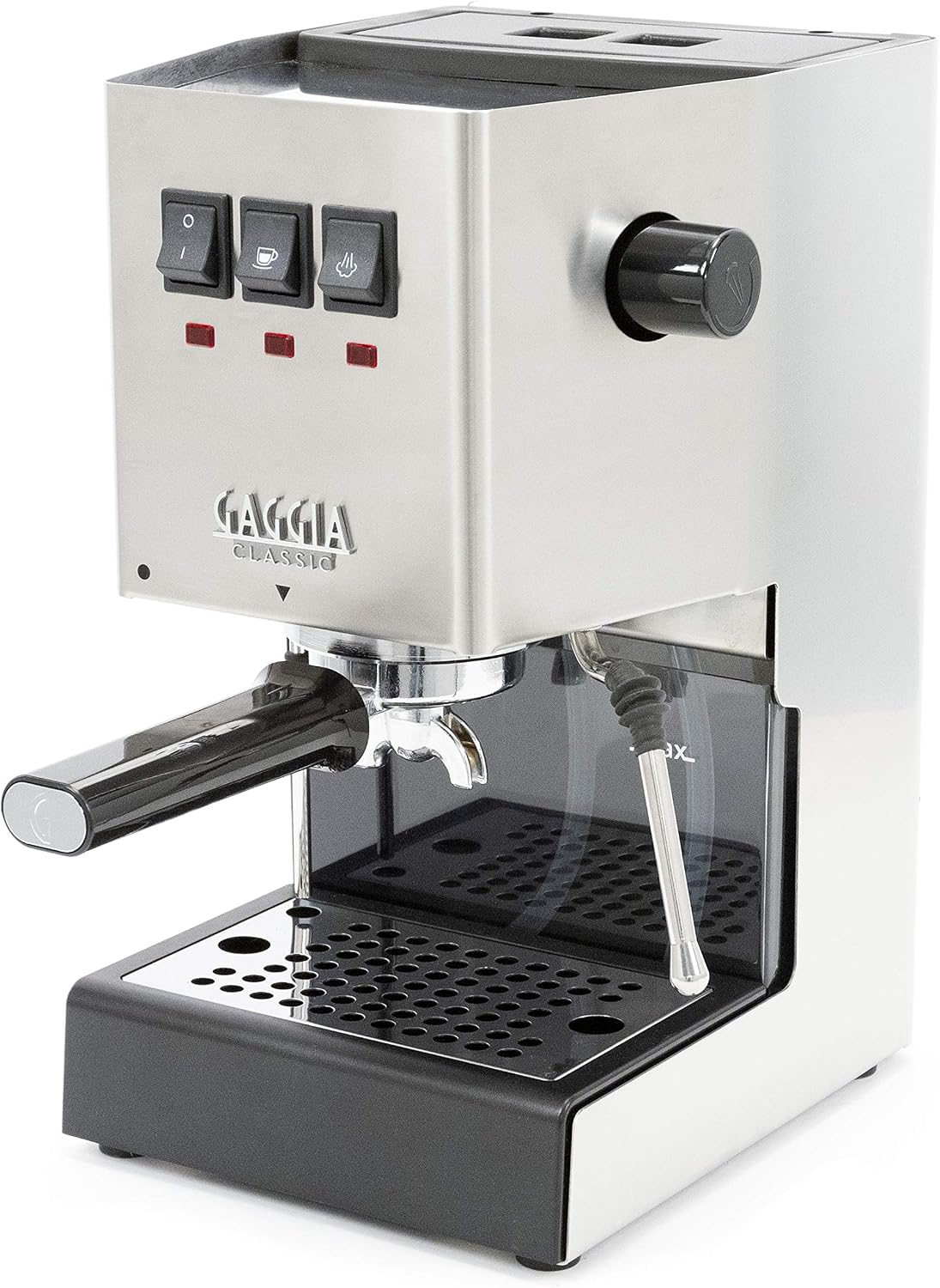
The Classic has been around for decades and the E24 is the latest version. According to Whole Latte Love’s listing, it moves to a brass boiler (rated at 1,350 W), adds a stainless steel 58 mm portafilter, updates the pressure valve to give 9-bar extractions, and keeps the commercial-style three-way solenoid that dries out the coffee puck after each shot. The reservoir holds 72 fl oz.
It is the textbook single boiler. You will learn temperature surfing and steam switching, and in return you get a machine that is cheap to keep running for years.
Learning espresso on a budget? The E24 was about $450 on Amazon when we checked (Whole Latte Love listed it at $499).
See the Gaggia E24 on Amazon →Heat exchanger: one big boiler with a shortcut
A heat exchanger (HX) machine has one large boiler that stays at steam temperature all the time, so steam is always ready. Brew water does not come from that boiler. It travels from the tank through a copper tube that runs through the steam boiler, picking up heat on the way to the group head.
Because the steam boiler is always hot, you can pull a shot and steam milk at the same time, which is why HX machines were the standard in cafés for decades.
The quirk: if the machine has been idle, water sitting in the exchanger can overheat. Many HX owners run a short “cooling flush” before the shot to get rid of it. Newer HX machines add temperature adjustment to reduce the guesswork.
Rocket Appartamento TCA: a compact HX with temperature control
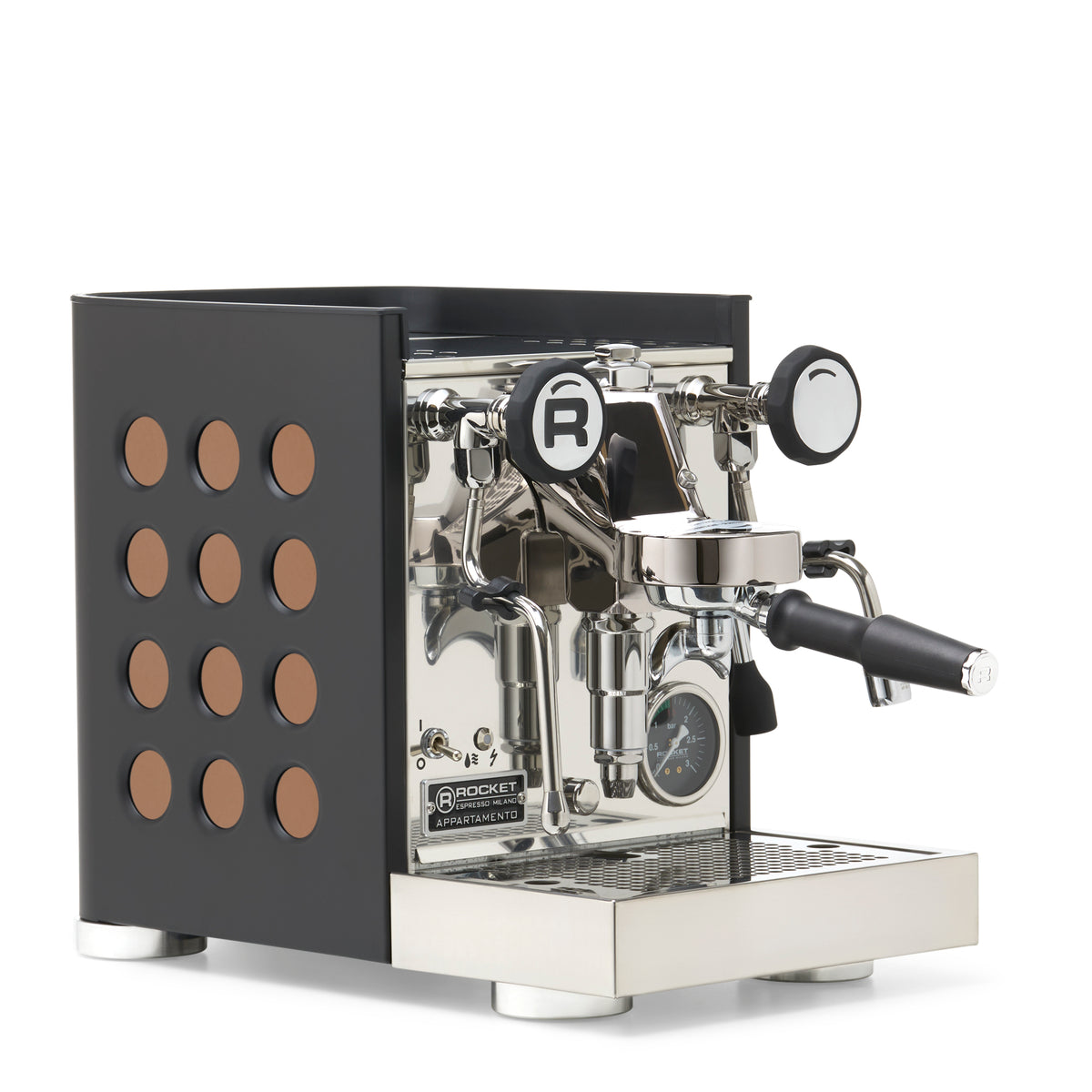
Rocket’s own spec sheet lists a 1.8 L heat exchanger boiler, a 1.9 L water tank, a 1,200 W element and a weight of 22 kg. TCA stands for Temperature Control Adjustment; Whole Latte Love describes it as four temperature settings you can switch between, which takes much of the guesswork out of the cooling flush routine.
It is narrow (270 mm wide) for a machine of this type, so it fits under kitchen cabinets better than most prosumer machines. Whole Latte Love listed it at $2,050 when we checked. On Amazon it mostly appears in bundles, so compare carefully.
Want café-style workflow in a smaller footprint? Check the current Appartamento listings and bundles.
Search Rocket on Amazon →Dual boiler: two separate boilers, no compromises
A dual boiler machine does what the name says. One boiler is dedicated to brewing, held at a precise temperature, usually by a PID controller. A second boiler makes steam. They do not affect each other, so you can steam and brew at the same time with no flushing and no waiting.
What you get: the most consistent shot temperature, adjustable brew temperature to suit different roasts, and the fastest workflow for back-to-back milk drinks. What you give up: price, size, weight, and more parts that can fail. Two boilers also mean more water to heat, so warm-up and energy use go up.
Breville the Dual Boiler: the most accessible true dual boiler
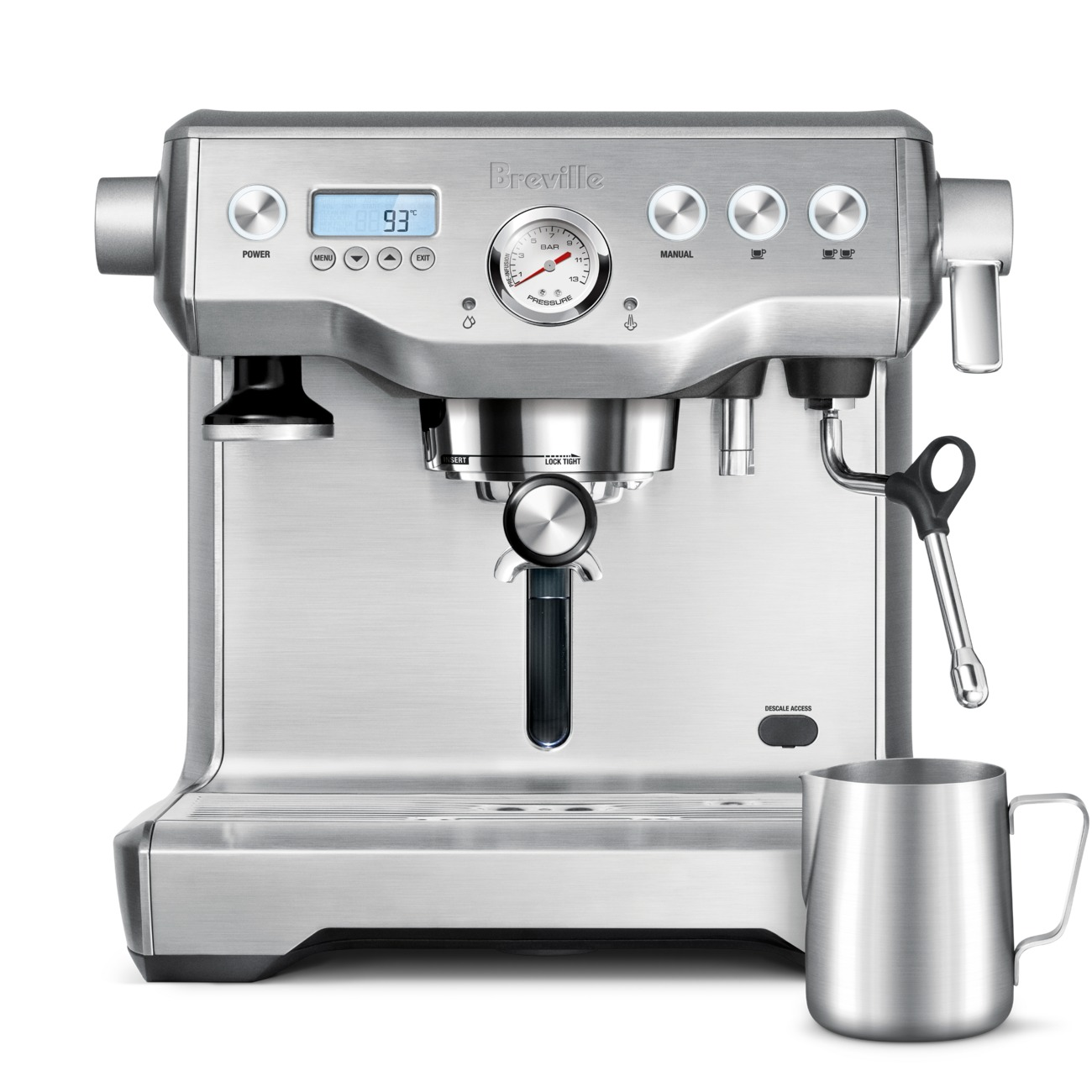
Breville’s page describes stainless steel dual boilers with PID control, a heated group head, and “simultaneous extraction & steam”. It adds low-pressure pre-infusion before the 9-bar extraction, and Seattle Coffee Gear’s guide lists an 84 fl oz (2.5 L) top-fill tank.
Breville lists it at $1,599.95, well below most European dual boilers, which is why it is so common in home setups. It is built more like an appliance than a heavy Italian machine, but if you make several lattes every morning it removes almost all of the waiting.
Making milk drinks for the whole house? Compare current prices before you buy, since availability shifts.
Search the Dual Boiler on Amazon →What about machines with no boiler at all?
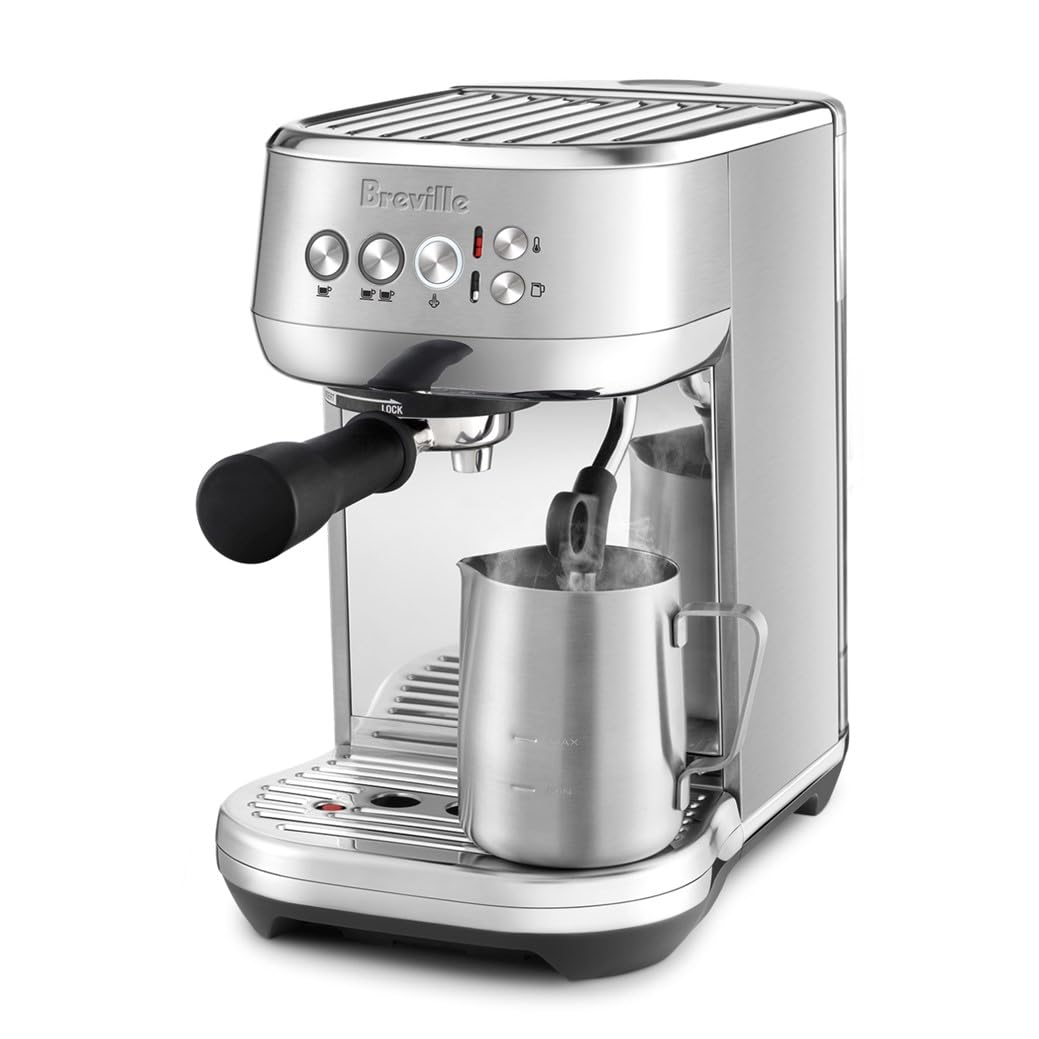
Many entry-level machines skip the boiler and use a thermoblock or, in Breville’s case, a “thermojet”: water is heated on demand as it passes through a heated block. The Bambino Plus is ready in about three seconds and switches to steam almost as quickly. You cannot brew and steam together, and the steam is weaker than a big boiler’s, but for one or two drinks it is the fastest and most compact option.
Short on counter space and patience? The Bambino Plus is the quickest way from switch-on to latte.
Check the Bambino Plus Price →Quick comparison
| Design | Brew + steam together? | Warm-up and workflow | Typical buyer |
|---|---|---|---|
| Thermoblock / thermojet | No | Seconds; small batches | One or two drinks, tiny kitchen |
| Single boiler | No | Wait to switch between brew and steam | Espresso drinkers, tinkerers, tight budget |
| Heat exchanger | Yes | Cooling flush on many models | Several milk drinks, likes a hands-on routine |
| Dual boiler | Yes | Set the temperature and forget it | Lots of milk drinks, wants precision |
How to choose
- Count your milk drinks. Zero or one a day: single boiler or thermojet. Three or more back-to-back: HX or dual boiler.
- Decide how hands-on you want to be. If a cooling flush sounds annoying, skip HX and go dual boiler.
- Measure your counter. HX and dual boiler machines are deep, heavy and need clearance above for filling the tank.
- Budget for the grinder. A cheap grinder will hold back an expensive machine. Keep a few hundred dollars aside for it.
If you are still deciding whether home espresso pays off at all, our home espresso vs café cost breakdown runs the numbers.
Whatever boiler you choose, the grinder matters just as much. Here are the best espresso grinders for home.
Whichever machine type you choose, budget properly for the grinder too: here is why it matters more than the machine.
Want the full picture on the thermojet option? See our Bambino Plus review.
More guides
- Home Espresso vs a Café Habit: The Real Math
- Moving On From Pods: Alternatives to a Nespresso
- Espresso Accessories Worth Buying (and Ones to Skip)
- Best Hand Coffee Grinders for Travel and Small Kitchens
Whatever boiler your machine has, minerals build up inside it. See how to descale an espresso machine at home, and which machines should go to a pro instead.