Water for Coffee: Filters, Hardness and Scale
If your coffee tastes flat no matter which beans you buy, or your kettle has a white crust inside, the problem may be coming out of the tap. Brewed coffee is almost all water, and the minerals in that water decide both how the cup tastes and how long your machine lives.
The good news is that fixing it is cheap. You need to know what is in your water, then pick the simplest treatment that gets it into a sensible range. Here is how to do that without turning your kitchen into a chemistry lab.
Disclosure: Espresso at Home is reader-supported. As an Amazon Associate we earn from qualifying purchases, at no extra cost to you.
What actually matters in coffee water
Three things do most of the work: hardness, alkalinity and chlorine. Everything else on a water report is detail.
Hardness: flavor helper, machine killer
Hardness is mostly calcium and magnesium. Some of it is good, because those minerals help pull flavor out of the coffee. Too much of it turns into scale inside anything that heats water. Seattle Coffee Gear uses a simple scale: under about 60 ppm is soft, 60 to 120 is moderately hard, 120 to 180 is hard, and anything above 180 is very hard. If your report uses grains per gallon, one grain is roughly 17 ppm.
For espresso machines, Clive Coffee recommends keeping total hardness between 35 and 85 ppm, and calls scale from hard water the single biggest cause of espresso machine failure. It also notes that scale damage generally is not covered by warranty.
Alkalinity: the flavor flattener
Alkalinity is a different measurement from hardness, even though the two often travel together. It works like a buffer against the acids in coffee. A little keeps the cup balanced. A lot mutes the brightness and fruit you paid for, and leaves coffee tasting dull and chalky.
Chlorine: always remove it
City water is disinfected with chlorine or chloramine, and both come through in the cup as a medicinal or swimming-pool note. There is no amount of chlorine that improves coffee, which is why an activated carbon filter is the minimum for anyone on municipal water.
The reference numbers
If you like targets, the Specialty Coffee Association’s brewing water standard, as summarized here, aims for about 150 mg/L total dissolved solids (75 to 250 acceptable), calcium hardness around 68 mg/L, alkalinity near 40 mg/L, a pH close to 7, no chlorine at all and sodium around 10 mg/L. You do not need to hit those exactly. Getting chlorine out and hardness into a moderate range covers most of the benefit.
What does not help
Two shortcuts sound sensible and cause problems.
Straight distilled or reverse osmosis water. With nothing dissolved in it, coffee tastes flat and hollow. Seattle Coffee Gear also points out that mineral-free water pulls minerals out of the brass, copper and steel inside a machine, and that machines which sense water level with a small electrical current may think the tank is empty. Pure water is a good starting point, not a finished product.
Water from a salt-based softener. A household softener swaps calcium and magnesium for sodium. That stops scale but leaves alkalinity where it was, so coffee can taste flat and slightly salty, and sodium-heavy water is harder on boilers. If your house has a softener, run coffee water from an unsoftened tap or a separate filter.
Step one: find out what you have
Start with your water utility’s annual water quality report, which usually lists hardness. Then test what actually comes out of your tap, because the report is an average and well water has no report at all. The physical signs help too: white crust on faucets, spots on glassware and scale in the kettle all point to hard water.
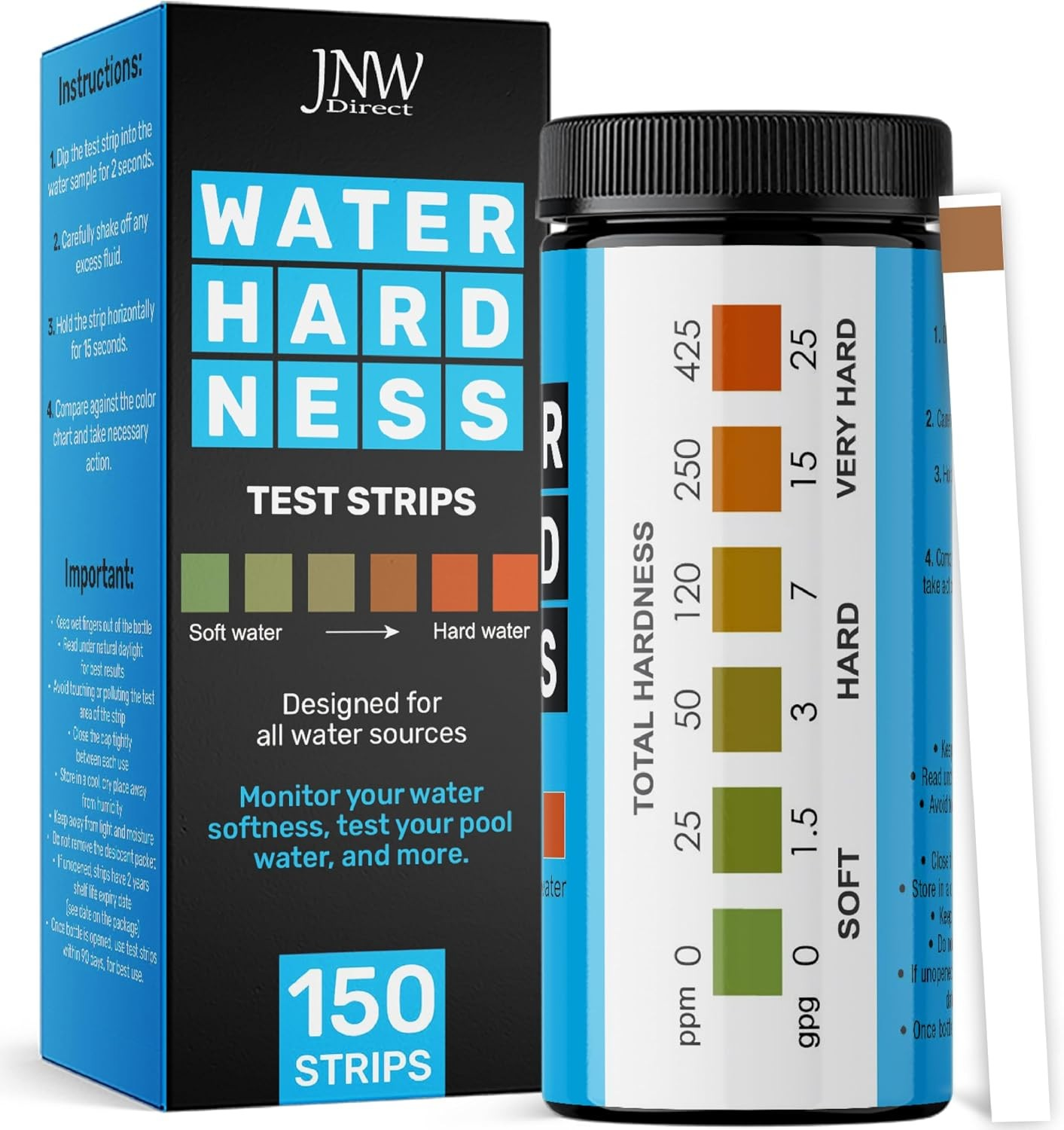
Hardness strips are the cheapest way to get a number. Dip one in a glass of tap water, compare the color pads to the chart on the box, and you know which band you are in. Clive describes them as costing a few dollars and taking ten seconds. This kit has 150 strips, so you can retest after you change filters.
Know your number before you buy anything. The kit was $8.99 on Amazon when we checked.
Get Hardness Test Strips →A quick decision checklist
- Chlorine taste or smell, hardness under about 120 ppm: a carbon pitcher filter is enough for drip, pour-over and AeroPress.
- Hardness above about 120 ppm and you own an espresso machine: do not rely on a pitcher. Use built-up water (pure water plus minerals) or the machine’s own softening filter.
- A machine with a water filter slot (many super-automatics have one): use it and replace the cartridge on schedule. An exhausted cartridge does nothing.
- Already seeing slow flow, longer warm-up or white flakes: descale first, then fix the water so you do not have to do it again soon.
- Salt softener in the house: bypass it for coffee water.
| Your situation | What to use | Pick |
|---|---|---|
| Drip or pour-over, moderate tap water | Carbon pitcher filter | 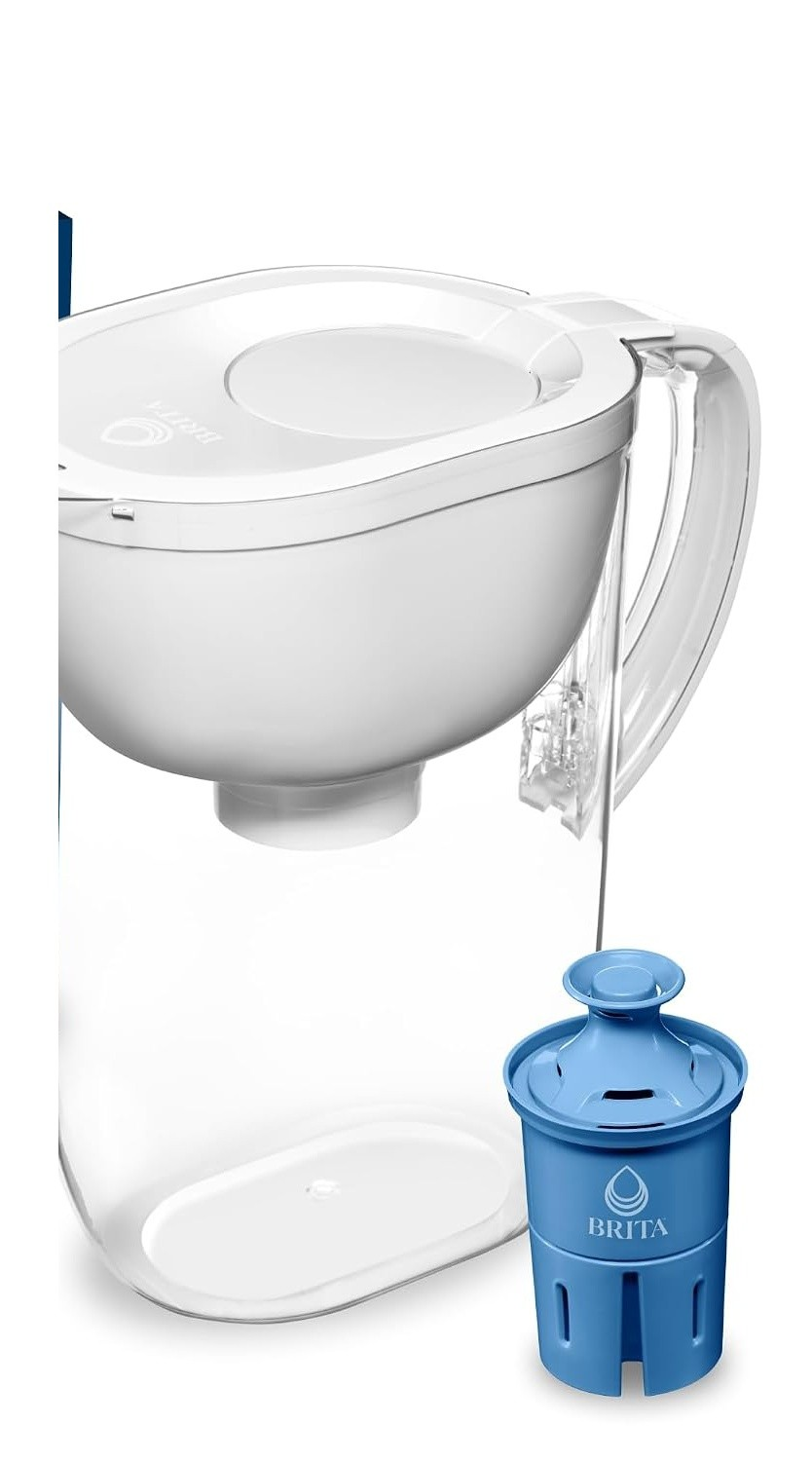 Brita Elite Pitcher |
| Espresso machine, hard water | Zero-TDS pitcher + mineral sticks | 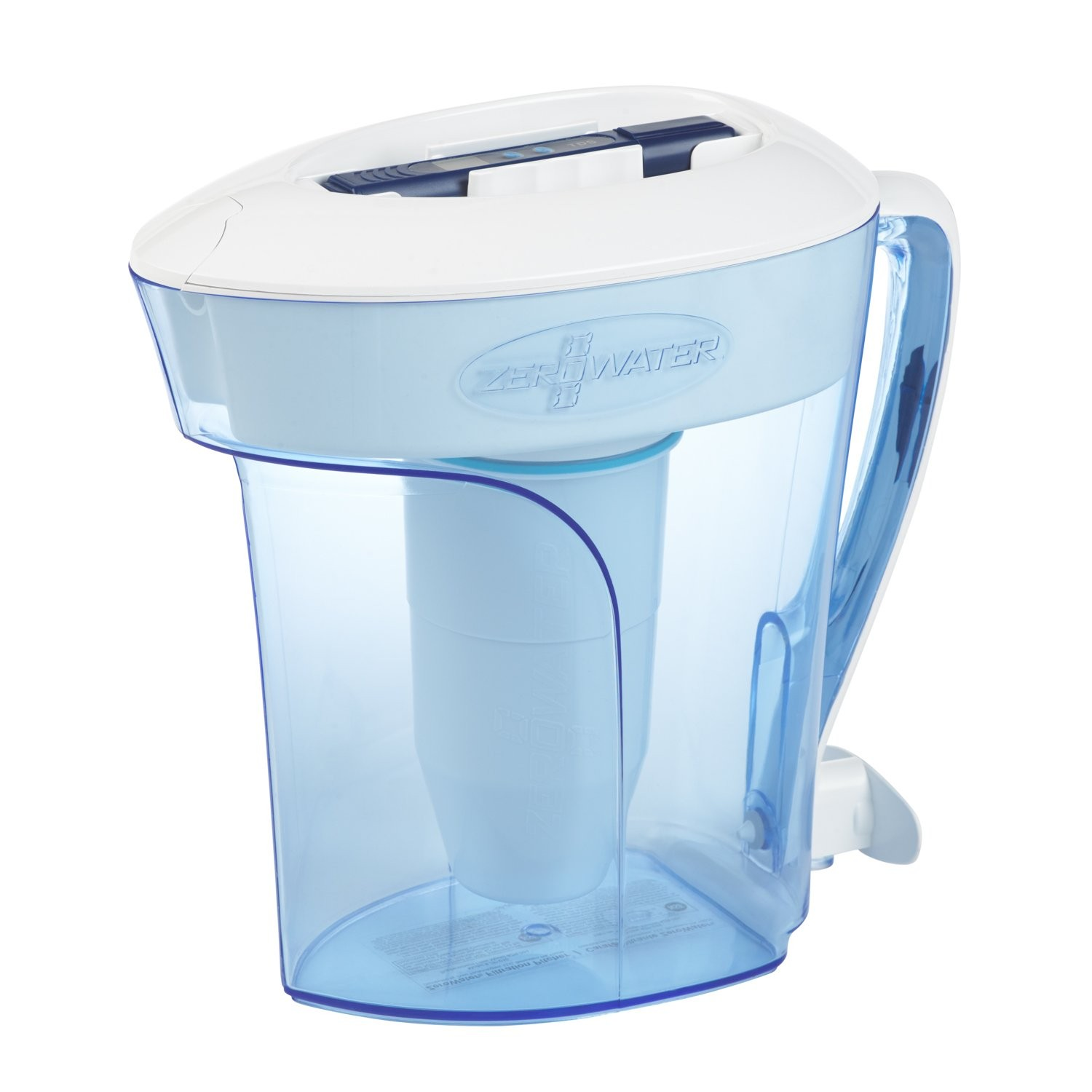 ZeroWater Pitcher 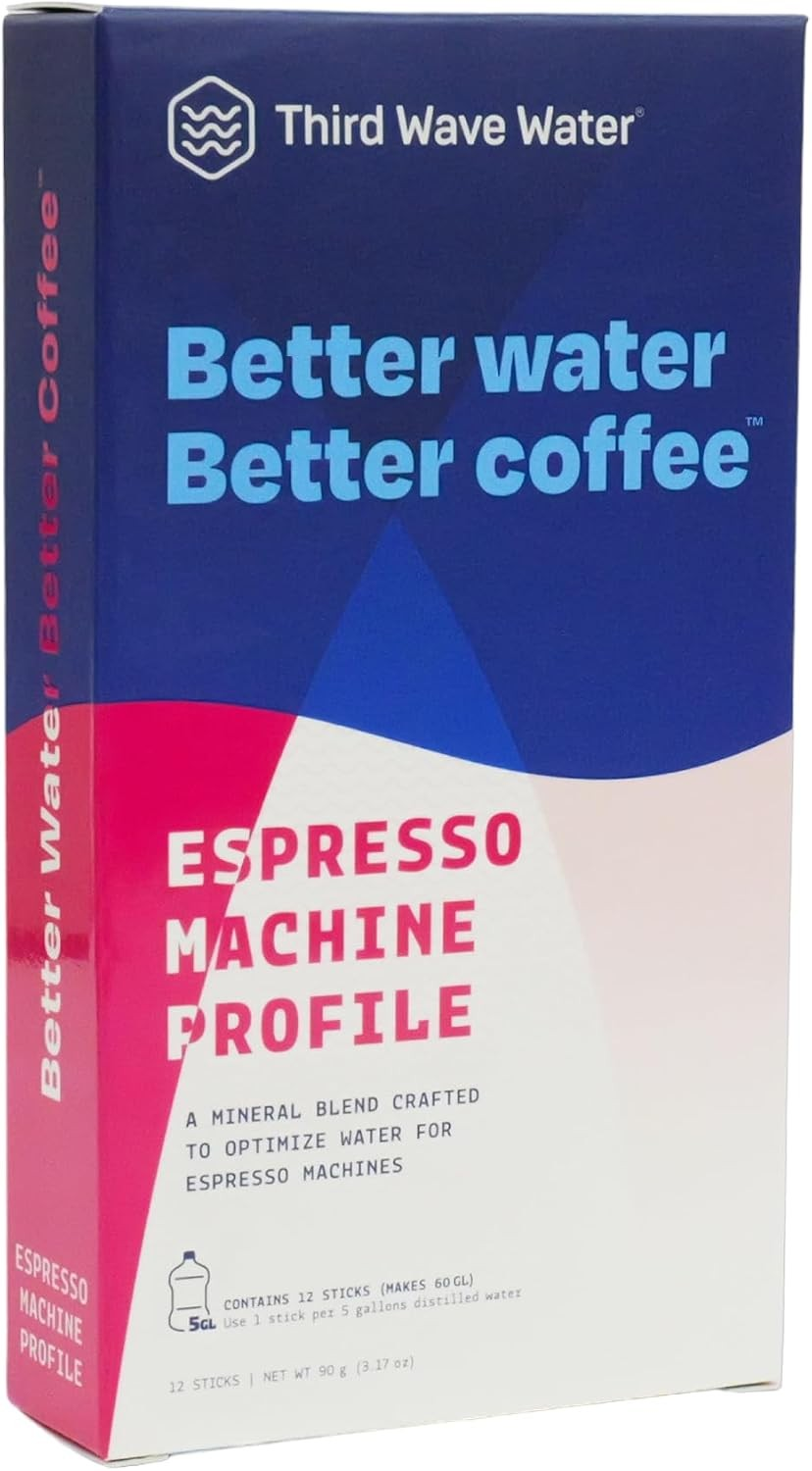 Third Wave Water |
| Not sure yet | Test first | Hardness Strips |
| Scale already built up | Descale, then fix the water | 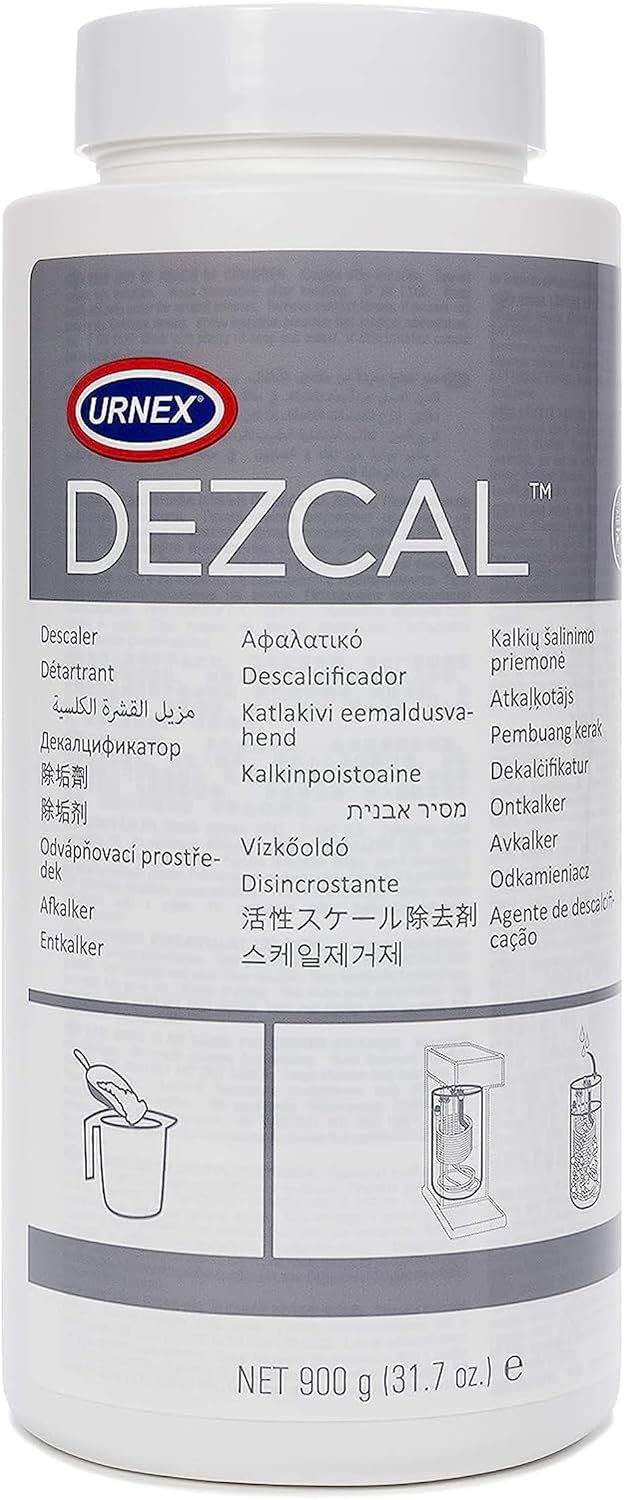 Urnex Dezcal |
Three setups for three kinds of coffee drinker
For drip and pour-over drinkers: a carbon pitcher
If you brew filter coffee and your water is not especially hard, a pitcher filter handles the one thing that ruins cups most often: chlorine. Brita’s Elite filter is certified to reduce chlorine taste and odor along with lead and a long list of other contaminants, and the 10-cup pitcher fits in most fridges.
Be clear about what it will not do. Seattle Coffee Gear notes that a carbon pitcher is not primarily a softener, and Clive puts it this way: you are still at the mercy of your tap’s baseline. For a kettle and a drip machine, that is usually fine. For an espresso boiler in a hard-water town, it is not enough.
The easy upgrade for filter coffee. It was about $31 on Amazon when we looked.
See the Brita Elite Pitcher →For espresso machine owners with hard water: build your own
The most reliable way to get predictable water is to start from nothing and add back exactly what you want. That is two products working together.
The ZeroWater pitcher uses a five-stage ion exchange filter designed to remove virtually all dissolved solids, and it ships with a TDS meter so you can see when the filter is spent. On its own, its output behaves like distilled water, which is exactly why you should not pour it straight into your machine.
Turn tap water into a blank page. About $30 on Amazon when we checked, with a TDS meter included.
View the ZeroWater Pitcher →Third Wave Water’s Espresso Machine Profile is a mineral blend made to be stirred into pure water. Clive’s recommendation is one packet per gallon of distilled or RO water, which gives you water that tastes right and is gentler on the boiler than most hard tap water. ZeroWater output works as the base if you would rather not buy jugs.
The routine is simple: fill a clean gallon jug, add a stick, shake, and use it for the machine tank. A gallon goes further than you would think when it only feeds espresso.
Predictable water, every refill. The five-stick box was $29.00 on Amazon when we checked.
Check Third Wave Water →For machines that already have scale
Better water slows scale down. It does not remove what is already there. If your machine is heating slowly, flowing weakly or shedding white flakes, descale it first with a product made for coffee equipment, following the steps in our guide to descaling an espresso machine. Seattle Coffee Gear warns that home descaling is not appropriate for some heat exchanger and dual boiler machines, including Rocket and some Lelit models, so check your manual before you pour anything in.
Clear the scale, then keep it away. Check the current price on Amazon.
Shop Urnex Dezcal →How you will know it worked
Taste is the first sign. Coffee brewed with chlorine-free water in a sensible mineral range tends to taste sweeter and clearer, and you may need to adjust your grind a little because extraction changes with the water. If shots start running sour or bitter after the switch, our sour or bitter troubleshooting guide walks you through it.
The second sign takes longer: the kettle stays clean, the drip tray stops collecting white grit, and descaling goes from a chore you dread to an occasional check. Put the water on your weekly cleaning routine list, retest every few months, and replace filters before they run out rather than after.
One more source worth reading if you want the chemistry: Clive’s piece on how water can make or break your coffee explains why two waters with the same mineral count can taste different.