Semi-Automatic vs Super-Automatic for a Busy Household
It is 7:10 on a school day. One adult wants a flat white, the other wants a long black, a teenager wants something iced, and everyone needs to be out the door by 7:30. The espresso machine you choose decides whether that morning works.
The real choice is not between brands. It is between a semi-automatic, where a person grinds, doses, tamps and steams, and a super-automatic, where you press a button and the machine does all of it. To keep this concrete, we put two popular machines against each other: the Breville Bambino Plus and the Philips 3200 LatteGo.
Disclosure: Espresso at Home is reader-supported. As an Amazon Associate we earn from qualifying purchases, at no extra cost to you.
The two contenders
| Breville Bambino Plus | Philips 3200 LatteGo | |
|---|---|---|
| Type | Semi-automatic | Super-automatic (bean to cup) |
| Grinder | None, buy separately | Built-in ceramic, 12 settings |
| Milk | Automatic steam wand, 3 temps, 3 textures | LatteGo two-part milk system |
| Water tank | 64 fl oz | 1.8 L |
| Price guide | $499 list, plus a grinder | Seattle Coffee Gear lists $799; about $593 on Amazon when we last checked |
| Buy | 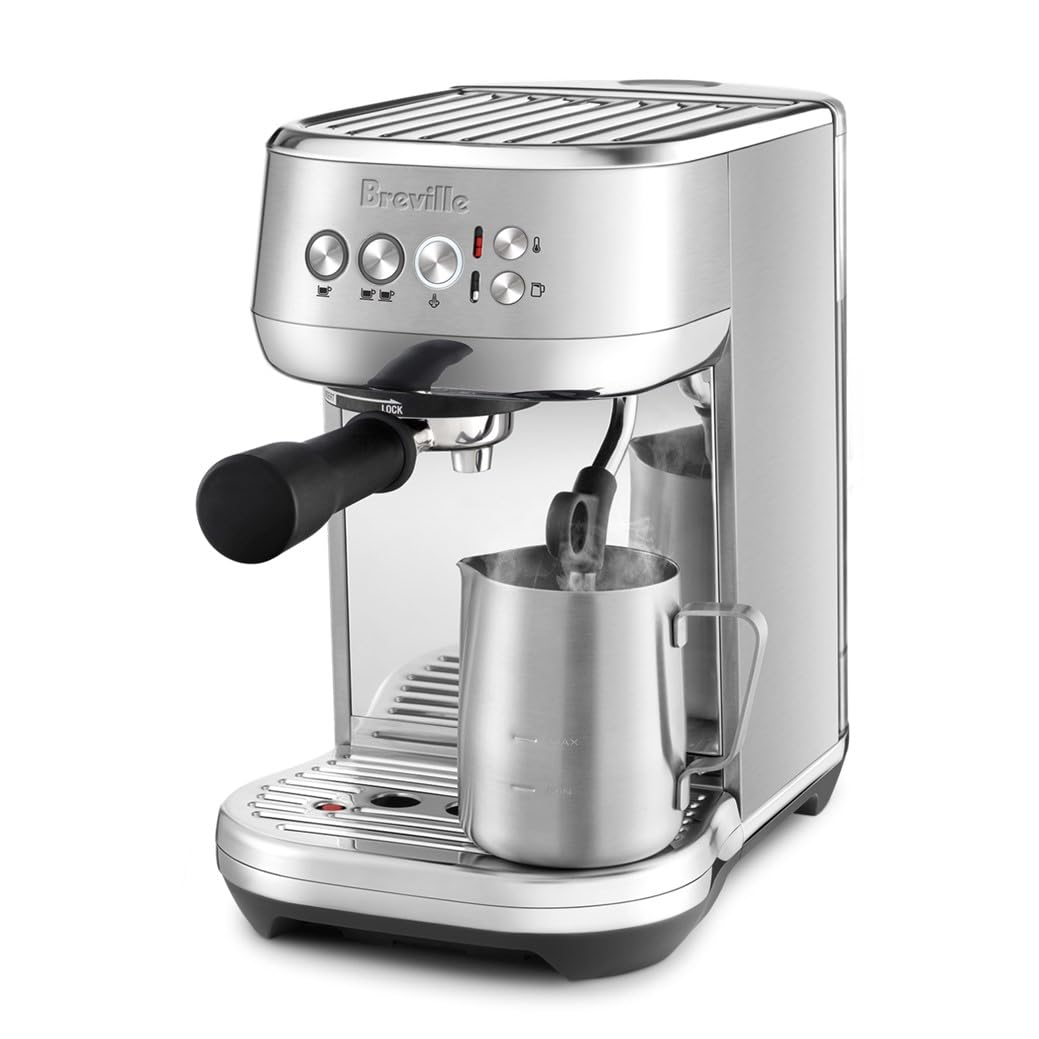 Bambino Plus | 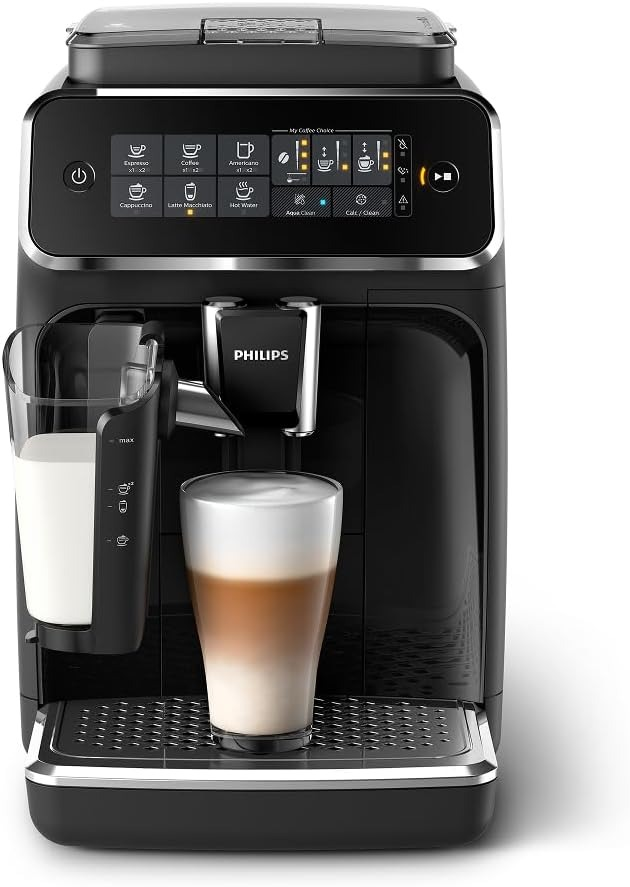 Philips 3200 |
The Bambino Plus is the machine we reviewed in depth in our Bambino Plus review: a ThermoJet heater that is ready in about three seconds, PID temperature control, low-pressure pre-infusion and a 54 mm portafilter built around an 18 g dose. The Philips 3200 LatteGo grinds beans with a 12-step ceramic grinder, holds 275 g of beans and makes espresso, coffee, Americano, cappuccino and latte macchiato from the front panel, according to Philips.
Round 1: Speed on a weekday morning
This is the round that matters most to a busy house, and it is not close. Breville says a super-automatic takes one to three minutes for most drinks. Complete Home Barista estimates a latte at two to three minutes on a super-automatic and six to ten minutes on a semi-automatic once you count grinding, tamping and steaming, and puts a run of several drinks at five to eight minutes versus 15 to 25.
The Bambino Plus is quick for its type, because it heats in seconds and steams milk while you do something else. But someone still has to grind, dose, tamp and lock in the portafilter for every shot.
Winner: Philips 3200. Four drinks before school is realistic on it.
Round 2: What ends up in the cup
A semi-automatic with a good grinder makes better espresso. You choose the beans, the grind, the dose and when to stop the shot, so you can chase sweetness and fix sourness. Seattle Coffee Gear points out that super-automatics usually end shots on a preprogrammed time, and with a built-in grinder there are only so many changes you can make. It also notes that super-automatics do not cope well with very oily dark roasts, which can clog the grinder.
For milk drinks the gap narrows. A latte is mostly milk, and both machines produce good microfoam without skill. Straight espresso drinkers will notice the difference far more than latte drinkers.
Winner: Bambino Plus, as long as you pair it with a real espresso grinder.
Round 3: Can everyone in the house use it?
A machine that only one person can operate becomes that person’s morning job. The Philips is a menu: pick a drink, press start. A teenager or a guest can make a cappuccino on the first try.
The Bambino Plus is one of the friendlier semi-automatics, with its automatic milk wand, but it still asks for a little technique. Dialing in a new bag of beans is a skill, and our guide to dialing in a grinder exists because it takes a few tries. Complete Home Barista describes the learning curve as steep for semi-automatics and minimal for super-automatics.
Winner: Philips 3200.
Round 4: Cleaning and upkeep
Neither machine is maintenance-free; they just ask for different things. With the Bambino Plus you knock out the puck, rinse the portafilter and basket, wipe and purge the wand, and do a regular cleaning cycle. The Philips rinses itself, but you empty the grounds container and drip tray, wash the milk system and rinse the brew group.
Philips has made that last part easy. The LatteGo milk system is two parts with no tubes and can be rinsed in about 15 seconds or put in the dishwasher, and the brew group slides out to rinse under the tap. With the AquaClean filter changed when the machine asks, Philips says you can go up to 5,000 cups without descaling.
Complete Home Barista estimates about five minutes a day and 30 a month for a semi-automatic, versus two minutes a day and 60 a month for a super-automatic, and expects a super-automatic to cost more to maintain each year. Day to day, the Philips is less work. Over a year, it is closer than it looks.
Winner: Philips 3200 for daily effort; call it a draw over the long run.
Round 5: Counter space and refills
The Bambino Plus is small, but it needs a grinder beside it, so the real footprint is two machines. The Philips measures 246 x 371 x 433 mm and does everything in one box. Its 1.8 L tank is also bigger than the Bambino Plus’s 64 fl oz, which matters when four drinks a morning drain it.
Winner: Philips 3200, narrowly.
Round 6: What you really spend
The Bambino Plus lists at $499, and it needs a grinder. Breville’s Smart Grinder Pro and the Baratza Encore ESP each list around $199, and Breville sells the Bambino Plus with the Smart Grinder Pro as a $649 bundle. Realistically, budget about $650 to $700. The Philips was about $593 on Amazon when we last checked, against Seattle Coffee Gear’s $799 listing, and needs nothing else.
If your household is replacing a café habit, either machine pays for itself. Our home espresso vs café cost breakdown does the math.
Winner: roughly even, depending on the day’s price.
The verdict for a busy household
If the house runs on lattes and cappuccinos, several people make their own drinks, and mornings are tight, the super-automatic wins on the things that matter at 7:10 a.m.: speed, ease and one-button consistency.
The Philips 3200 LatteGo is the pick for that house. It grinds fresh beans for every cup, the milk system is quick to clean, and anyone can use it. Choose medium roasts rather than very oily dark ones to keep the grinder happy.
Press a button, get a cappuccino. Prices move a lot on this one, so check today’s before you buy.
Check the Philips 3200 Price →If one person in the house enjoys the ritual, mostly makes the coffee for everyone, or drinks straight espresso, the semi-automatic is the better machine and the better hobby.
The Bambino Plus is the friendliest way into that. It is fast for a semi-automatic, the automatic wand means milk is never the bottleneck, and the espresso can be better than any super-automatic manages once you have it dialed in.
For the house with one keen barista. Pair it with a real espresso grinder and it outclasses push-button machines on straight shots.
See the Bambino Plus on Amazon →If you go semi-automatic, do not skip the grinder
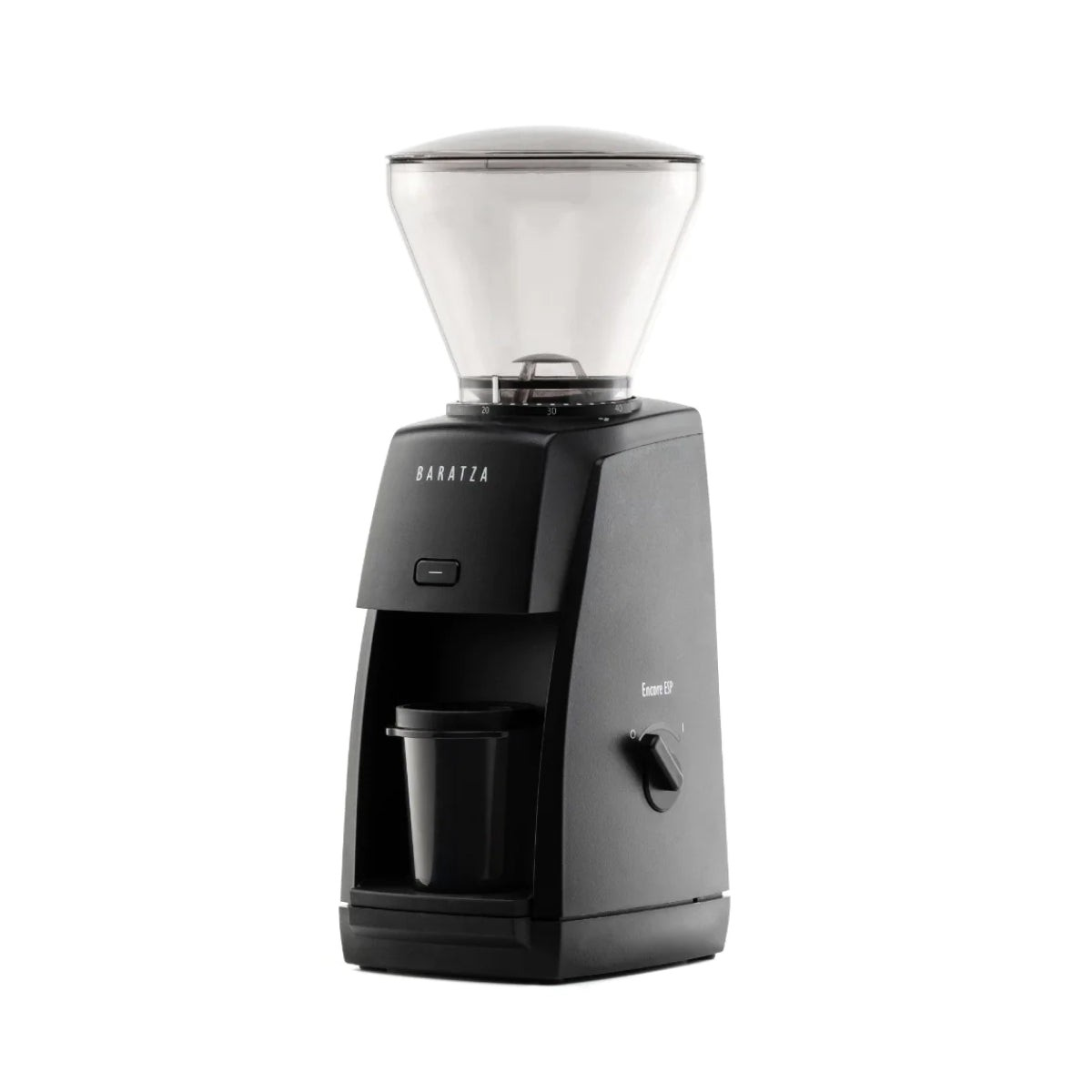
The Encore ESP spends half its dial on espresso, which makes it a sensible match for the Bambino Plus. Our espresso grinder guide covers other options. Still unsure which type suits you? Read what actually matters in a first espresso machine before you decide.
More guides
- Breville Bambino Plus Review: Is It Enough Machine?
- Moving On From Pods: Alternatives to a Nespresso
- A Morning Coffee Routine for Busy Parents
- Your First Espresso Machine: What Actually Matters
- Water for Coffee: Filters, Hardness and Scale
- Best Espresso Machines Under $500: Five Honest Picks