Decaf Coffee That Doesn’t Taste Like Decaf
It is nine at night, dinner is done, and you want a proper coffee. Not a herbal tea, not a sad cup of something brown. The problem is that the last decaf you tried tasted like wet cardboard, so you skip it and either go without or lie awake at 2 a.m.
That cardboard decaf is real, but it is not the whole story. Good decaf exists, and most of the difference comes down to three things you can check before you buy: how the caffeine was taken out, how fresh the beans are, and how you brew them.
Disclosure: Espresso at Home is reader-supported. As an Amazon Associate we earn from qualifying purchases, at no extra cost to you.
Why so much decaf tastes flat
Caffeine is one compound among roughly a thousand soluble ones in green coffee. Every decaf method has the same job: pull that one compound out of raw, unroasted beans and leave the flavour behind.
The beans have to be soaked or steamed first so they open up, and that step alone is hard on them. Do it carelessly and you lose sweetness and aroma along with the caffeine. Decaf beans also roast differently, because they start out darker and more porous, so a roaster who treats them like regular beans can scorch them.
Then there is freshness. Decaf is often the slowest-selling bag on a café shelf or a supermarket aisle, so it tends to be older. A stale decaf will taste worse than a stale regular coffee, because it had less to lose in the first place.
The four decaf methods, in plain language
You will see these names on good bags. If a bag just says “decaffeinated” and names no method at all, it is usually a solvent process and often commodity coffee.
Swiss Water Process
No solvents. Green beans soak in hot water, which pulls out caffeine and flavour. That water runs through carbon filters that trap caffeine and let flavour compounds through. The result, a flavour-rich but caffeine-free liquid, is then used to soak fresh beans: the flavour has nowhere to go, so only the caffeine moves out. Seattle Coffee Gear notes that it is certified to remove 99.9% of the caffeine, which is why so much organic decaf uses it.
Sugarcane (ethyl acetate) process
Ethyl acetate occurs naturally in fruit, and when it is made from fermented sugarcane the bag usually says “sugarcane decaf” or “EA process”. It is common with Colombian coffee. Fans like it because it tends to keep body and sweetness, sometimes with a light fruity note.
CO2 process
Carbon dioxide under very high pressure behaves like a solvent that grabs caffeine and mostly ignores the bigger flavour molecules. Flavour retention is very good, but the equipment is expensive, so you see it more in large commercial brands than in small-batch roasters.
Methylene chloride
This is the one that makes people nervous on a label. It boils off at about 104°F, coffee is roasted at well over 400°F, and residues in the finished cup are far below regulatory limits. Many specialty roasters still avoid it, mainly because customers ask them to.
How much caffeine is left?
Decaf is not zero caffeine. In the US, coffee labelled decaffeinated must have at least 97% of its caffeine removed, and Swiss Water and CO2 coffees usually reach 99.9%. A cup of decaf typically has a few milligrams, compared with roughly 95 mg in a regular cup.
For most people that is nothing. If you are very sensitive, though, three or four cups of decaf in an evening still add up.
What actually matters when you buy
Here is the short checklist we use:
- The method is named on the bag. Swiss Water, Mountain Water, sugarcane/EA or CO2. Naming it is a sign the roaster cares.
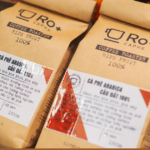
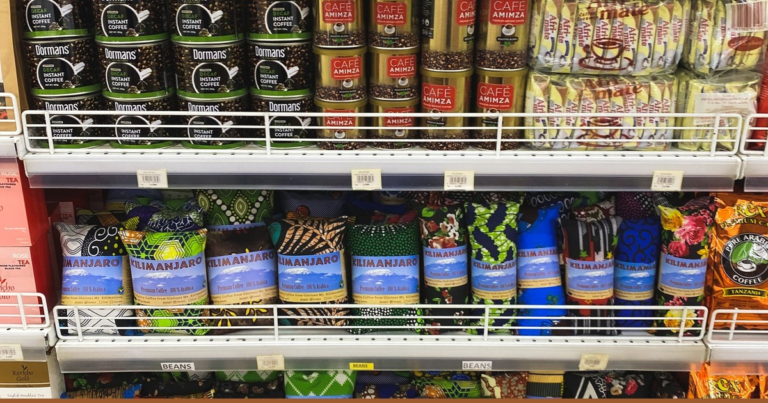
- There is a roast date, and it is recent. A good decaf that has sat for months will not taste good.
- The origin is named. A single country or region tells you more about the cup than “decaf blend” does.
- Whole bean, not ground. Ground decaf goes stale even faster than ground regular coffee.
What matters less: the word “natural” on the front, fancy tin packaging, and “low acid” claims, which mostly describe a dark roast.
Brewing decaf so it tastes like coffee
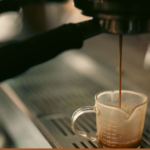
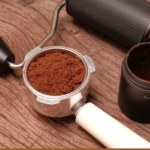
Decaf beans are more brittle, so they shatter into finer particles at the same grinder setting. Seattle Coffee Gear’s advice is to start one or two steps coarser than you would for a regular coffee of the same roast. If your decaf espresso runs slow and tastes bitter, that is usually the fix.
Decaf also extracts faster, which makes it easier to over-extract. Keep your recipe the same, change the grind first, and taste. If you do not own a grinder that adjusts in small steps, our guide to hand grinders covers some good, affordable ones.
Three decaf picks for three kinds of drinker
For milk drinks and dark-roast fans: Kicking Horse Decaf
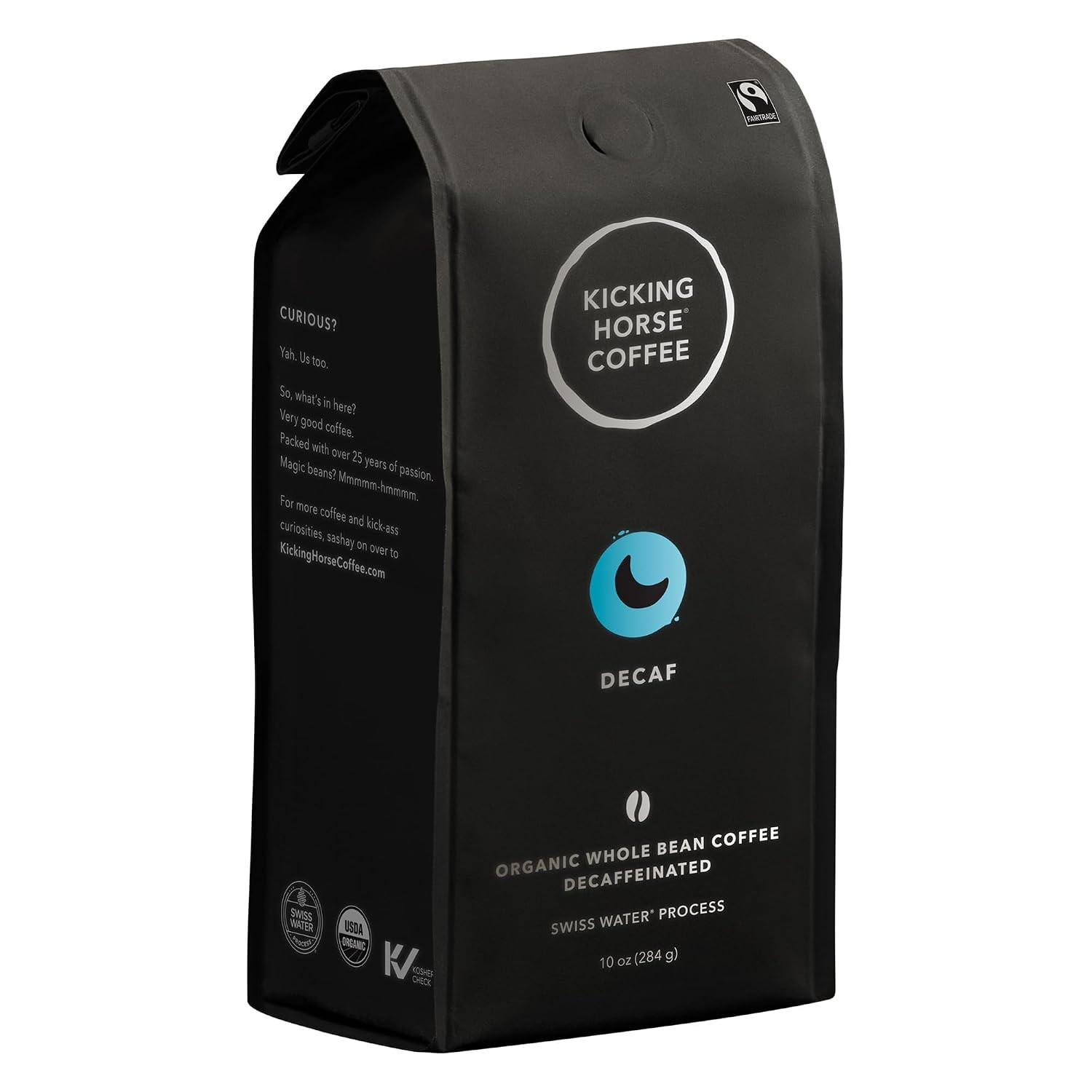
Kicking Horse’s decaf is a dark roast decaffeinated with the Swiss Water Process, and the listing describes it as certified organic and Fairtrade. Dark roasts are the forgiving choice for decaf: the roast flavour carries through milk, so a decaf latte still tastes like coffee rather than warm milk.
It is also one of the easiest decafs to find, which matters when you want to keep a bag in rotation instead of buying one twice a year.
Evening lattes without the 2 a.m. wake-up? It was about $10.50 for a 10 oz bag on Amazon when we checked.
See Kicking Horse Decaf →For black coffee and pour-over: Volcanica Costa Rica Decaf Tarrazu
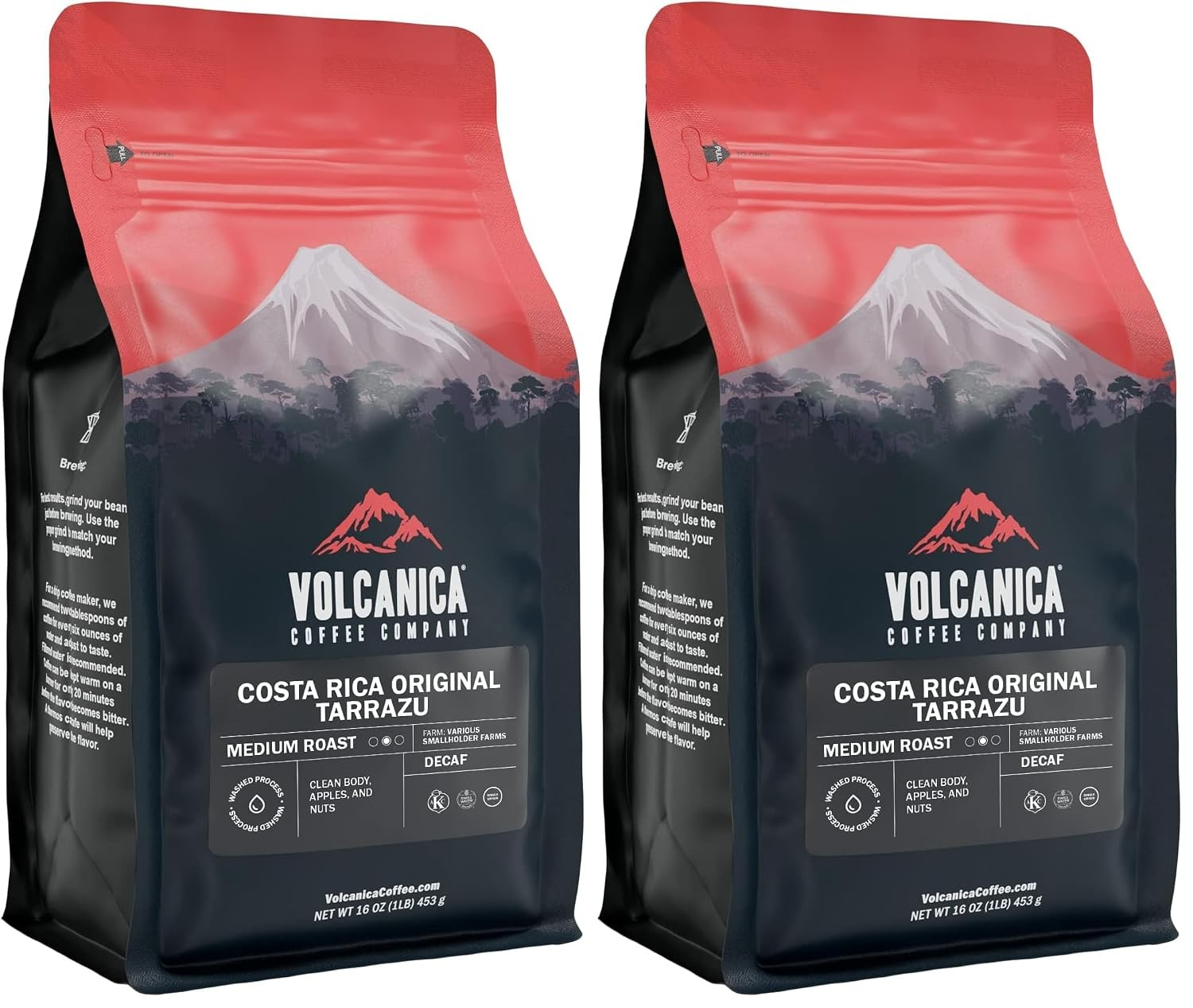
If you drink your coffee black, a medium roast from a named region is a better bet than a dark blend. This one is from Tarrazu, Costa Rica, and is Swiss Water processed. Volcanica’s listing describes a smooth, bright cup with a subtle chocolate note.
It is a good bean for pour-over or an AeroPress, where a lighter roast has room to show some sweetness. Grind a notch coarser than your usual setting and taste from there.
Want a decaf you can drink black? It was about $24 for two 16 oz bags on Amazon when we checked.
Check the Costa Rica Decaf →For cutting back slowly: Volcanica Half Caff
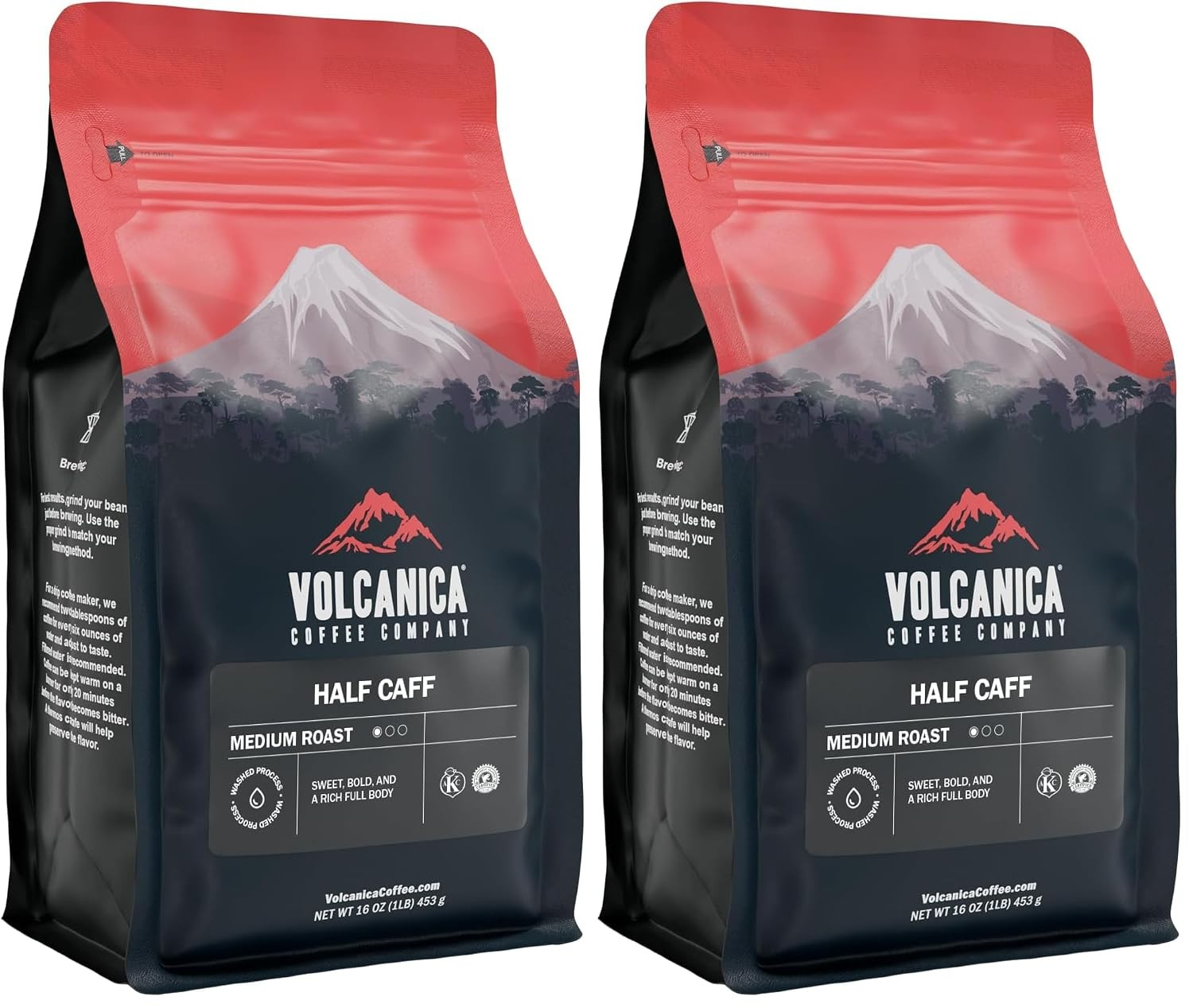
Not everyone wants to go to zero overnight. Volcanica’s Half Caff is a mix of its house blends, half regular and half Swiss Water decaf, so a normal-sized cup has roughly half the caffeine of a regular one.
It is a sensible bridge for an afternoon cup, or for the weeks when you are trying to cut down without the headaches. You can also make your own half caff by mixing bags, but a pre-blended one is easier to keep consistent.
Cutting down without quitting? A half-and-half blend is an easy middle step. Check the current price on Amazon.
See Volcanica Half Caff →| Coffee | Method | Roast | Best for | Amazon | |
|---|---|---|---|---|---|
| Kicking Horse Decaf | Swiss Water | Dark | Lattes and cappuccinos | Check Price |
| Volcanica Costa Rica Decaf Tarrazu | Swiss Water | Medium | Black coffee, pour-over | Check Price |
| Volcanica Half Caff | Half Swiss Water decaf | Medium | Cutting back gradually | Check Price |
Keep it fresh at home
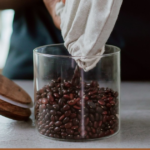
Decaf goes stale faster than regular beans, so buy smaller bags more often rather than one big bag that sits for two months. Keep the beans in an airtight container away from light and heat, and grind just before brewing.
If you only drink decaf at night, consider splitting a bag: half in a sealed container for this week, half in the freezer in an airtight bag, taken out once and not refrozen.
The short version
Decaf does not have to taste like a compromise. Look for a named method, a recent roast date and whole beans, then grind a step coarser. Do that and the evening cup becomes something you actually look forward to.
If you are still weighing whether home coffee is worth it in the first place, our home espresso vs café cost breakdown runs the numbers.
Hosting? Our brunch coffee guide shows an easy way to keep decaf separate when you brew for a crowd.
Decaf goes stale just like regular beans. Our guide to storing coffee beans covers what actually keeps them fresh.
Not sure what the rest of a decaf label means? Read how to buy coffee beans: roast dates and labels explained.